AU calls for release of political detainees ahead of South Sudan elections - IOL
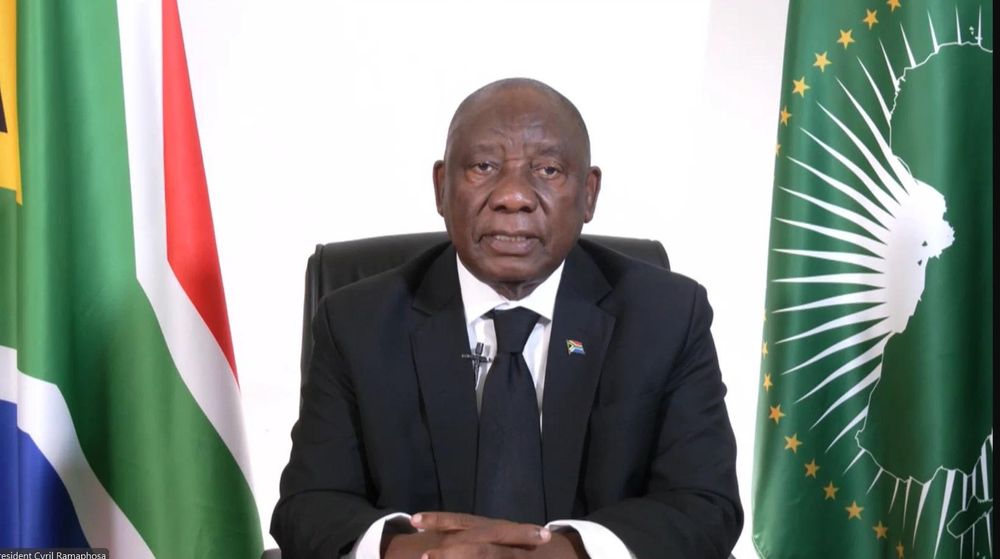
President Cyril Ramaphosa apologised for postponing the meeting originally scheduled for September 16, explaining he had been unwell and advised by doctors to rest.
AFRICAN Union (AU) leaders have called for the release of all persons arbitrarily detained on political grounds in South Sudan, a halt to hostilities, and the adoption of a consensual electoral roadmap ahead of the country’s first general elections.
Opening the virtual Summit of the AU Committee on South Sudan (C5) Plus on Wednesday, South African President Cyril Ramaphosa apologised for postponing the meeting originally scheduled for September 16, explaining he had been unwell and advised by doctors to rest.
After welcoming AU Commission Chairperson Mahmoud Ali Youssouf, South Sudan’s President Salva Kiir Mayardit, and other dignitaries, Ramaphosa commended the country’s leadership for their commitment to peace, while stressing that AU member states had a collective responsibility to support the nation.
Addressing the newly appointed AU High Representative for the Horn of Africa and the Red Sea, former Tanzanian President Jakaya Kikwete, Ramaphosa said: “We wish you well as you deploy your extensive expertise and considerable energies to assisting the government and the people of South Sudan.”
Ramaphosa noted that since the inaugural C5 Plus Summit earlier this year, support for the Revitalised Agreement on the Resolution of Conflict in South Sudan (R-ARCSS), which he described as the only internationally recognised framework for the country's transition, had grown across the continent.
He pointed to a volatile political landscape, citing significant recent developments: the dissolution of the Transitional Government on September 22, 2026, amendments to the National Elections Act of 2012, and the commencement of the Inter-Party Political Dialogue on September 24.
Acknowledging that these moves occured as the nation was preparing for its first post-independence elections later this year, Ramaphosa advised that voting alone could not secure the nation’s future, stating: “We know that elections on their own are not a sufficient guarantor of peace and democracy.”
He emphasised that credible polls required a foundation of stability, explaining that holding them “must be preceded and accompanied by a genuine, inclusive political process, bolstered by security arrangements and protection of electoral staff and civilians”.
He further said: “There must be a clear legal framework, adequate financing, and capable institutional and operational capacity,” urging leaders to “seize this moment to come together despite their differences to discuss the problems and challenges that stand in the way of their advancement as a nation.”
Ramaphosa confirmed that the summit yielded a concrete Declaration with strict recommendations, following briefings from Kiir, the AU, Kikwete, and former Nigerian Foreign Minister Geoffrey Onyeama, who led the AU’s technical pre-election and needs assessment mission in Juba in August.
Ramaphosa stressed that the foundational document for the country’s transition remained absolute, asserting: “We have agreed that the Revitalised Peace Agreement remains the paramount legal instrument with which all parties must comply and by which progress in South Sudan will be measured.”
Detailing the summit’s eight-point action plan, Ramaphosa demanded that all parties “comply fully with the provisions of the Revitalised Peace Agreement and demonstrate their commitment to its full implementation.”
In a direct intervention regarding human rights and the political climate, Ramaphosa said, while respecting the nation’s sovereignty and judicial processes, the government must “release all persons arbitrarily detained on political grounds and guarantee the rights, humane treatment and due process of persons facing judicial proceedings, thereby contributing to an inclusive political environment.”
Turning to the logistical and financial prerequisites for the upcoming polls, he urged the government to “work with speed to resolve the challenges that remain” and to adopt “a feasible, consensual and time-bound electoral roadmap that clearly sets out the legal basis, scope and sequencing of elections”.
While appealing to the international community to “support South Sudan in the most effective and coordinated manner”, Ramaphosa made it clear that external aid could not replace local accountability.
He said: “The primary responsibility for the implementation of the agreed measures rests with the government and parties of South Sudan,” adding that external support “must reinforce South Sudanese national ownership and respond to clearly identified priorities.”
Ramaphosa closed by stating that for democracy to take hold, leaders “must demonstrate genuine commitment to inclusivity, peace and national reconciliation”, expressing confidence that, “acting together, we can accompany South Sudan through this critical period and help secure a future of lasting peace and democracy for its people”.