Austerity steps to save only Rs17b
Direct Source Verification:
This story is aggregated from The Express Tribune (tribune.com.pk). Full reporting rights and copyright belong to the primary publisher.
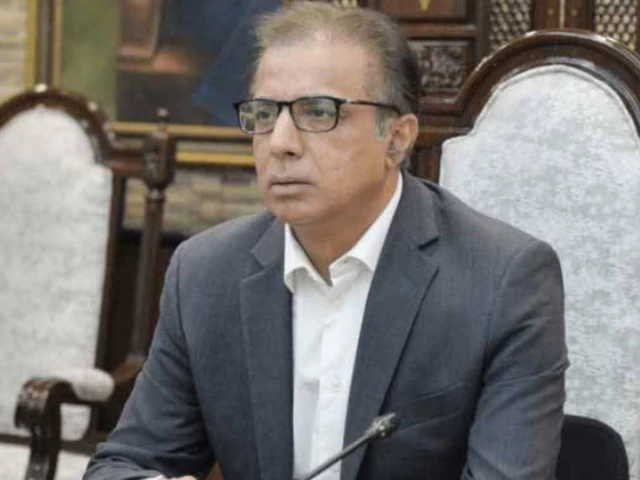
Secretary tells NA panel IMF programme implementation 'pretty strong'
The International Monetary Fund (IMF) conditions on sugar-sector liberalisation and spending on education and health have been missed but overall implementation of the programme remains "pretty strong", said the federal government's chief negotiator on Thursday.
In a briefing to the National Assembly Standing Committee on Finance on the IMF programme, Secretary Finance Imdad Ullah Bosal disclosed that new austerity measures would save only Rs16.8 billion. But he ducked a question from PPP MNA Hina Rabbani Khar whether the austerity scheme was merely rhetoric.
Bosal revealed that the reduction in fuel allocation for official vehicles by 50% would save Rs700 million during the three-month implementation period, while savings on account of a 5% cut in non-salary expenses for one year were Rs16.1 billion.
Prime Minister Shehbaz Sharif had announced the austerity policy in response to public criticism of the government's decision to pass on the financial burden of Middle East war to the people. The monthly petroleum levy collection is projected at Rs139 billion.
Headed by PPP's Syed Naveed Qamar, the standing committee got a detailed briefing from the finance ministry about the status of the IMF programme on the completion of two years.
Bosal, who is also the chief negotiator, stressed that there was pretty strong implementation of the IMF programme; therefore, there had not been many difficulties in reaching staff-level agreements in the past. He shared the implementation status report of the previous three reviews but did not give the final status of implementation of conditions for the fourth review due to ongoing parleys with the IMF. However, he did share the final status of a couple of conditions.
Three provinces had agreed on sugar-sector liberalisation but one province had certain reservations, said Bosal. He did not name the province but a member of the committee said it was Sindh. Bosal said discussions with the province were ongoing to address its concerns.
According to the IMF condition, the federal and provincial governments will agree and the federal cabinet will adopt a national policy for sugar-market liberalisation on licensing, price controls, import, export permissions and zoning, and clear timelines for implementation. But in breach of the condition to approve the policy by June this year, the federal government is still exercising export and import controls and allowed export of 308,000 metric tons of sugar in recent days.
The government is advancing work towards full liberalisation of the sugar sector and has shared draft recommendations for a national policy with provincial governments, according to the finance ministry.
The IMF had also imposed a condition to collect agricultural income tax from landlords and farmers but its implementation too remains slow. The IMF on Thursday held a meeting with the Sindh government to review the implementation status. Naveed Qamar said the fate of traders' scheme and agricultural income tax scheme was the same as the increase in tax rates from 15% to 45% on agricultural income could not force people to pay taxes.
Chairman of the standing committee also observed that the federal government was dragging its feet on making public the declarations of civil servants. The secretary finance said the condition would now be fully implemented by December this year. The committee decided to take a briefing from the Establishment Division and the FBR on assets declaration.
The secretary finance said the health and educational spending targets could not be met because of some provinces and it remained a recurring concern in almost every review. Against the target of spending Rs3.47 trillion on health and education in the last fiscal year, the five governments spent Rs3.1 trillion. As the FBR missed tax collection targets, Bosal said, the federal government had to request provinces to curtail their expenses.
The condition to amend the Sovereign Wealth Fund (SWF) Act and other legislation to adopt appropriate governance mechanisms and safeguards following international standards and good practices has also been missed. Bosal said the IMF mentioned that Pakistan was neither Qatar nor Norway, which could make investment through the SWF.
Special Secretary Finance Qumar Abbasi said the current law empowered the SWF to retain 50% of dividends of companies but it had now been proposed that the income would first go to the government and it would then decide about any further distribution.
The condition on amending laws for nine additional statutory SOEs to bring them in line with the SOE Act could also not be met. The secretary finance said the laws of Port Qasim Authority, Gwadar Port Authority, Karachi Port Trust, State Life Insurance Corporation, National Telecommunication Corporation and Pakistan Railways would be amended. Qumar Abbasi said out of the nine, three laws had already been passed but the rest were at various stages of approval.
There was also an IMF condition for making a comprehensive assessment of the anti-corruption regime. The secretary finance informed the meeting that the PM had tasked the law minister and the National Accountability Bureau (NAB) to lead the development of an action plan to mitigate corruption vulnerabilities in the top 10 government departments having the highest corruption risks.
The secretary finance said NAB was undertaking a corruption assessment to which Naveed Qamar expressed concern that it could again empower NAB under the guise of the IMF. The condition on amending the SECP Act remains unimplemented. The government is required to submit in parliament legislative amendments to the Companies Act 2017 to strengthen compliance for unlisted firms, modernise corporate governance structures and align corporate regulations with international best practices. Bosal said about 114 amendments would be made subject to approval by parliament.
The conditions for putting a floor on the net tax revenues collected by the FBR from retailers under the Tajir Dost scheme and the floor on the net tax revenues collected by the FBR were also missed. On a question about the failure of the fixed tax scheme for traders, the secretary finance said the response had so far been very slow and there was a need to take remedial measures.
Original Source
https://tribune.com.pk/story/2631257/austerity-steps-to-save-only-rs17b