Banks must compensate digital fraud victims for losses if due diligence fails: SC
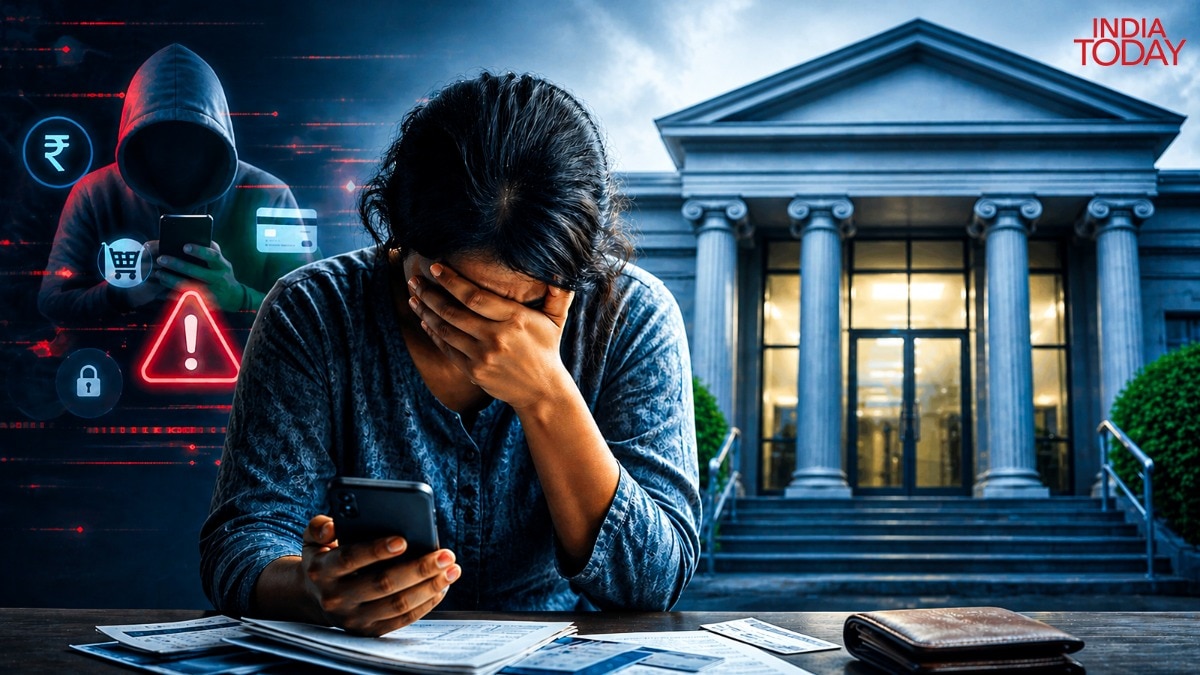
The Supreme Court on Thursday said banks must be held accountable for losses suffered by victims of digital fraud, observing that protecting them is the responsibility of financial institutions. The court asserted that victims of offences such as digital arrest scams should be compensated for at least the amount lost if the fraud is found to have resulted from a failure of due diligence by the bank.
A bench comprising Chief Justice of India Surya Kant and Justices Joymalya Bagchi and V Mohana reiterated the need for mandatory preventive measures, including temporarily suspending unusual transactions that deviate from an account holder's established transaction pattern, automated reporting of suspicious activity and physical verification to establish the genuineness of transactions.
"It is your duty as bankers to protect victims. What is the competent authority doing?" the Chief Justice asked during the hearing.
"Maybe you cannot flag transactions by big companies, but shouldn't a transaction be flagged when a person who usually withdraws only Rs 10,000 or Rs 20,000 at a time suddenly withdraws Rs 50,000?" he added.
The bench, while hearing a Public Interest Litigation taken up on its own initiative, stressed that the proposed regulatory framework must provide for adequate compensation to victims if financial institutions are found to have failed in their due diligence obligations.
The Supreme Cort directed the RBI to submit a list of all authorised financial institutions by the next date of hearing and said the court would issue directions applicable to all institutions without necessarily impleading individual banks in the proceedings.
The bench also sought details of financial institutions that would be covered by the proposed guidelines and the measures being considered to compensate victims for their losses, further underlining that banks were responsible for alerting neighbouring police stations about unusual transactions involving customers who may be victims of digital arrest scams.DIGITAL ARREST CASES DECLINE BY 50%: CENTRE TO SC
During the hearing, Attorney General R Venkataramani, appearing for the Centre and other authorities, informed the court that reported digital arrest cases had declined by around 50 per cent compared with the previous year.
He attributed the reduction to the Supreme Court's intervention, coordinated action by government ministries and departments, and public awareness campaigns.
Chief Justice Surya Kant, however, pointed out that the country had still suffered losses of nearly Rs 800 crore from such offences this year.
The Chief Justice identified two key areas requiring further intervention, such as the accountability of banks and the problem of mule accounts, which are frequently used to receive and transfer proceeds of cybercrime.
The court's observations highlighted the need to strengthen financial institutions' due diligence obligations and introduce measures to identify and respond to unusual transactions.
The bench said it would examine the RBI's proposed KYC Amendment Directions, 2026, to assess the provisions for compensating victims when financial institutions are found to have failed in their due diligence obligations.- Ends
Aneesha Mathur is a Special Correspondent for India Today where she puts her LLB degree to use covering Legal issues and cases in the Supreme Court of India, Delhi High court and other courts/tribunals.
Aneesha joined India Today in October 2018. After graduating from St Stephen's College and Faculty of law,Delhi University, she spent the formative years of her career in print Media.
Her interest in journalism stems from experience while interning with Legal services and Juvenile justice board as a law student, where she learnt the importance of ensuring that accurate information reaches the world, and that stories about individual experiences and statistics that show a "bigger picture" must supplement each other so other people can see what the large impact of a small thing can be. When not working or thinking about the law and it's state, Aneesha hides from reality in fantasy novels, rom-coms and food.