Belief, business, Bangkok: What do people pray for? - Bangkok Post
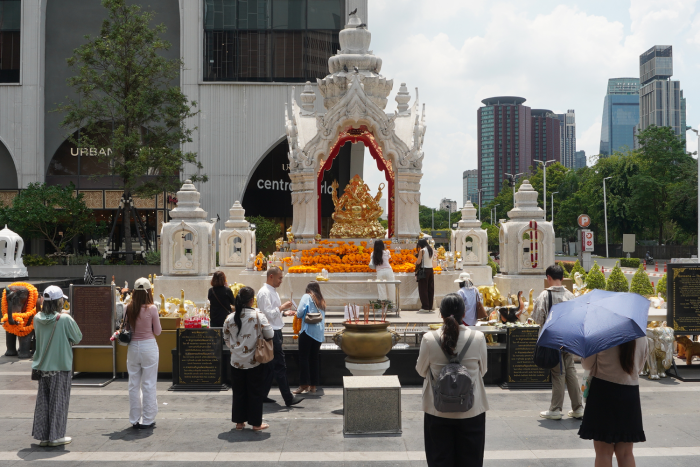
Superstitions have always run deep in Thailand, from before the arrival of Buddhism to the modern age of technology. In Bangkok, interest in spirituality and fortune-seeking has become increasingly visible, with the practice popularly dubbed “mutelu”.
The popularity of mutelu has had both cultural and economic implications, while raising a broader question: why are people, especially teenagers and young adults, turning to the supernatural?
To explore the capital’s fascination with the unseen, this episode of the Bangkok Post’s Why Bangkok brings together worshippers, a business operator and a philosophy professor to examine the beliefs and business behind the trend. (Story continues below)
Although the term “mutelu” has become increasingly popular in recent years, the practice of seeking blessings from supernatural beings is far from new.
Soraj Hongladarom, a professor of philosophy at the International Buddhist Studies College, Mahachulalongkornrajavidyalaya University (MCU), said the term emerged roughly a decade ago, but the behaviour it describes has existed in Thai society for generations.
Traditional practices include making vows to sacred beings and promising offerings in return for blessings. Those whose wishes are fulfilled may return with eggs, arrange traditional dance performances or make other offerings to honour their promises.
Before Buddhism reached Thailand, Mr Soraj said, local communities already believed in spirits and deities associated with the natural world. These animist traditions did not disappear but became intertwined with Buddhist and Hindu influences, creating a distinctive blend of spiritual practices.
The beliefs associated with mutelu are part of this broader tradition of seeking help from sacred beings, which has continued despite changes in society.
“In the past, people asked [sacred beings] for children because they thought it was very important to have children who could help with their work,” Mr Soraj said.
“But these days, fewer Thais want to have them. Society has changed, but the desire to ask the divine for the things we want still seems to remain.”
Today, the things people pray for reflect both longstanding beliefs and contemporary concerns.
Soraj Hongladarom, a professor of philosophy at the International Buddhist Studies College, Mahachulalongkornrajavidyalaya University (MCU) on the Bangkok Post's Why Bangkok.
Beyond its cultural significance, mutelu has developed into a commercial opportunity, with businesses increasingly incorporating spiritual beliefs into their products, services and tourism activities.
Chotechuang Sooramgura, associate managing director of Noomsao Travel and Tours, described the phenomenon as “belief marketing”.
A related term, “muketing”, has also emerged to describe the application of marketing strategies to products and services associated with spiritual beliefs.
The concept has expanded beyond traditional offerings and amulets to include products designed around spiritual preferences, such as sacred jewellery, decorative items and mobile phone wallpapers featuring deities.
Mr Chotechuang, who organises inbound and outbound trips to spiritual destinations, said the market appeals to people across generations, particularly during periods of uncertainty and stress.
Younger consumers, for example, may express their beliefs through digital products and accessories, while others prefer visiting shrines or purchasing traditional offerings.
Chotechuang Sooramgura, associate managing director of Noomsao Travel and Tours on the Bangkok Post's Why Bangkok.
The trend has also created opportunities for Thailand’s tourism sector.
In Bangkok, foreign visitors from Western countries, China, Malaysia and Vietnam have become a familiar sight at popular shrines, adding to the area’s appeal as a cultural attraction.
The economic benefits extend beyond tourism operators to flower sellers, traditional performers and neighbourhood businesses, Mr Chotechuang says.
Such businesses can also generate further value by turning spiritual visits into more meaningful experiences.
“For example, if I want to pray at a shrine and the staff simply tell me to walk in, light incense and leave, there is no storytelling,” he said.
“Think of a Japanese omakase meal, where the chef explains the ingredients. That’s how stories add value to a product.”
He sees this as an opportunity to develop Thai spiritual beliefs into a form of soft power. By digitising and commercialising cultural heritage for modern travellers, businesses could add value to the experience and create more sustainable tourism products.
While it remains unclear how much the “mutelu” business in Thailand has generated so far, Mr Chotechuang noted that people seeking spiritual support may view their spending differently from ordinary purchases.
Rather than considering it an expense, they may see it as an investment in the outcome they hope to achieve.
This emotional dimension makes belief marketing particularly appealing to businesses seeking to turn intangible beliefs into tangible products and services.
However, the growing popularity of mutelu may reveal something deeper than a commercial trend or renewed interest in traditional beliefs.
Mr Soraj said it is unfair to dismiss worshippers as greedy or overly superstitious, as many turn to sacred beings because they are facing genuine difficulties.
"It's not actually fair to call the people who pray greedy because they might really be in trouble," he said. "Market vendors, for example, face considerable risks. They don't know what will happen tomorrow, and they barely have any savings."
The uncertainty people face in their daily lives is an important factor in explaining why spiritual practices continue to appeal to people across generations, he said.
The growing interest among younger Thais is particularly concerning, Mr Soraj said, as it may reflect the increasing risks they perceive in their own lives.
He argued that institutions and those in positions of power have not done enough to support younger generations, whether in education, employment or their overall quality of life.
These concerns are also reflected in attitudes towards starting families. Some young people say they do not want children because of the high cost of raising them and fears that their children may face an uncertain future.
People offer prayers at the Lakshmi Shrine on Gaysorn Village's top floor on Varalakshmi Vratam, a sacred day dedicated to the goddess of wealth and love. (Jetjaras Na Ranong)
For Mr Soraj, these concerns and the growing reliance on supernatural support may be connected, pointing to a society in which people struggle to find a sense of security.
However, the professor said he does not suggest that people should abandon their faith. Rather, spiritual beliefs should not replace practical efforts to understand and address the problems they face.
One of the central teachings of Buddhism, he explained, is that everything happens through causes and conditions. To solve a problem, people must first understand its causes and consider what they can realistically do with the resources available to them.
For Soraj, faith and personal effort do not necessarily have to be mutually exclusive. He suggested that people do not need to abandon their beliefs, but should also consider how they would manage if they could no longer depend on supernatural beings.