Biden-Appointed Judges Join Trump Nominee to Back CBP Phone Searches
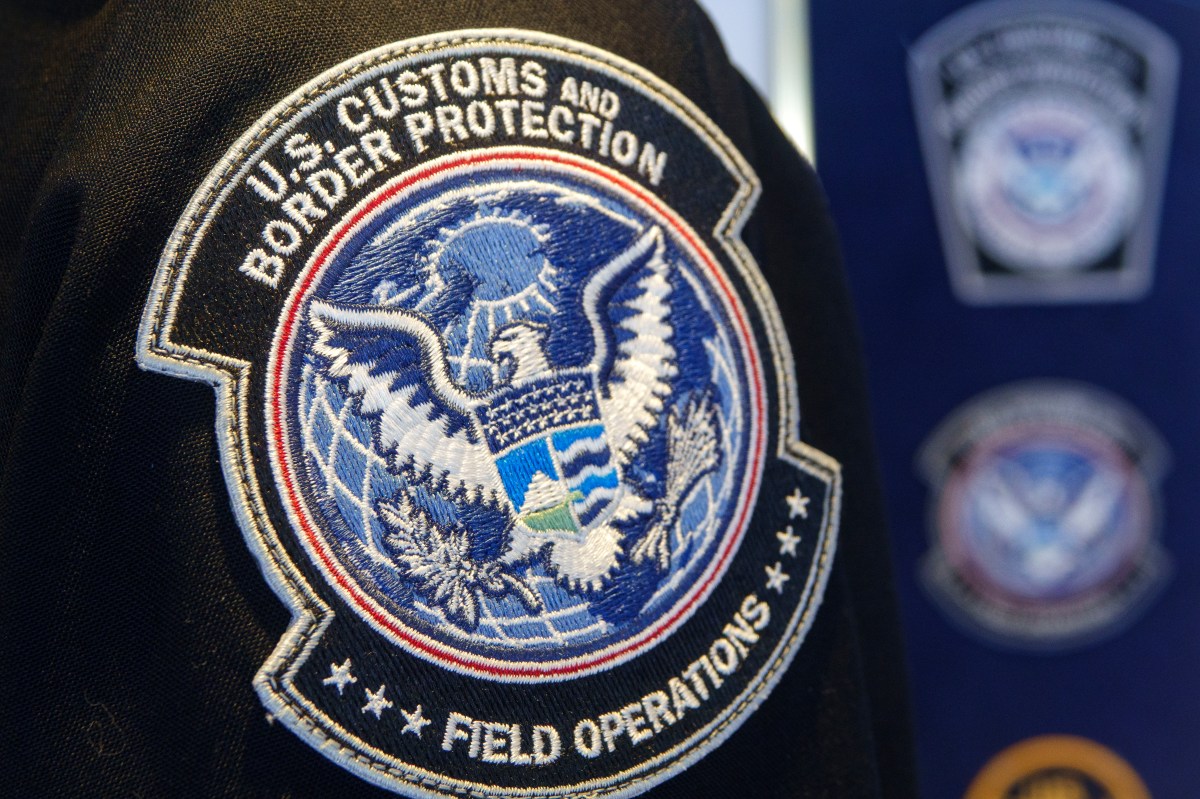
An Appeals Court panel ruled Thursday that officers working on the United States border at airports and land crossings can search travelers' phones without a warrant, probable cause, or reasonable suspicion.
The case, brought by one individual who'd had his phone searched and was later convicted of bank fraud and money laundering, tapped into a key issue around the First Amendment and the protections it offers.
The majority opinion was written by a judge appointed by President Donald Trump who was joined by a Biden appointee. Their colleague, another appointee of President Joe Biden, wrote a concurring opinion which also included some warnings.
Millions of international travelers, including American citizens and green card holders who are journalists, attorneys and others with potentially sensitive information on their phones, will likely be impacted by the ruling.
“Today's decision leaves Americans’ most sensitive information open to search at the border without any suspicion at all,” Scott Wilkens, senior counsel at the Knight First Amendment Institute, said in a statement shared with Newsweek.
“Our phones hold our private thoughts and associations, photographs of our family and friends, and a log of our nearly every movement. The First Amendment should require the government to get a warrant before searching them. We're disappointed the court declined to recognize that.”
Newsweek reached out to the Department of Homeland Security (DHS) for comment.
Writing for the majority, Judge Steven J. Menashi, the Trump appointee, said border agents can manually search a traveler's cellphone without obtaining a warrant or having individualized suspicion.
The court, which includes Hector Gonzalez and Eunice C. Lee, both Biden appointees, ruled that cellphones can be treated as property for border searches, and therefore considered "routine" alongside other personal belongings such as suitcases and notebooks.
Plaintiff Chinwendu Alisigwe was a lawful permanent resident, or green card holder, whose phone was searched at John F. Kennedy International Airport in New York City. He was later convicted of bank fraud and money laundering offenses after agents found evidence on his phone during the search.
The panel rejected arguments that the U.S. Supreme Court's 2014 ruling in Riley v. California, which generally requires police to obtain a warrant before searching a phone after an arrest, should apply at the border.
The judges also said that the First Amendment does not create a separate requirement that officers obtain a warrant before examining information stored on a person's phone.
While all three judges agreed that Alisigwe's conviction should stand, Lee sharply criticized the majority's broader constitutional holding. She argued that modern smartphones contain vast amounts of deeply personal information, so they should not automatically be treated the same as an item of luggage or anything else carried over the border.
Lee wrote that travelers returning from vacation or a business trip could be carrying medical records, financial information, personal messages, and location information which could all be browsed by a border agent under the court's reasoning.
The Knight First Amendment Institute was one of the key players in the case, along with the Reporters Committee for Freedom of the Press. They argued that border device searches can expose sensitive information carried by journalists, which should be protected.
The Second Circuit rejected that argument, finding that the First Amendment has no special rule for phones and other electronic devices at the border, and adding that granting heightened protections just for electronics would be inconsistent.
Over the past 19 months, there have been a handful of cases involving journalists having their devices searched or seized, as well as some facing immigration enforcement action, raising concerns about their freedoms under the First Amendment.
U.S. Customs and Border Protection (CBP) data has shown officers have carried out thousands of manual device searches annually in recent years, and the agency has faced multiple legal challenges over the practice.
The judges only ruled on manual phone searches, avoiding a decision on more advanced forensic searches, including fully extracting data from a device.
That leaves open an unresolved question that courts around the country may continue to wrestle with: whether deeper searches of electronic devices should require at least reasonable suspicion or a higher level of constitutional protections.
Newsweek’s reporters and editors used Martyn, our AI assistant, to produce this story. Learn more about Martyn here.
Contact Newsweek editors on this story: Gray R. Thomas