
BJP's UP Rajya Sabha picks reveal party's caste strategy for 2027 polls
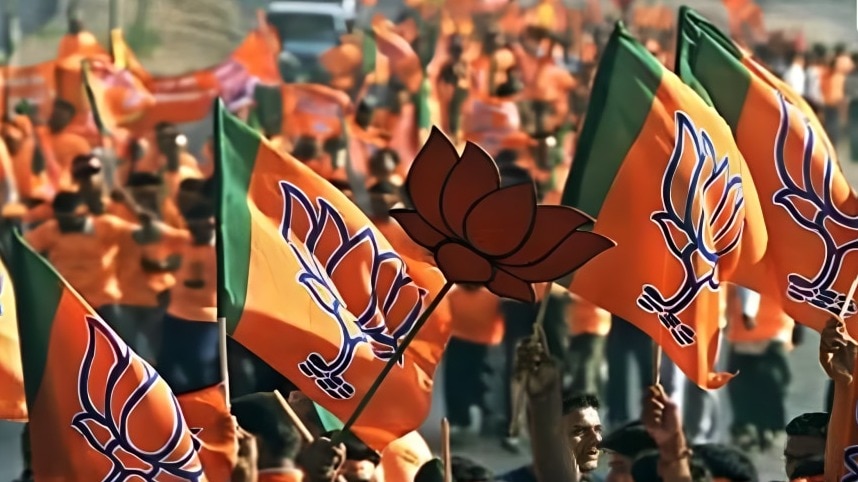
The BJP’s Rajya Sabha nominations from Uttar Pradesh are offering an early glimpse into how the party could be approaching the 2027 Assembly elections, with caste representation, regional balance, women’s presence and organisational experience all finding space in the list.
Rather than being limited to choices for the Upper House, the nominations are being viewed through the wider political lens of Uttar Pradesh, where the BJP is looking to maintain its social coalition while strengthening its position ahead of the next Assembly polls.
At the centre of the list is the BJP’s social engineering strategy, with the nominees representing OBC, Dalit and upper-caste communities.OBC REPRESENTATION GETS SIGNIFICANT WEIGHTAGE
The OBC category has received considerable representation, with three nominees coming from different OBC communities.
The list includes one Lodh, one Pal and one Kurmi candidate. Dharampal Singh, Prakash Pal and Shruti Gangwar represent different sections of the BJP’s wider OBC support base. Prakash Pal
The composition points to an attempt to retain the party’s broad OBC coalition rather than rely on representation from a single community.BRAHMIN AND DALIT REPRESENTATION
The BJP has also retained representation for the Brahmin community through Radhakant Ojha and Gopi Krishna Pandey.
Their inclusion fits into the party’s effort to maintain a balance with its traditional upper-caste support base while continuing to expand its social coalition.
Dalit representation comes through Vidyasagar Sonkar and Priyanka Singh Rawat. Priyanka Singh Rawat
Priyanka Singh Rawat’s nomination also adds another dimension to the list, with two women finding representation among the nominees.
Overall, the combination of OBC, Brahmin and Dalit candidates, along with women’s representation, gives the list a broad social spread.REGIONAL BALANCE ACROSS UP
The nominations also appear to take geographical equations across Uttar Pradesh into account.
Rohilkhand finds representation through Dharampal Singh and Shruti Gangwar, while Priyanka Singh Rawat brings a prominent face from Awadh.
Prakash Pal represents the Kanpur-Bundelkhand belt, while Ram Pratap Singh Chauhan brings a strong organisational presence from western Uttar Pradesh. Ram Pratap Singh Chauhan
The list also includes leaders associated with Purvanchal, including Vidyasagar Sonkar and Radhakant Ojha.
The regional spread suggests that the BJP has not approached the Rajya Sabha nominations purely through individual leaders or caste calculations.
The political and organisational significance of different regions appears to have also been factored in, particularly with the 2027 Assembly election approaching.ORGANISATION GETS A PLACE
One of the prominent names in the list is Ram Pratap Singh Chauhan, whose nomination carries an organisational message beyond caste or regional representation.
Chauhan has been an active organisational face of the BJP in Uttar Pradesh and has served as a state general secretary as well as the party’s in-charge for Western Uttar Pradesh.
His nomination underlines the importance being given to the party’s organisational machinery.
By sending an organisational leader to the Rajya Sabha, the BJP could also strengthen the link between its state-level organisation and its parliamentary representation.A MESSAGE AHEAD OF THE 2027 POLLS
The Rajya Sabha nominations are consequently being read as an indication of the BJP’s political calculations for the 2027 Uttar Pradesh Assembly elections.
The party appears to be seeking to preserve its existing social coalition while giving representation to different regions, communities, women and organisational groups.
The larger message from the list is that the Rajya Sabha nominations go beyond representation in Parliament. They also offer a window into how the BJP is fine-tuning its social engineering strategy in Uttar Pradesh ahead of 2027.
With OBC, Dalit and upper-caste representation combined with regional spread, women’s representation and organisational experience, the list brings several strands of the BJP’s wider electoral strategy together.- Ends
Himanshu Shekhar is a Senior Special Correspondent with India Today Hindi magazine. He reports on politics and public policy. He has had earlier stints with Tehelka, Satyagrah, Business Standard, and Dainik Bhaskar.


