Bola Matel-Okoh: Women Must Look Beyond Competence, Build Confidence to Thrive in Leadership - The Guardian Nigeria News
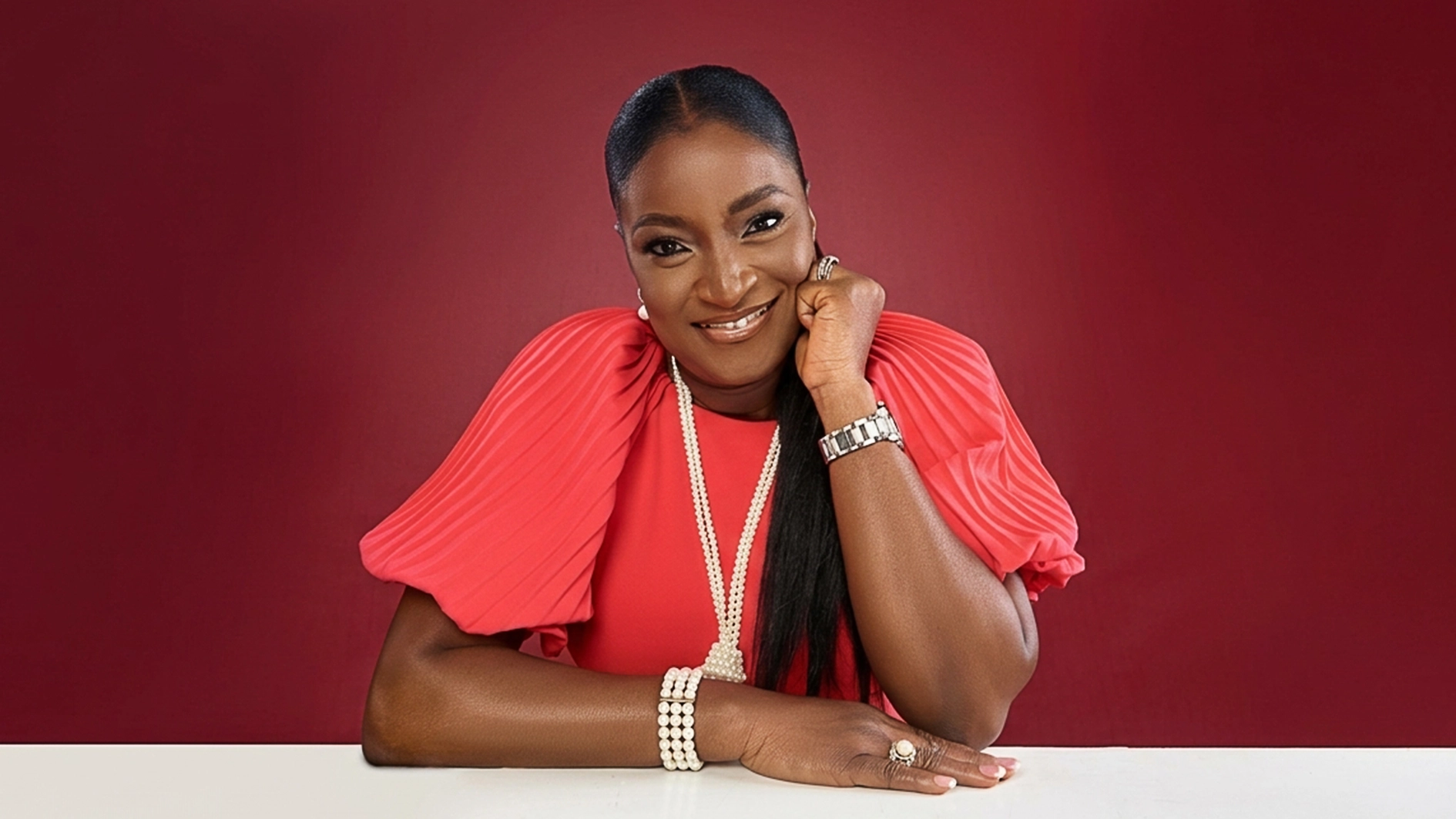
Bola Matel-Okoh is an attorney, executive coach, entrepreneur and corporate leader with over three decades of professional experience spanning law, corporate governance, business and leadership develo...
Bola Matel-Okoh is an attorney, executive coach, entrepreneur and corporate leader with over three decades of professional experience spanning law, corporate governance, business and leadership development. Admitted to both the Nigerian Bar and the New York State Bar, she has practised law in Nigeria and the United States, with experience in Admiralty Law, Immigration Law and insurance class action litigation. She is a Non-Executive Director of Wema Bank Plc and the Founder and CEO of BMO Advisory Services, where she focuses on executive coaching and leadership development, particularly for women. She is also the founder of Women’s Lifestyle Hub and CEO of Havilah Ventures. In this interview, she shares insights from her career journey, leadership, success, self-doubt and her passion for empowering women to take their place in positions of influence.
You have moved from legal practice in Nigeria and the United States to corporate boardrooms, entrepreneurship, and executive coaching. Looking back, was there ever a master plan, or did you evolve with each opportunity?
There was no perfectly mapped-out master plan. What I had was a sense of purpose, ambition, a commitment to excellence, and a willingness to keep evolving. My legal training gave me a strong foundation in critical thinking, discipline and advocacy. Moving between Nigeria and the United States expanded my perspective. Corporate leadership taught me how organisations and people really work, while the boardroom exposed me to governance, strategy and the complexities of decision-making at the highest level. Entrepreneurship and executive coaching grew out of my desire to use everything I had learned to help others, particularly women, navigate leadership with greater clarity, confidence and authenticity.
Looking back, the journey appears more connected than it felt while I was living it. Each chapter prepared me for the next, even when I could not see the bigger picture. So, I would say I evolved with each opportunity, but not passively, remaining open, prepared, and willing to step into unfamiliar spaces. I have learned that purpose is not always revealed as a complete blueprint. Sometimes it unfolds as we remain open, prepared, and courageous enough to respond to the opportunities before us.
What defining moments shaped the woman and professional you became? Beginning my career as a Legal Assistant taught me humility and the importance of learning from the ground up. I did not begin with a title or a corner office; I began by observing, working hard, and proving that I could be trusted with greater responsibility. Qualifying as a lawyer in Nigeria and later being admitted to the New York State Bar were defining achievements because they demanded discipline, resilience, and the courage to adapt to different professional environments. Working across Nigeria and the United States also taught me that competence may open the door, but character, credibility and relationships determine how far you go. Another defining moment was entering executive management and later joining the board of Wema Bank. I had to grow beyond technical competence and develop strategic thinking, executive presence, and the confidence to contribute at the highest level. Every transition stretched my identity. I learned not to define myself by one role, but by the value, integrity and impact I bring wherever I serve.
When did you realise your influence could extend beyond law? It was a gradual realisation. Law trained me to analyse, advocate and solve problems, but as my career progressed, I became increasingly interested in the people behind the organisations, their aspirations, fears, relationships and capacity to lead. In corporate environments, people often came to me for guidance that had little to do with legal matters. They wanted perspective on leadership, career decisions, confidence and navigating difficult professional situations. I began to recognise that one of my strengths was helping people see possibilities in themselves that they could not yet see. I became an executive coach at 52 and realised law had equipped me with powerful skills, but it didn’t have to define the full extent of my contribution. My influence could extend to helping women find their voices, own their authority, and lead with clarity, confidence, and authenticity.
What have you learned about power and influence? One of the most important lessons I have learned is that position may give you authority, but it does not automatically give you influence. Influence must be earned through preparation, credibility, sound judgment, and consistency. I also learned that power is most effective when it is exercised with purpose and integrity. It should not be used merely to control people or protect a position, but to advance the organisation, create opportunities, and give others a voice. Ultimately, power may secure your seat at the table, but the value you bring, the trust you build, and the courage with which you use your voice determine your influence.
What has been the most difficult chapter of your journey? One of the most difficult chapters of my life was when my mother passed away in January 2023, just one month before I was scheduled to begin the first cohort of my leadership programme. I was grieving deeply and questioned whether I had the emotional strength to proceed. Yet I also knew that the programme represented something important, an opportunity to equip women with the guidance I wished I had received earlier in my own leadership journey. I eventually launched the programme in March. Moving forward did not mean that I had stopped grieving; it meant I had decided to allow purpose to carry me through the pain. That season taught me that strength is not the absence of vulnerability. Sometimes strength is simply taking the next step while your heart is still healing. It also deepened my understanding of legacy. My mother’s life and the stories of the people she impacted reminded me that true success is not only about what we achieve, but about the lives that are better because we lived.
What did you see in accomplished women that revealed the need for executive coaching? I saw highly accomplished women who were brilliant, hardworking, and exceptionally competent, yet still questioned whether they truly belonged in the rooms they had earned the right to enter. Many had invested heavily in technical competence but had received little preparation for the unwritten realities of senior leadership, power dynamics, visibility, strategic relationships, executive presence, and the confidence to advocate for themselves. I also saw women carrying enormous responsibilities while trying to meet unrealistic expectations in every area of life. They were succeeding publicly but sometimes struggling privately with self-doubt, exhaustion, and isolation. My own experience made this need very personal. That is why I created my leadership and coaching programmes. I do not want other women to have to figure everything out alone. Competence gets women into the room; confidence, credibility, connection and strategic influence help them thrive there.
What private struggles do highly successful women bring into the coaching room? Many highly successful women enter the coaching room carrying struggles that are almost invisible to the outside world. Behind the impressive title, polished appearance, and record of achievement, they may carry self-doubt, loneliness, and the constant pressure to prove they deserve to be in the room. Some struggle with impostor feelings and live with the fear that one mistake will expose them as inadequate. Others struggle to use their voices in rooms where they are in the minority, despite being exceptionally qualified. Some are exhausted from constantly proving themselves, managing competing responsibilities, and feeling that they cannot afford to show vulnerability. There is also loneliness at the top. As women rise, they may have fewer people with whom they can speak openly and safely. They may be managing difficult boardroom dynamics, questioning their next move, or dealing with the hidden cost of being constantly available to everyone. In coaching, we create a confidential space where the title can be put aside, and the whole woman can be seen. We work on moving from self-doubt to self-trust, from seeking approval to anchoring in value, and from hiding in expertise to owning her voice and influence.
Has ambition ever become exhausting? Yes. I am naturally ambitious and competitive, and for many years, I tied achievement closely to how I measured progress. There were seasons when I was no longer simply pursuing excellence; I was trying to prove that I was capable, deserving, and strong enough. The difference can be difficult to recognise because both may look like hard work from the outside. But internally, they feel very different. Healthy ambition is energised by purpose. Proving yourself is driven by fear, the fear of being overlooked, falling behind, or not being enough. One expands you; the other eventually exhausts you. I learned to pause and ask myself: What is driving me? Is this opportunity aligned with my values and purpose, or am I pursuing it because I need external validation? Today, I still believe in ambition, excellence, and playing to win. But I also understand the importance of boundaries, rest, and alignment. I no longer believe that every opportunity must be pursued or that success must come at the expense of personal well-being.
Are women held back more by external barriers or internal conditioning? I believe it is both, and we must be careful not to use one to dismiss the other. External barriers are real. Women still face bias, unequal access to influential networks, limited sponsorship, and systems that were not originally designed with their realities in mind. We must continue challenging those structures. At the same time, years of social conditioning can cause women to minimise themselves even when an opportunity becomes available. Many have been taught to wait until they feel completely ready, avoid appearing too ambitious, soften their opinions, or let their work speak for itself. The problem is that excellent work does not always speak loudly enough in competitive environments. Women must learn to articulate their value, build strategic relationships, pursue visibility, and occupy space without apology. We need institutional change and internal transformation. Opening the door is not enough if a woman has been conditioned to believe she should not walk through it. But confidence alone cannot overcome every structural barrier. Sustainable progress requires both.
What does Bola Matel-Okoh understand about success today that the younger Bola could not? The younger Bola understood success largely through achievement, qualifications, recognition, career progression, and the ability to perform at a high level. Those things still matter, but today my definition of success is much broader and deeper. Success is alignment: knowing who you are, understanding what matters to you, and ensuring that your decisions reflect those values. It is having the courage to evolve, even when the next chapter looks different from everything you have done before. Success is also an impact. It is not only the positions I’ve held, but the women I have helped find their voices, the leaders I have equipped, and the opportunities I have created for others. Today, I value well-
being, relationships, faith, purpose and legacy alongside professional accomplishment. I understand that you can reach the summit and still feel unfulfilled if you lose yourself on the journey. The younger Bola wanted to prove what she could achieve. The woman I am today cares more about who I am becoming, whom I am lifting, and what will remain after I am gone.