Bracell secures voluntary certification for EU deforestation rules - Valor International
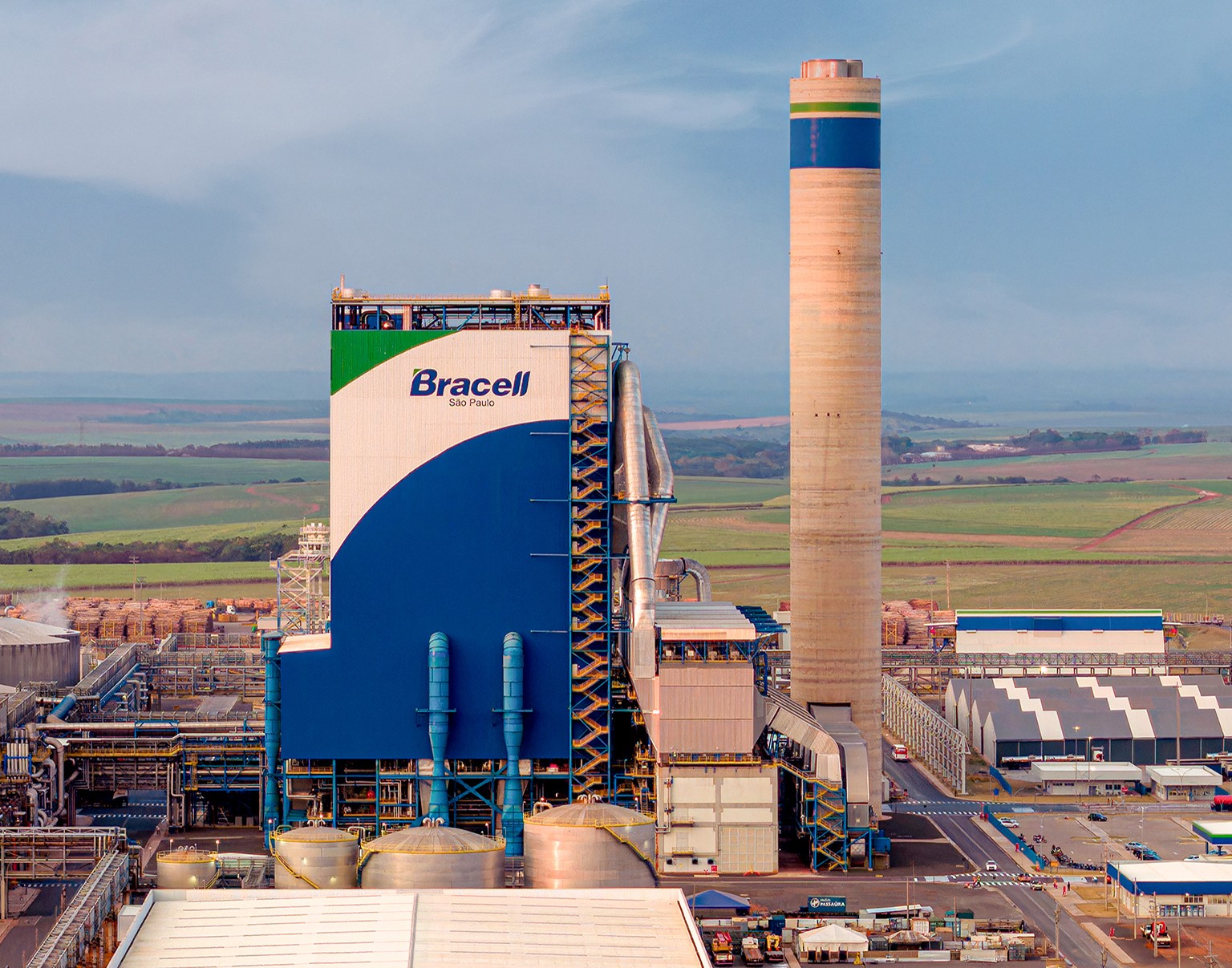
Dissolving and specialty pulp producer Bracell has become the first company operating in Brazil to obtain a voluntary certification from PEFC, one of the leading international systems setting standards and criteria for audits of the forest sector to verify sustainable forest management. The certification was created to help exporters demonstrate compliance with the European Union Deforestation Regulation (EUDR).
The certification does not replace the obligation each company will have to meet before European regulatory authorities. Rather, it is intended to help companies organize and systematize the information they will need to provide to demonstrate that their products do not come from deforested areas, as required by the European law, which enters into effect on December 30.
PEFC told Valor that Bracell, which already holds chain-of-custody certification, has obtained the organization’s additional “PEFC-EUDR” module. “This is a voluntary certification that helps companies prepare for EUDR requirements and makes it easier for them to provide information to their customers in the European market,” the organization said in a statement.
The module builds on the existing chain-of-custody framework and adds specific requirements to support the due diligence that the EUDR will demand. These include geolocation data for production areas, environmental and labor compliance information, and assessments of the risks of deforestation and forest degradation.
Companies that do not opt for this certification remain free to demonstrate compliance with the regulation through other means, such as implementing their own due diligence systems. However, Valor has learned that other companies operating in Brazil are also seeking to obtain the additional certification.
Bracell expects the certification to speed up the scrutiny process that the European Union will apply to imported products. “This is a voluntary certification that strengthens our compliance with EUDR requirements and involves an independent third-party audit to verify specific aspects of our compliance with the regulation,” said João Augusti, the company’s sustainability and certification manager.
The goal is to strengthen internal controls, not to shorten the due diligence process required by the regulation, since certification alone does not guarantee faster processing. “But things will move faster because the company will not delay the delivery of any information, since [the customer] will have everything digitized. The product arrives, and the customer will be able to enter two numbers and access all the information required by the regulation,” he said.
Owned by Indonesia-based Royal Golden Eagle (RGE), Bracell has a sister company operating in Indonesia, Asia Pacific Resources International Limited (April). For years, both RGE and April have faced allegations from nongovernmental organizations that they have failed to honor zero-deforestation commitments and have weakened their sustainability policies. April is still trying to complete a lengthy remediation process with another international certification system, the Forest Stewardship Council (FSC), following its disassociation over outstanding environmental and social issues. The process was halted last year, and the suspension was maintained this year because of changes to April’s sourcing and sustainability policies.
Asked whether moving ahead with the European market’s due diligence system was an attempt to distance itself from its parent company’s image, Bracell’s Brazilian operation said the decision was entirely its own. “It was a decision made here in Brazil, together with Bracell’s stakeholders. Meeting the requirements of our European market is our own business and has no connection to the situation involving the other companies,” Augusti said.
According to the executive, the main difference between this certification and Bracell’s standard chain-of-custody label is the requirement to link detailed geographic data and a comprehensive package of environmental and social evidence to the product through final delivery.
“The standard chain-of-custody framework verifies traceability, whether certified and controlled wood is being used without mixing, and our performance at the farm level in terms of environmental and labor standards,” he said. “The EUDR module adds the requirement that the entire polygon—the geographic boundary of the area where the eucalyptus is harvested—be provided along with the product delivered to the customer. That is the key point, because the customer and the EUDR system will use those polygons to check whether deforestation took place in the area after 2020.”
Despite the scale of the compliance effort, Europe is not Bracell’s largest pulp market. That position belongs to Asia. Last year, European Union countries accounted for less than 10% of the company’s pulp sales, while Asia represented about 70%. In paper, however, Europe accounted for nearly one-fifth of consumption from the company’s Lençóis Paulista mill in São Paulo state, half of whose output is shipped to Latin America. Other paper and diaper facilities in Bahia and Pernambuco serve the domestic market.
The company considers Europe a strategic market because buyers there tend to pay higher prices than those in other regions. Bracell exports kraft pulp, used to make printing and writing paper, as well as dissolving pulp, which is used in textiles, wet wipes, and even food products, to countries including Germany, Poland, Italy, and Greece. Its customers include manufacturers, end buyers, and distributors that supply the raw material to smaller converting companies.
“Europe is a significant market, as it has the most demanding requirements and also pays very well for our products. Prices in Europe are usually higher,” Augusti said. He added that adopting the voluntary module signals a willingness to comply that could help the company enter new markets, although the impact is difficult to quantify. “Having a presence in the European market is important because it qualifies us to do business in any other market in the world.”
This article was translated from Valor Econômico using an artificial intelligence tool under the supervision of the Valor International editorial team to ensure accuracy, clarity, and adherence to our editorial standards. Read our Editorial Principles.