Brazil election: Early count puts Bolsonaro ahead of Lula
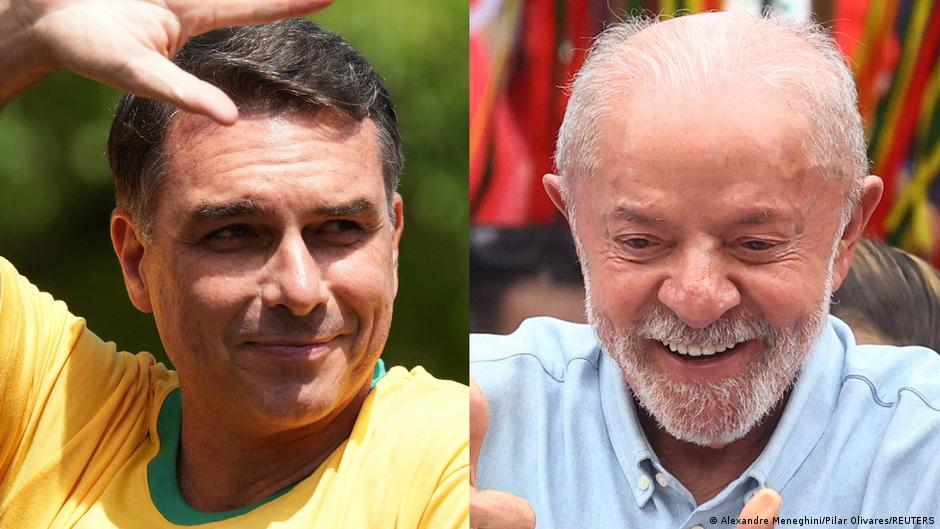
The early count in the Brazilian presidential election puts Flavio Bolsonaro (left) ahead of Luiz Inacio Lula da SilvaImage: Alexandre Meneghini/Pilar Olivares/REUTERSAdvertisementPolls have closed in Brazil's presidential election on Sunday, with leftist President Luiz Inacio Lula da Silva seeking a fourth non-consecutive term and Senator Flavio Bolsonaro seeking to continue the right-wing populist movement started by his father, Jair Bolsonaro.
Because Brazil uses electronic voting machines, the results are expected to be available within several hours of the polls closing. Voters can follow the tally in real time on the Electoral Court’s website.
The early results showed a trend favoring Bolsonaro. With 10% of the ballots processed, he has received 51% of the vote. Lula has 40.8%, according to the court.
The vote is expected to be a tight race between the two leading candidates, with neither likely to win more than 50% of the vote to avoid a runoff that would take place on October 25.
Lula and Bolsonaro wrapped up their campaigns on Saturday in Brazil's economic powerhouse state of Sao Paulo.
The 80-year-old Lula capped off his campaign with a tour through the city of Sao Paulo, vowing to "defeat the far right."
Organizers said some 150,000 of Lula's supporters turned up for the rally in Brazil's largest city.
Lula has campaigned on continuing his left-leaning Workers' Party platform, comprising welfare programs, state-funded development and income redistribution.
"The people will have to choose between strengthening the democratic regime and barbarism ... between progress and backwardness," he said as he cast his ballot on Sunday.
Flavio Bolsonaro, 45, has served as the Liberal Party's senator for Rio de Janeiro since 2019. On Saturday, he led a motorcycle parade through Sao Paulo's countryside cities of Santa Barbara d'Oeste and Americana.
He also held up a portrait of his father, while the crowd shouted "mito" — a Portuguese word for "legend" that Jair Bolsonaro's supporters use to refer to him.
The right-wing Bolsonaro has campaigned on hardline security policies and tax cuts, emphasizing high cost of living under Lula, who he has slammed as "incompetent."
"Brazil needs change," the son of the former president said as he cast his vote. "Brazil cannot bear any more suffering, such as high taxes, so many women killed."
The elder Bolsonaro is currently serving a 27-year sentence in prison for attempting a coup to overturn his loss to Lula in the 2022 presidential election. Flavio Bolsonaro has vowed to pardon his father if elected.
Lula's team has cast the Bolsonaro movement as a threat to Brazil's sovereignty, pointing to Flavio and Jair's ties with US President Donald Trump, who last year slapped a 50% tariff on Brazilian imports in response to Jair Bolsonaro's coup trial. The US president called the case a "witch hunt."
The younger Bolsonaro has said in interviews he is "more moderate" than his father, who he has nevertheless said will remain "my compass, my point of reference."
Policies where both Bolsonaros are similar include relaxed gun control laws and skepticism of human-caused climate change.
Trump has not endorsed the senator, but has said he is watching the election "very closely."
Brazil finds itself politically divided, and campaigning has been bitter, with online operations from both sides seizing on every gaffe, accusation and rumor, quickly producing slick videos or AI-generated images for social media.
In September, it was revealed Bolsonaro is under investigation for alleged corruption, money laundering and tax evasion tied to the financing of a biopic about his father. He has denied any misconduct.
The latest polling for the first round of voting shows Lula at 46% and Bolsonaro at 45%, according to the Brazilian data intelligence and public opinion research firm Quaest cited by Reuters news agency.
In the case of a run-off, the Quaest poll shows Lula at 42% and Bolsonaro at 44%.
In 2022, Lula beat Jair Bolsonaro by only 1.8 percentage points.
Along with voting for president, Brazil's 160 million registered voters are also choosing other lawmakers, governors, and some senators.
If you rely on our team for trusted reporting, please take a moment to select us as your Preferred Source on Google, so you'll always see our verified news first.