
Brazil, South Korea seek to restart Mercosur trade deal talks - Valor International
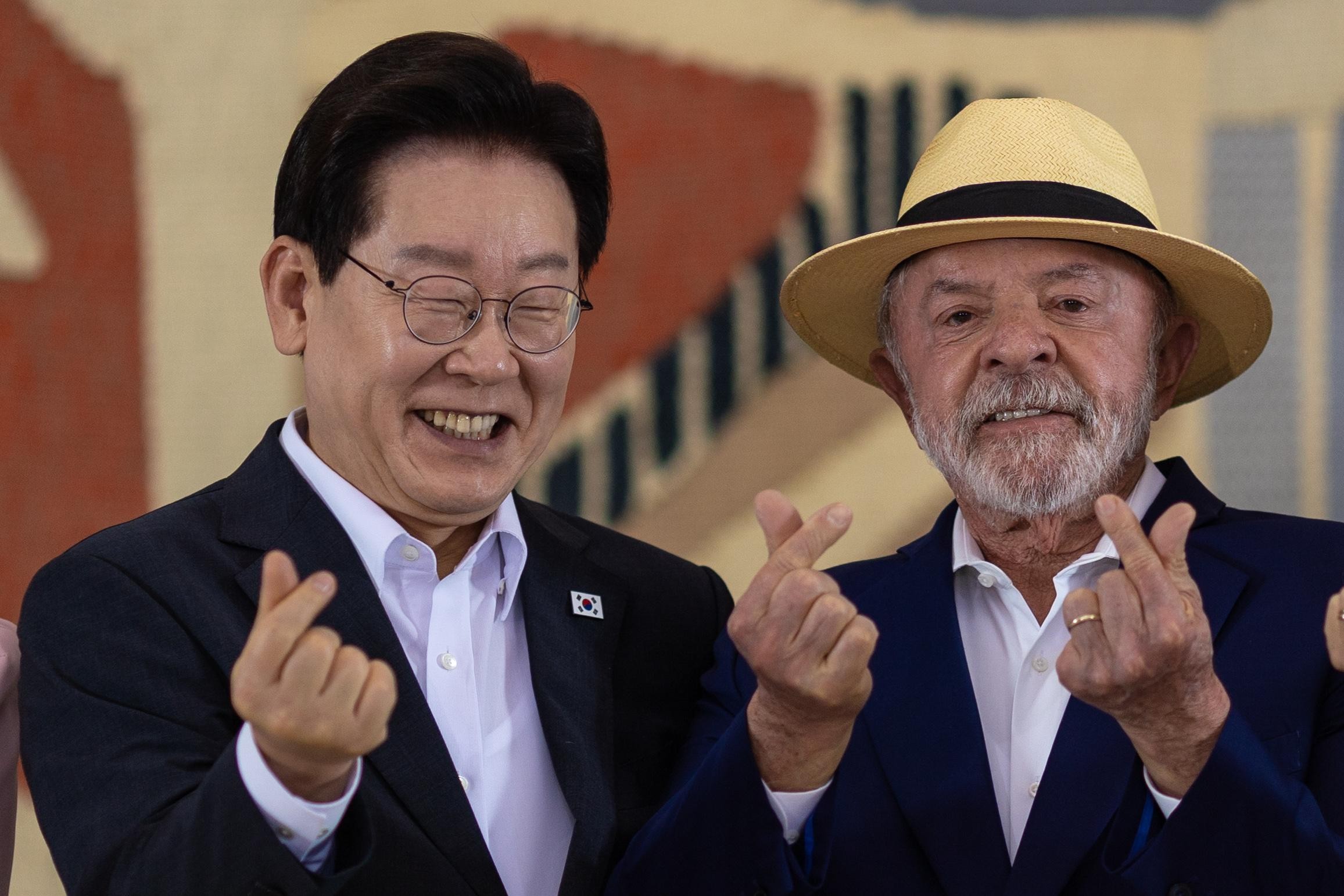
Seeking to expand access to new markets, President Lula announced on Monday (27) that Brazil and South Korea have agreed to establish a working group to help revive negotiations on a trade agreement between Mercosur and the Asian country, which have been stalled since 2019. He also confirmed that a South Korean sanitary inspection mission will visit Brazilian meatpacking plants in August, a step considered crucial to opening South Korea’s market to Brazilian beef.
Vice President Geraldo Alckmin will coordinate the Brazilian side of the working group on the trade agreement, while the South Korean government is expected to appoint “someone it trusts” as its representative in the coming days, Lula said.
“After 17 years of negotiations, we now have a concrete commitment for the sanitary certification mission to Brazil next month, a decisive step toward granting Brazilian meatpacking plants access to the South Korean market,” Lula said alongside South Korean President Lee Jae-myung during the South Korean leader’s state visit to Brazil.
Lula did not provide details about the South Korean sanitary mission. The inspection is regarded as a key milestone because it will allow South Korean authorities to verify whether Brazilian producers comply with the sanitary and quality standards required for importing Brazilian beef.
Access for Brazilian beef to the South Korean market has long been regarded as one of the main obstacles to a trade agreement. South Korea maintains stringent sanitary standards for imported animal products, an issue that is particularly sensitive for Brazil, Argentina, and Uruguay, where beef exports account for a significant share of overseas sales.
As Valor reported in June, South Korean farmers have resisted greater competition from Mercosur suppliers, echoing concerns raised by European agricultural producers during negotiations for the Mercosur-European Union trade agreement. Another hurdle is concern among some industrial sectors about increased competition from lower-priced South Korean manufactured goods.
During his remarks, Lula highlighted the growth in bilateral trade despite rising unilateralism and protectionism in the global economy. In 2025, trade between Brazil and South Korea totaled $10.8 billion. According to Lula, that figure remains “small considering the size of South Korea and Brazil.” “Starting with today’s meeting, next year our trade balance will be much larger,” he said.
The two countries signed five memorandums of understanding covering cooperation in space exploration, industrial technology, energy, education, and sports. “There is tremendous room for further progress,” Lula said, referring to investment and broader bilateral cooperation.
Lee said Seoul intends to deepen its partnership with Brazil. “Through this agreement, we will create a stable supply base while strengthening mutually beneficial cooperation. At a time of trade uncertainty, a Brazil-South Korea agreement cannot wait—it must happen now,” he said.
This article was translated from Valor Econômico using an artificial intelligence tool under the supervision of the Valor International editorial team to ensure accuracy, clarity, and adherence to our editorial standards. Read our Editorial Principles.


