
Brazil’s rare earth exports plunge as sole producer expands - Valor International
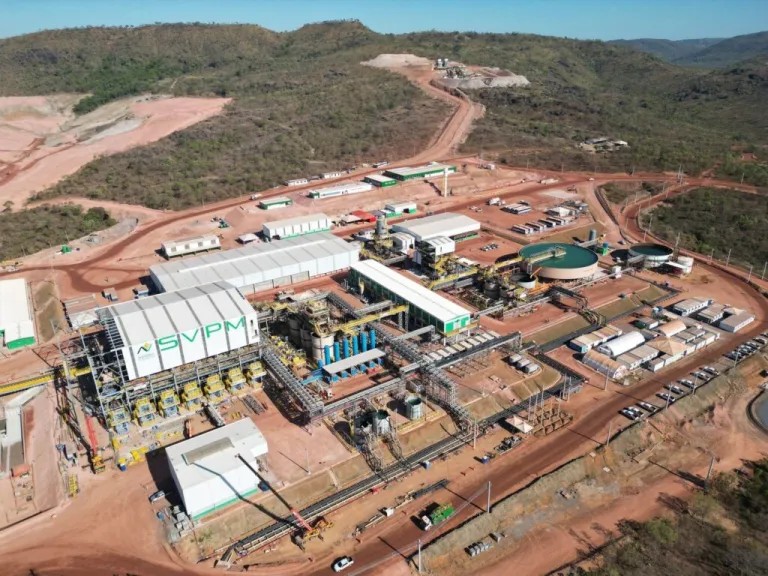
Brazil’s rare earth exports have plunged nearly 80% this year after reaching a record in 2025, as the country’s only commercial producer temporarily scaled back operations to expand capacity and improve its processing technology.
The decline comes as Serra Verde, Brazil’s sole operating rare earth miner, moves under U.S. ownership and prepares to increase production of minerals critical to advanced manufacturing and defense technologies. The company resumed commercial-scale production after completing the first phase of its expansion in September and began shipments in October.
According to data from Brazil’s National Mining Agency (ANM), rare earth exports totaled $3 million from January through November 17, compared with $14.6 million over the same period last year. China accounted for about $12 million of the 2025 total, but Brazilian shipments to the Chinese market have fallen to almost zero this year.
Estonia received $710,000 worth of Brazilian rare earth exports in 2026. It is one of the few European countries, alongside France, with facilities capable of processing rare earth materials. Neo Performance Materials operates its Silmet plant in Sillamäe, Estonia, while Solvay processes rare earths in La Rochelle, France.
Fernando Landgraf, a professor at the University of São Paulo’s Polytechnic School, said the decline in shipments may partly reflect technical challenges associated with Serra Verde’s efforts to scale up production.
“[It could be] a technical issue involving adjustments to the rare earth concentration process. When mining volumes increase, it is normal to discover that the figures you were working with—such as how much concentrate can be extracted from each tonne of clay—have changed,” he told Valor.
Landgraf said changes to Serra Verde’s supply contracts with Chinese buyers may also have contributed to the decline in exports to China. Last year, the mining company told Reuters that it had shortened the duration of those contracts. “That may indeed have had some influence this year,” he said.
Serra Verde confirmed that it had reduced production to carry out the first phase of its expansion project. The work was designed to improve the quality of its final product, mixed rare earth carbonate—an intermediate material that requires further processing to separate the individual rare earth elements—while also reducing production costs.
“We successfully completed this phase in September. After that, we resumed commercial-scale production and began shipping the carbonate in October. The first sales took place in November,” Serra Verde President Ricardo Grossi said in a statement.
Grossi said production resumed as benchmark rare earth prices outside China, which the company uses as a reference, were at record levels.
“Our goal is to reach an annualized production rate of approximately 4,000 metric tonnes of total rare earth oxides in the second quarter of 2027,” he said.
The second phase of the expansion is also progressing and is expected to be completed in the third quarter of next year.
“The target is to reach an annualized production rate of about 6,400 metric tonnes of total rare earth oxides by the end of 2027,” Grossi said.
U.S.-based USA Rare Earth acquired Serra Verde this year and counts the U.S. government as a financing partner and strategic backer. Landgraf said the transaction was important for Washington from a geopolitical standpoint.
“Heavy rare earth minerals [which have higher market values and are important for manufacturing permanent magnets] are critical for the United States, particularly dysprosium and terbium, because the country’s major rare earth mine, Mountain Pass, does not have high concentrations of those elements,” Landgraf said.
Under the merger agreement, all output from the initial phase of Serra Verde’s operating mine will be committed to a $1.55 billion special-purpose vehicle (SPV) financed by the U.S. government, under a 15-year exclusive offtake agreement signed by USA Rare Earth.
“Our 15-year supply agreement covers phase 1 production, and deliveries will follow the production ramp-up and the agreed shipment schedule. In other words, all of that output already has a designated destination,” Grossi said.
The merger was completed in September, and Serra Verde began exporting to the United States last month. According to a statement from USA Rare Earth, the company recorded its first revenue from those shipments this month.
“We are also conducting a technical and economic assessment of a possible expansion of Phase 2, which could double raw ore production from the same deposit,” Serra Verde’s president added.
This article was translated from Valor Econômico using an artificial intelligence tool under the supervision of the Valor International editorial team to ensure accuracy, clarity, and adherence to our editorial standards. Read our Editorial Principles.
