BRICS leaders call for reform of global governance system - IOL
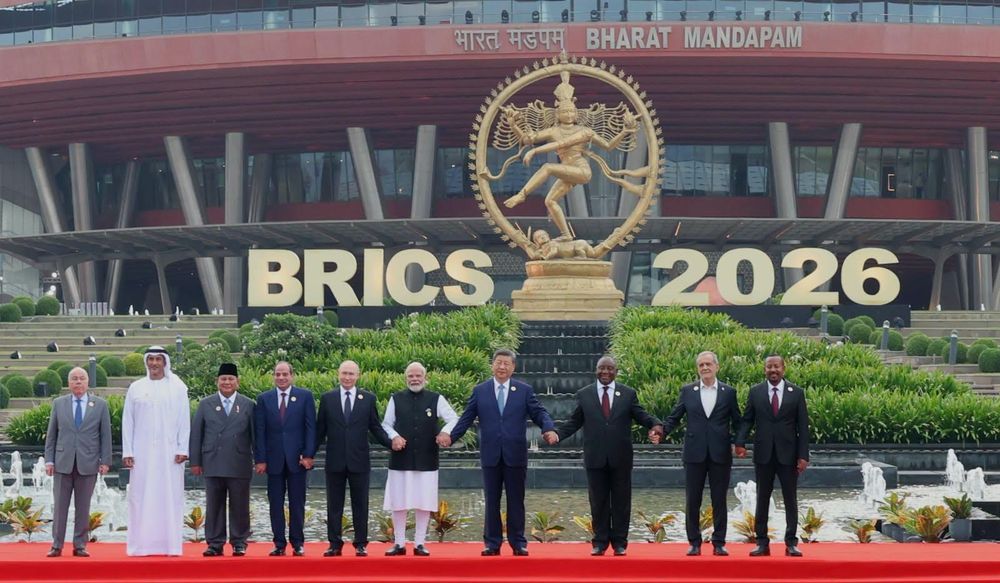
BRICS leaders reaffirm their commitment to a fairer and more representative international order.
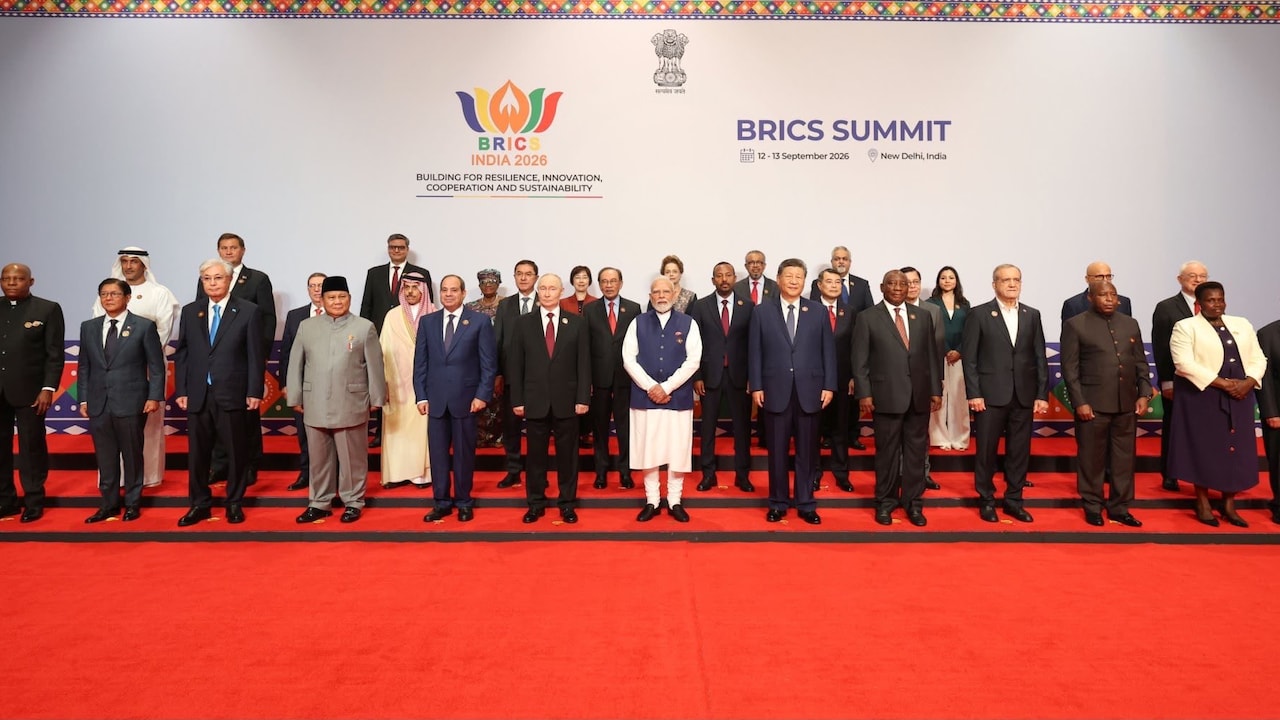
Amid escalating geopolitical tensions and weakening international systems, leaders at the 18th BRICS Summit in India called for urgent global governance reform, reaffirming their commitment to multilateralism, the UN Charter, and a fairer voice for the Global South.
The 18th BRICS Summit was held in India over the weekend under India’s chairship theme, “Building for Resilience, Innovation, Cooperation and Security”.
The summit took place against the backdrop of continuous geopolitical tensions, the weaponisation of tariffs, the withdrawal from multilateral bodies by the US, and the weakening of the multilateral system.
The New Delhi Declaration, a summary of the Summit's key resolutions, was released yesterday with a focus on global governance and strengthening multilateralism, with calls for the reform of major international organisations such as the United Nations (UN) Security Council, the International Monetary Fund (IMF), the World Bank, and the World Trade Organisation (WTO), so that developing countries and the Global South can have a stronger, fairer voice and greater representation.
The declaration also stresses the importance of defending multilateralism and ensuring that international law and the UN Charter are respected and applied equally to all nations without double standards. Furthermore, it supports an open, fair, and rules-based global trading system, and condemns unilateral economic sanctions and protectionist trade barriers that harm developing economies.
South Africa’s High Commissioner to India, Professor Anil Sooklal, said that a strong message emanating from the declaration and the leaders is that “BRICS must now start focusing on practical deliverables that directly impacts on empowering our people, growing our economies, and addressing issues of underdevelopment, sharing technologies.”
He said the need for accelerated reform of the global governance architecture, especially the United Nations and its Security Council was pronounced strongly in the declaration. Moreover, the reform of financial institutions, especially shareholding in the IMF, to increase shareholding of developing countries and the reform of the WTO to ensure that it addresses global trade challenges.
“They speak out strongly against unilateral coercive measures that are being imposed, financial measures, tariffs, and the need for us to reinforce multilateralism,” Sooklal said.
He highlighted that BRICS is at the forefront in shaping a multipolar world and the move away from one or two countries dominating the global scene.
"They want a more equitable, fair, just global community underpinned by international law and the purposes and principles of the UN Charter."
Sooklal said the summit declaration also speaks strongly in terms of addressing global conflicts and reiterated BRICS' commitment to a two-state solution to the Israeli-Palestinian conflict, and to address the humanitarian crisis in places like Gaza, Sudan and the situation in West Asia with Iran.
“One of the positive developments of this summit, because many were skeptical that two BRICS members, Iran and UAE, would not be able to work towards a consensus in the BRICS declaration, but it demonstrated that BRICS is able to bridge challenges and find solutions,” Sooklal said.
President Cyril Ramaphosa yesterday warned that the durability of the UN is threatened by overt violations of the UN Charter, stressing that BRICS must remain a united voice for reform and a bridge across geopolitical divides.
“South Africa advocates a predictable global system based on international law, with the UN Charter at its centre… To give strength to the law, there must be accountability for atrocities,” Ramaphosa said at the summit yesterday.
He said South Africa calls for comprehensive, representative, and transparent UN Security Council reform while supporting the broader UN system’s renewal across peace, security, human rights, and socio-economic development.
“First, BRICS must remain a united voice for reform. Second, BRICS should demonstrate that multilateral cooperation delivers practical results. Third, BRICS should help shape approaches to global governance that are fairer, more accountable and development-oriented. Fourth, BRICS is a bridge across geopolitical divides. In a fragmented world, dialogue matters more than confrontation,” Ramaphosa said.
He added that they must strengthen multilateralism through reform and action, and ensure the voices of Africa and the Global South are fully reflected in shaping the future international order.
Former diplomat and international relations analyst Dr Kingsley Makhubela highlighted key takeaways from the BRICS New Delhi Declaration, noting its explicit calls for UN Security Council reform.
He said the declaration also shifts terminology to “emerging and developing countries” (EMDCs) and places greater emphasis on addressing the root causes of Middle Eastern conflicts, supporting the peaceful use of nuclear energy, and condemning attacks on International Atomic Energy Agency (IAEA)-supervised sites.