
BSE marks 150 years at the heart of India’s capital markets - IOL
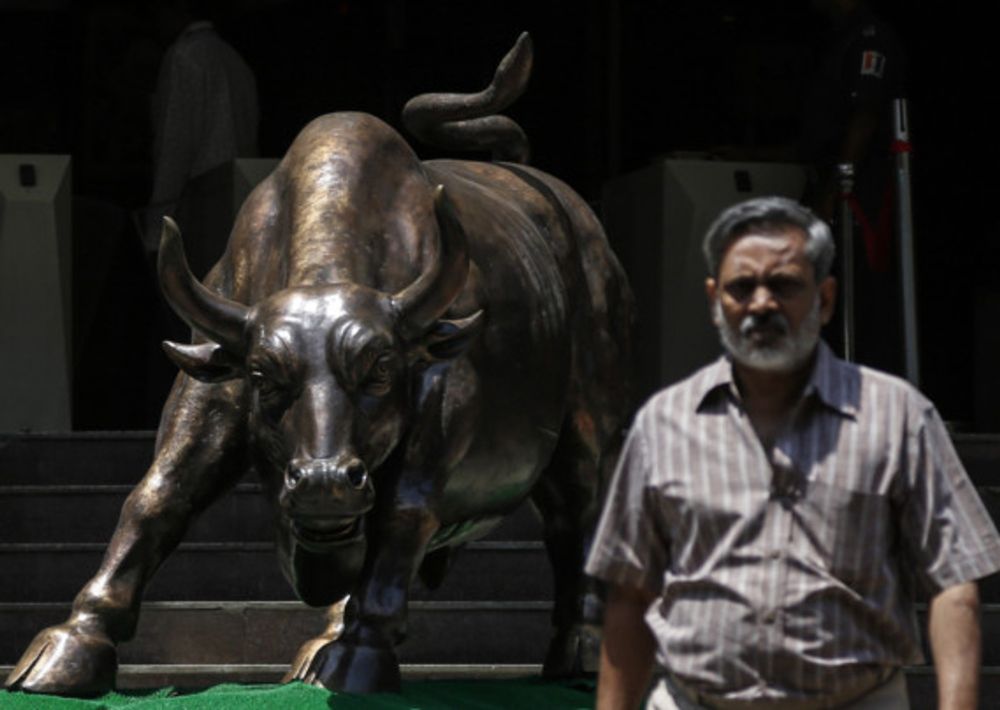
Bombay Stock Exchange (BSE) stands as one of Asia's oldest stock exchanges but also holds the distinction of being the world's largest by the number of listed companies, while a bronze bull sculpture outside its premises has become a beacon of resilience and strength. building in Mumbai April 1, 2014.
As the world continues to evolve, so too does the Bombay Stock Exchange, referred to as BSE. Last year, the BSE proudly commemorated its 150th anniversary, solidifying its position as a cornerstone of inclusion for developing India and the global financial landscape. Located in Mumbai, India's financial capital, the BSE’s legacy is rich with remarkable milestones that reflect both historical significance and modern advancements.
Established in 1875, BSE is not only Asia's oldest exchange but also the world's largest by the number of listed companies. Its role in shaping India’s capital market has been pivotal, providing a robust platform for capital raising that has benefited numerous enterprises within and beyond India's borders.
Its financial index, called the BSE Sensex, launched 40 years ago, is also the first stock market index of the country, which is tracked by investors across the globe and considered a barometer for the growth of the Indian Economy.
Through its rigorous financial systems, BSE provides an efficient and transparent market for trading in equity, debt instruments, equity derivatives, currency derivatives, interest rate derivatives, mutual funds, stock lending and borrowing.
This week, following the conclusion of the 18th BRICS Summit in New Delhi, a delegation of journalists from member countries took a close look at the BSE headquarters in Mumbai. Here, managing director and CEO Sundararaman Ramamurthy offered a historical perspective on the exchange’s evolution and significance within the global financial domain.
He further highlighted India's rich trading heritage, which stretches over two centuries, with its roots in financial trading dating back to ancient times, although documented records mainly began in the 19th century.
"India has more than 200 years of documented trading history, notwithstanding the non-documented history. It has seen numerous changes, including the 90s, which saw the digitisation of exchange, where brokers used to get to get here and make lots of noise in this very hall. You are sitting in that hall where brokers used to shout while trading," he stated.
Over the years, the veteran financial markets guru stated that despite a challenging stock and financial market globally, BSE continues to show signs of resilience.
"There is a historical significance in how trading in the stock market used to exist. Trading from under the trees to these halls has now migrated to the broker's office, as well as through app-based smartphones, which has also pushed up trading hours and the number of investors, which have also gone up," said Ramamurthy.
Today, the BSE stands at the forefront of the financial industry, with its indexes linking to over $21 trillion in assets under management as of December 31, 2025. The BSE’s esteemed legacy in fostering a transparent market for trading across various asset classes cements its reputation as a beacon of economic growth in India.
Echoing Ramamurthy's sentiments, BSE's chief policy strategist, Ruresh Kunde, stated that BSE's spirit of resilience has allowed it to continue to grow its market share, which now includes 13,000 Small to Medium Enterprises (SME), 5,100 listed companies, and 58 mutual funds.
"As one of the oldest stock exchanges in the world, our market share is also growing very fast. While our BSE Sensex index is now 40 years old, this is despite the unique challenges faced by India’s economy and our population; the markets have shown an inspiring ability to adapt and thrive."
