
Bukit Timah landed property estate resident's request to remove security barrier rejected, ordered to pay S$8,000 in legal costs - Mothership
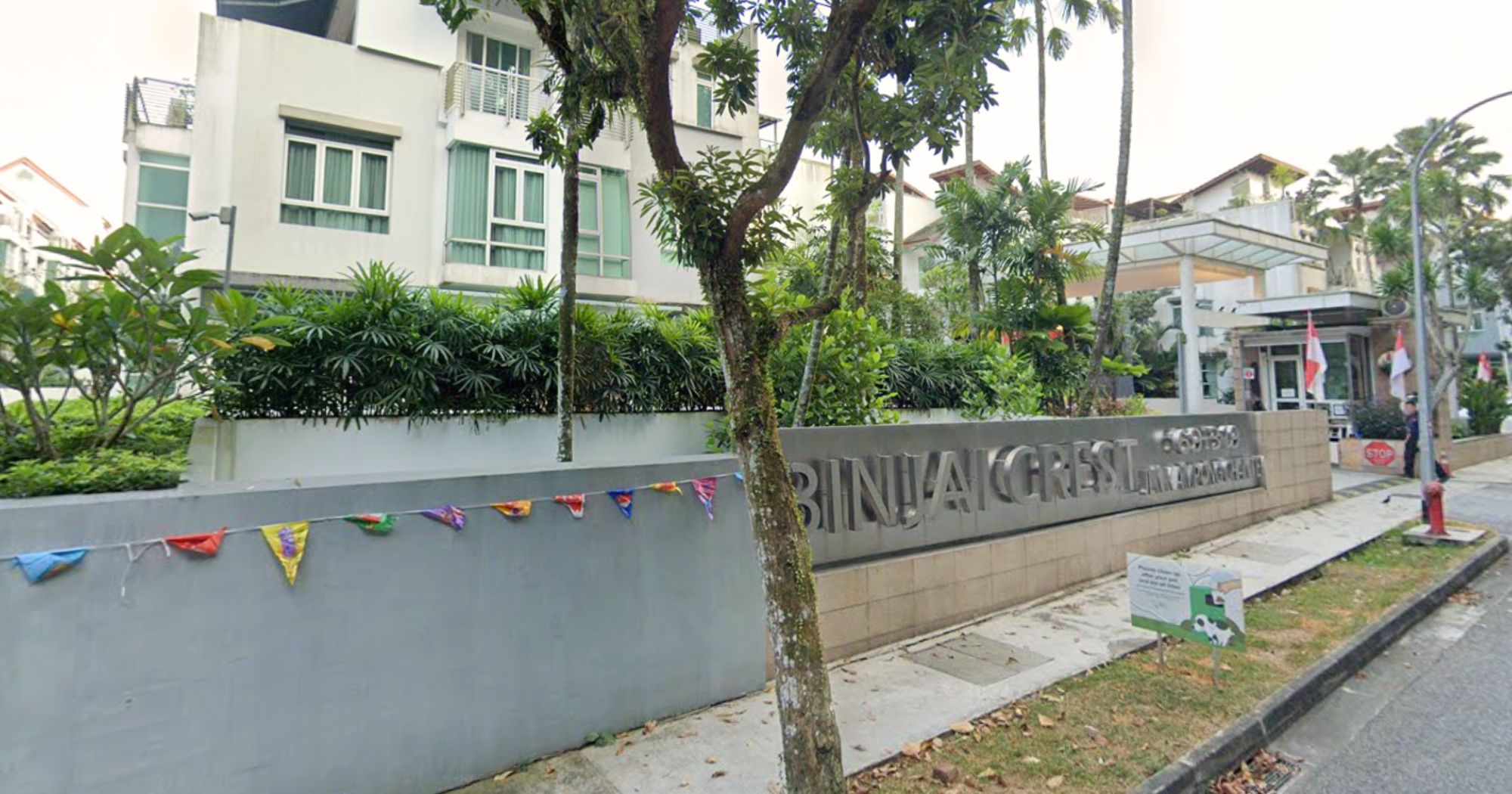
Tay also requested the MCST to provide a large number of documents, which range from 2021 to the present day, within seven days.
To save on security costs, the Management Corporation Strata Title (MCST) of Binjai Crest, a landed property estate in Bukit Timah, decided to reduce the number of night security guards from two to one.
They then installed a security barrier with an intercom that can be used to contact the security service provider’s command centre.
A resident, Tay Jia Sheng, requested that the MSCT remove the barrier on the grounds that there was no special resolution to approve its placement.
A special resolution means that at least 75 per cent of the share value represented by the valid votes cast by owners who are present in a general meeting must vote in favour of a decision.
However, the Strata Titles Board (STB) ruled that the MSCT was acting to "control, manage and administer the common property", and did not allow the resident's claim.
The STBs are tribunals established under the Building (Strata Management) Act to mediate and hear applications between subsidiary proprietors and the management corporation, or between subsidiary proprietors.
These involve matters relating to certain disputes arising in respect of strata titled property and orders for collective sales of property under the Land Titles (Strata) Act.
Binjai Crest is a 125-unit strata landed development located at 319 Jalan Kampong Chantek.
A judgment released on Aug. 4 revealed that a complaint was lodged against Tay by a former council member of the MCST following a dispute about the security barrier.
He had claimed that this complaint was lodged using his personal information that was allegedly obtained in breach of confidentiality.
He sought four orders against the MCST, including to remove a security barrier installed on the common property at the main entrance of Binjai Crest as it was installed without a special resolution.
However, the board noted that the MCST had erected the barrier for the purpose of controlling, managing, and administering the common property, and did not require a special resolution for this.
The installation was intended to reduce costs, allowing the MCST to save around S$30,000 annually by reducing the number of security guards at night from two to one.
Tay also requested the MCST to provide a large number of documents, which range from 2021 to the present day, within seven days.
While the board acknowledged that the MCST is obligated to make requested documents available for inspection, it noted that Tay had not specified the exact documents he wanted.
The board stated that the MCST is not required to sieve through the documents to find the information Tay needs on his behalf.
As such, it ordered the MCST to provide the relevant documents within 21 days, and allow Tay to review them within the next 30 days to select, extract, or copy the necessary information himself.
Tay also requested MCST fix the lights in the estate, claiming that there is a “systemic and persistent state of defective lightings in Binjai Crest”.
The board allowed this application, ordering the MCST to inspect the lighting in the common property and rectify all the defective lighting.
The last order Tay made was for the MCST to comply with the posting of meeting minutes of general meetings, claiming that they had posted draft minutes instead of the finalised and signed-off ones.
The board did not find that there was any breach by MCST in this case.
Overall, the MCST successfully defended two of four orders, while Tay succeeded on one order. Neither party fully succeeded on the order involving the documents.
As such, Tay was ordered to pay the MCST S$8,000 in costs.
