
Burke says the quiet part out loud: Immigration and housing are linked
The sands have shifted rapidly in Australia’s migration debate and Labor has belatedly sniffed the wind.
Last year vanquished Liberal leader Peter Dutton was being assailed by party moderates for saying loudly that high migration was contributing to elevated rents and property prices.
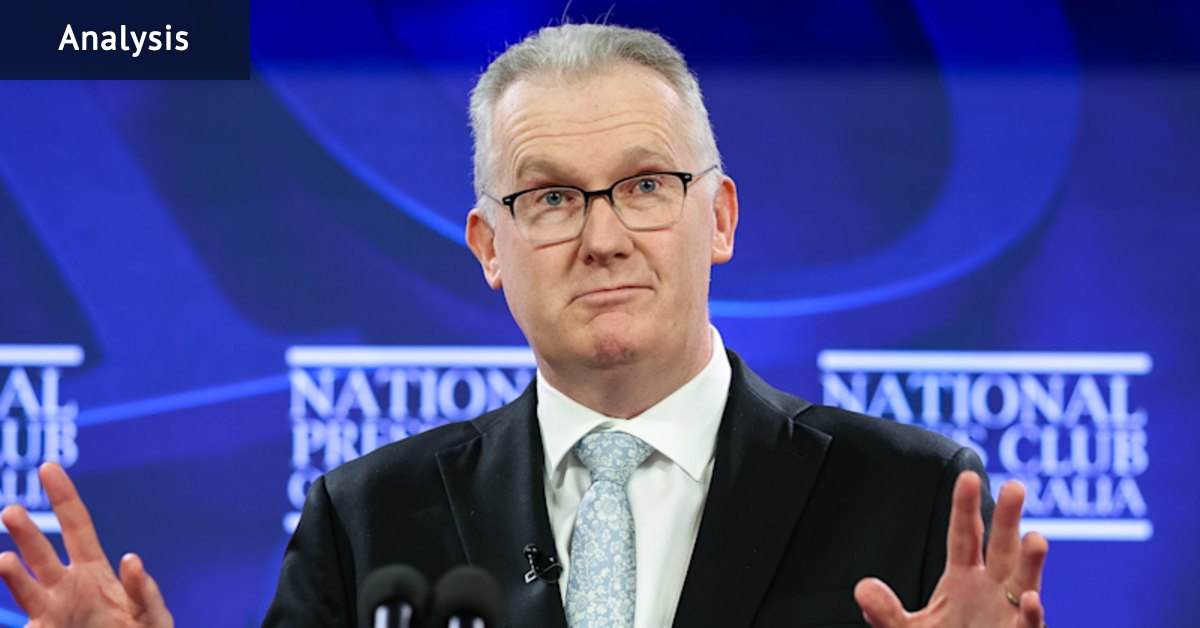
Immigration Minister Tony Burke’s address on Thursday marks a major shake-up to Labor’s migration policy.Alex EllinghausenLiberal senator Andrew Bragg said, in the wash-up, that Dutton’s message had hurt the Coalition badly in its election thrashing. “We love multicultural Australia,” Bragg said, and “we’re not wanting to make people feel unwelcome.”
An example of Dutton’s rhetoric came in a budget-in-reply speech in which he said Labor’s “poor management of migration” had helped cause road congestion and pressure on services.
The notion that the housing crisis was driven solely by a lack of housing supply had become a shibboleth on the left. Until Home Affairs Minister Tony Burke stood up at the National Press Club.
“Immigration will need to be part of the solution to help provide some space for housing supply to catch up,” he said on Thursday, as Labor aims to neutralise the political issue driving voters to Pauline Hanson. “We’re both improving supply and reducing demand.
“The housing shortage we have is not caused by immigration, but immigration needs to be part of the solution.”
It wasn’t the only striking admission from Burke, who left Labor flailing for six weeks after the last-minute delay of his speech.
The minister blew the whistle on a bipartisan, two-decade miscalculation since John Howard liberalised Australia’s migration rules in the early 2000s.
“Effectively, the decision that Australia took when we had a demand-driven program was to say that if employers can get the workers that they need and our educational institutions can get the students who are willing to pay, and we get the business, then infrastructure and housing will takecare of themselves,” Burke said.
“That is no longer the experience of Australians. That is no longer the view of Australia.”
The failure to maintain public confidence in the program, displayed in a litany of opinion polls, has created a void that’s been filled by an opportunistic populist who feels so unrestrained as to outrageously suggest that none of Australia’s 800,000 Muslims are good people.
A 2024 study in the Quarterly Review of Economics and Finance found that every 1 per cent rise in immigration led to between a 1.8 per cent and 3 per cent rise in support for far-right parties across 4500 electoral results in Europe.
Former Labor adviser and migration expert Henry Sherrell called last month for a ceiling of 1 per cent population growth from immigration. Australia exceeded that figure in half of the past 20 years, much more than peer democracies, but just once in the 50 years before that.
Burke called out the use of the term “mass migration”, which some bad-faith conservatives on the right have co-opted, but mainstream figures like Opposition Leader Angus Taylor have increasingly used it.
The numbers as outlined by Sherrell suggest that Australia has run a uniquely permissive migration program this century, in something of an experiment in the Western world.
Labor hopes its intervention in the migration debate will finally cauterise the political problem and show the party is alive to voters’ concerns. Labor knows it cannot win back Hanson’s hardcore supporters, but Albanese’s primary vote has taken a hit and the party thinks it can recover about 5 percentage points on that vote through sustained work to persuade the electorate that it has listened.
Its opponents will cast Burke’s measures as half-arsed and focused too heavily on backpackers, a group One Nation and the Coalition do not view as a problem.
With one and maybe two interest rate rises on the way, don’t expect Hanson to take her foot off the pedal. And prepare for more ugly politics on who comes and goes from Australia.
Cut through the noise of federal politics with news, views and expert analysis. Subscribers can sign up to our weekly Inside Politics newsletter.
You have reached your maximum number of saved items.
Remove items from your saved list to add more.
/file/attachments/orphans/Fikile_746198.jpg)