Business as a liberal art? Some high schools say yes
Wait Wait...Don't Tell Me! Fresh Air Wild Card with Rachel Martin It's Been a Minute Machine Gods Get NPR+ More Podcasts & Shows Search Newsletters NPR Shop Get NPR+ Tiny Desk New Music Friday All Songs Considered Music Features Live Sessions About NPR Diversity Support Careers Press Ethics Business as a liberal art? Some high schools say yes Learning about money is becoming a growing part of the high school curriculum. Your Money Business as a liberal art? Some high schools say yes October 29, 20265:00 AM ET By
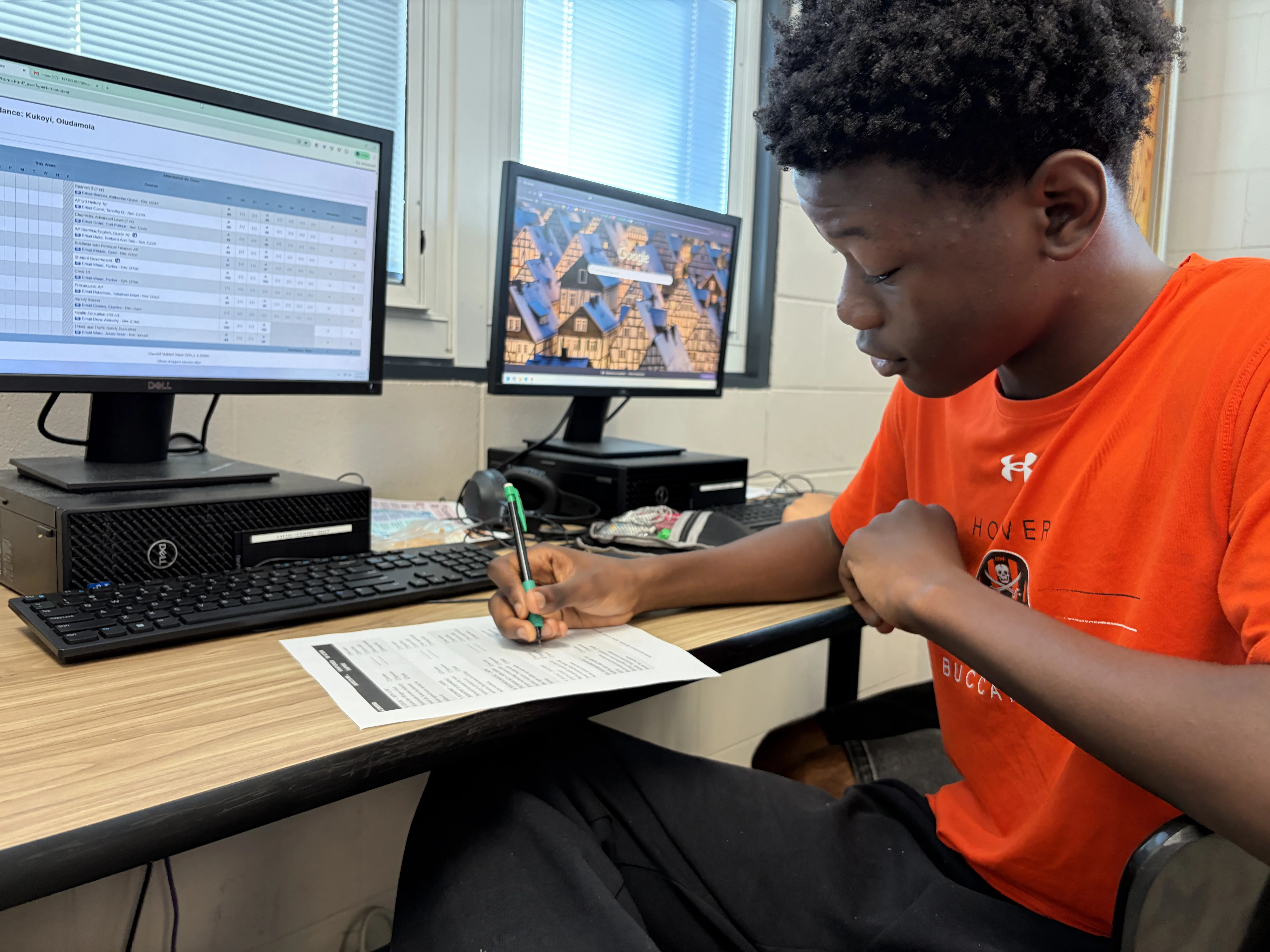
Sophomore Damola Kukoyi fills out a worksheet in his AP Business with Personal Finance class at Hoover High School on October 6, 2026. Stephan Bisaha hide caption
Sitting in a semicircle around their teacher, Gerri Kimble, students at Hoover High School near Birmingham, Alabama ponder a high schooler dilemma: What to do with their part-time job paychecks. These teens say they're buying loaded teas, filling the gas tank — and investing.
"I put it in index funds, like S&P and then QQQ and VOO," says junior Darshan Parmar. Kimble asks if his parents do the actual investing. Parmar says he does it himself.
One student puts 70 percent in his Roth IRA. Another contributes to a 401(k). A third says he invests directly in stocks.
"Oh you watch the markets?" Kimble asks. "Love it."
These students are among the first in the country to take a newly created Advanced Placement Business with Personal Finance course. The class is offered for the first time this year at more than 1,500 high schools across the country.
Business AI chatbots are offering financial advice. Should you trust them? AP courses are college level classes offered in high school. Enrolled students can take an exam in order to earn college credit. Typically, these credits are for canonical subjects like English, history and chemistry.
Students at Hoover High School's AP business class however get lessons on management and finances. They learn about the outside factors that can make or break a business – political, economic, social, technological, environmental and legal.
"It's a foundational piece of business that we're learning," says senior Bramley Williams.
Teacher Gerri Kimble monitors her AP Business with Personal Finance class as they work on an assignment about the outside factors that affect people's and businesses' bottom line at Hoover High School on October 6, 2026. Stephan Bisaha hide caption
"Business is the constant learning of adaptation," says David Coleman, CEO of the College Board, the organization that creates and develops advanced placement courses for public and private schools across the country. The group also manages and administers the SAT. It created this business course because students said in AP surveys that they want to turn their ideas into jobs.
Education A makeover for college: No gym, no meal plan and two years of work The class is designed to appeal to students who might be drawn to a more practical curriculum than a more theoretical subject such as AP economics, which was already and still is offered at high schools like this one.
Learning in the age of AI Schools are experimenting with AI with little evidence or policy to guide them Yet Coleman still considers business a new part of the liberal arts, arguing it's as important for preparing students for the world as core areas of study like math and history. Coleman says this kind of pedagogy that mixes the practical with the theoretical "could not be more useful today."
AP Business with Personal Finance teacher Gerri Kimble talks with students about their part time jobs and saving their earnings at Hoover High School on October 6, 2026. hide caption
The AP course is part of a trend towards more curriculum in US high schools focused on money and finance. Thirty nine states this year require a personal finance class to graduate – four more than two years ago according to the Council for Economic Education.
Hoover High School, located in an affluent Birmingham suburb, often feels more like a college. The campus has wide open green spaces and a massive student body a bit short of 3,000, making it the largest high school in Alabama.
Many students in this class have college aspirations.
Students say the AP class is more challenging, and could improve their grade point averages (AP classes are often weighted higher than other courses).
NPR Ed Not All Financial Education Is Effective. Here Are 4 Ideas That Work "This AP course is a way for me to boost my GPA and learn more about a topic that I love," sophomore Damola Kukoyi at Hoover High says.
Beyond this AP business class, Hoover offers a four-year business academy with classes such as accounting and entrepreneurship.
Lucas McKinney takes part in a discussion about the outside factors that affect a business and consumers during his AP Business with Personal Finance class at Hoover High School on October 6, 2026. Stephan Bisaha hide caption
A Federal Reserve paper from a few years ago found families in states requiring financial ed made better financial decisions. They were more likely to use stimulus checks during the COVID-19 pandemic to pay down credit card balances and refinance their mortgages while rates were low.
"When we educate youth about how to use money responsibly they're really good at doing so," says Jennifer Steele, a professor of education at American University.
Hoover High Senior Rachel Deschaine, who's enrolled in the AP business course, says general business knowledge is important too because it teaches students people and companies interact financially with the world. Her dad owned a trucking company while her brother is majoring in economics. Deschaine sees the lessons in her class in the conversation at the dinner table.
"There's a business in literally everything," she says. "If you're willing to understand how it works, it really opens up the opportunities to a person."
NPR does not offer or accept money for coverage or interviews. Anyone who makes such an offer or request is not an NPR employee and does not represent NPR.