C Raja Mohan: The ghosts of 1945 are being recruited for today’s contest over Asia - The Indian Express
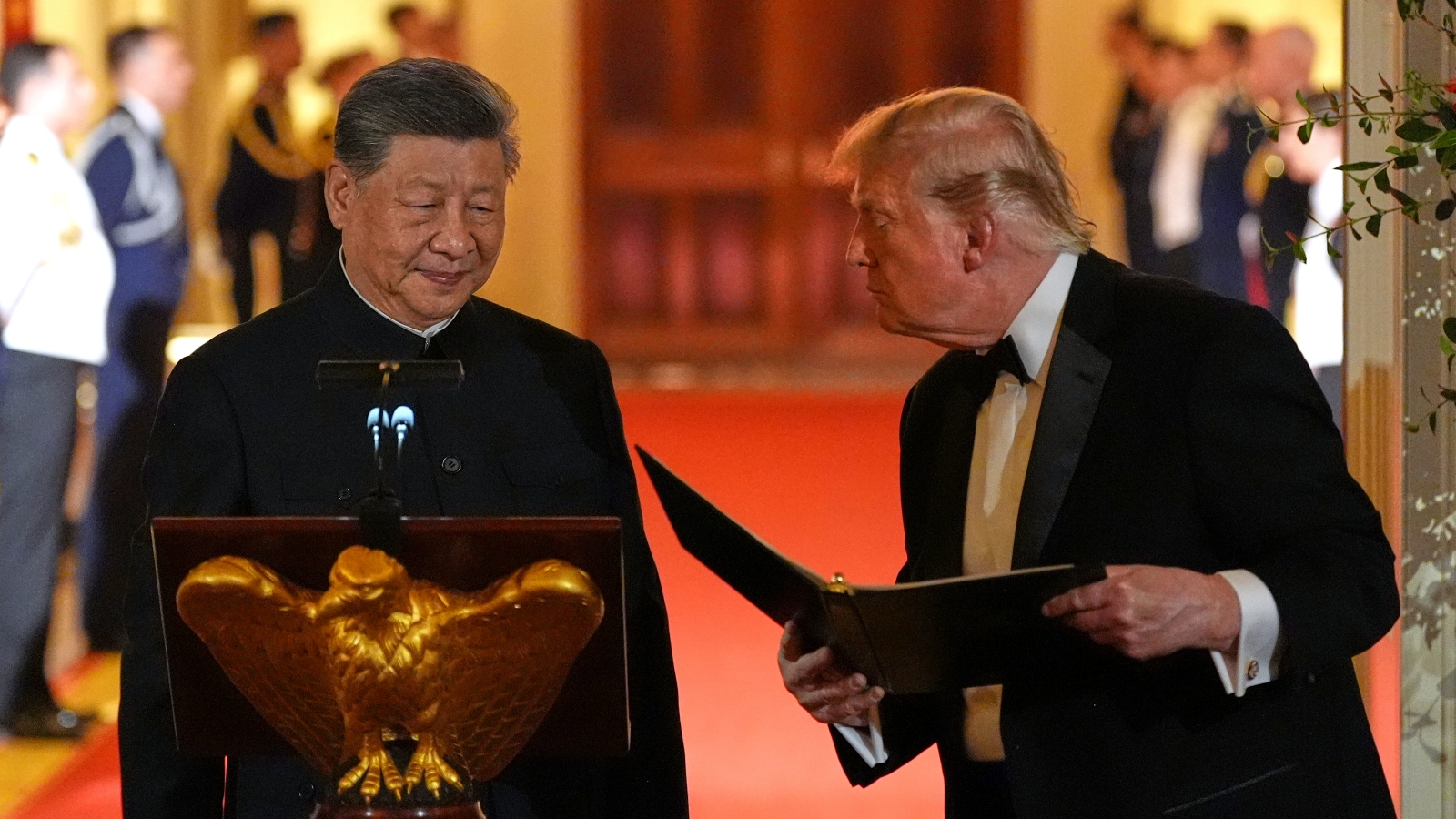
World War II and its expansive impact on the Subcontinent is largely forgotten by India’s strategic community. But its ghosts still shape Asia’s great-power politics. They surfaced last week when US President Donald Trump and Chinese President Xi Jinping met in Washington.
In India, there has been little attention to the affirmation of Trump and Xi that the US and China were victorious allies during World War II. References to history are rarely innocent. The past is interpreted and reinterpreted to serve the politics of the present.
Since returning to power, Trump has invoked America’s wartime cooperation with both Russia and China. His critics see these references as a way to justify his leader-level outreach to Vladimir Putin and Xi that is unsettling US allies in Europe and Asia. For Putin, the memory of victory supports Russia’s claim to a leading role in European security and the restoration of the “Yalta System” led by the US and the Soviet Union that shaped the European and global order. For Xi, it strengthens Beijing’s effort to present China as a victor of 1945 and undermine the “San Francisco System” of US alliances that defined the post-War Asian order.
The US-China wartime partnership is a historical fact, but it needs qualification. Washington’s ally in the war was the Republic of China (RoC) led by Jiang Jieshi (Chiang Kai-shek) that now endures in Taiwan. The People’s Republic of China (PRC), led by Mao Zedong, emerged only in 1949. That distinction lies at the heart of Taipei’s response. Taiwanese officials have accused Beijing of using “narrative diplomacy” to undermine the historical identity of Taiwan.
Tokyo’s response reflected deep political unease. Imperial Japan was the wartime adversary against which America and China cooperated; it is now Washington’s principal Asian ally. Prime Minister Sanae Takaichi spoke to Trump after his meeting with Xi. Japan’s foreign ministry said Trump explained the talks in detail, and the two reaffirmed their alliance and strategic coordination on China. Tokyo sought reassurance without making its concern an open quarrel with Washington. Recalling China and America as victorious partners, with Japan as the defeated aggressor, gives Beijing the political ammunition to challenge Tokyo’s present defence policies. The irony is difficult to miss. Japan is ramping up its defence spending to cope with the massive military imbalance with China and Beijing’s assertive policies on territorial disputes with Tokyo. In Beijing’s narrative, Japan is turning to militarism. For Beijing, a Japan that does not defer to China is a warmonger.
China also opposes Japan’s call to remove the obsolete “enemy state” clauses in the UN Charter directed at Japan, Germany and Italy after 1945. This is despite the UN’s earlier consensus to remove them. The stratagem is about pushing Japan onto the political defensive. The Trump-Xi declaration on World War II also raises questions about the future of America’s San Francisco System, built around the 1951 peace settlement with Japan. That system placed Japan at the centre of Washington’s regional strategy. Beijing’s invocation of the wartime alliance is part of the Chinese push to build a different dynamic among the three countries, nudge America towards a “China-First” policy in Asia and weaken the US-Japan alliance.
Beijing’s argument also reflects a change in the Chinese Communist Party’s account of the war. During the Mao era, the subject was awkward: Chiang’s Nationalist armies bore much of the conventional fighting against Japan. From the 1980s, the war became central to a narrative of Japanese aggression and China’s “century of humiliation”. China presented itself chiefly as a victim. Under Xi, China has increasingly presented itself as a victor. Commemorations, parades and school textbooks emphasise its place among the powers that defeated Japan and founded the United Nations. Harvard historian Rana Mitter has shown how this changing memory supports China’s claim to the apex of global hierarchy. Victimhood asks the world to acknowledge suffering; victory offers a claim to authority in shaping the order that followed.
Where is India in this debate over 1945? Barely visible. But Delhi is surely concerned. At a Russia-India-China foreign ministers’ meeting in June 2020, Subrahmanyam Jaishankar reminded his counterparts that 2.3 million Indians had served under arms and another 14 million had participated in war production. Indians fought from North Africa and Italy to Southeast Asia. The Indian Army’s stellar role in rolling back imperial Japan’s armies in Burma and Southeast Asia has largely been forgotten. Jaishankar argued India received little recognition when the victors shaped the post-war order. He called it an uncorrected “historical injustice”.
The source of that injustice, however, has deep roots at home. India’s national movement was divided in responding to World War II. Congress opposed Britain’s decision to involve India without consulting Indians and later launched the Quit India movement. The Communists shifted from opposing the War to supporting it after Germany invaded the Soviet Union. Subhas Chandra Bose sought German and Japanese help to secure Indian independence. These differences have made it hard for India to incorporate the great sacrifice of its soldiers into an accepted account of the war or its claim to be at the heart of global governance.
In teaching itself and talking about the evolution of modern India’s engagement with the world, the Indian elite pays little attention to the politics of World War II, its impact on the Partition of the Subcontinent, and the post-war marginalisation of India in the global pecking order. That, arguably, is one reason for the nature of Indian discourse on foreign policy that relies on abstract concepts rather than history and geopolitics.
The writer is contributing editor on international affairs for The Indian Express. He is a professor at the Motwani Jadeja Institute of American Studies, Jindal Global University