Calls for trucker strike on October 1 are spreading
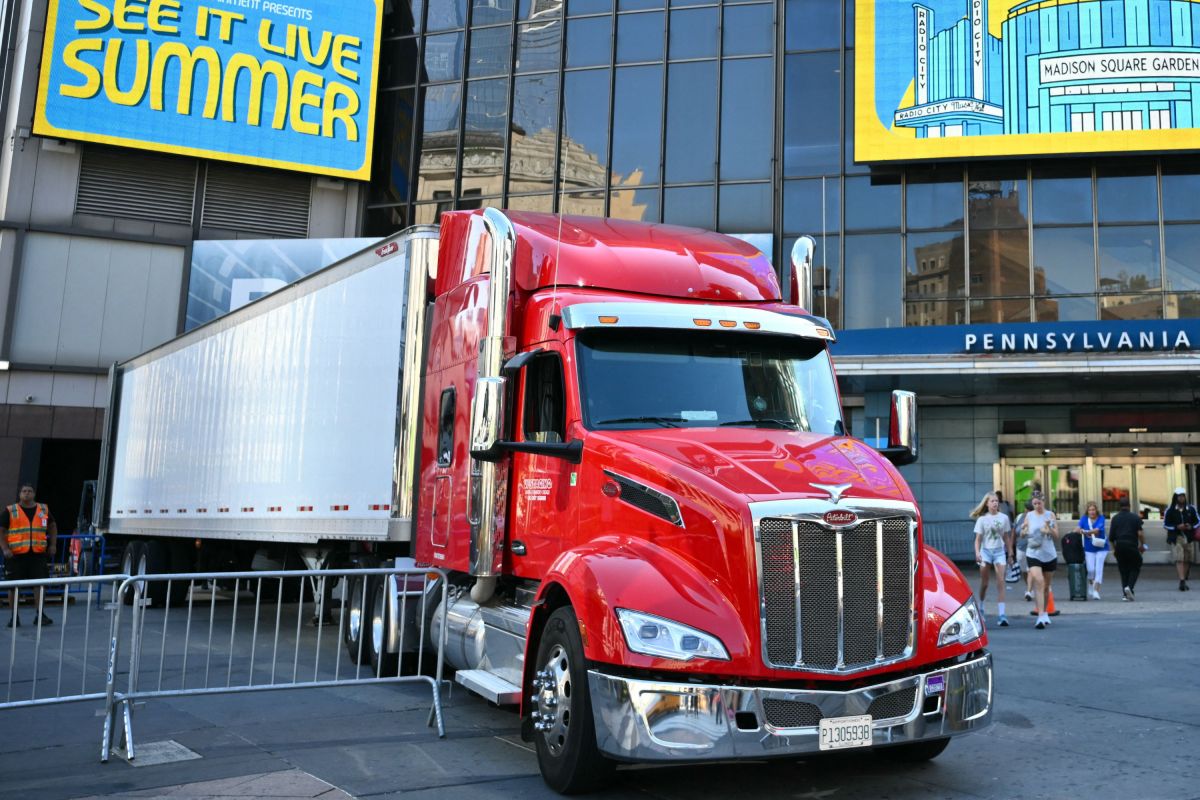
A claim that U.S. truckers are planning a nationwide strike on October 1 over soaring diesel prices has spread rapidly across social media, but there is little evidence so far of an organized nationwide is strike being planned.
As diesel fuel reaches a record high of $6.51 a gallon, videos and AI-generated posters have circulated claiming that frustrated truckers are going to take action and warning that a strike could disrupt freight deliveries and cause food shortages across the country.
The Owner-Operator Independent Drivers Association (OOIDA) told Newsweek in an emailed statement that the discussion of a trucker strike seems to be “limited to social media chatter” but that they are monitoring the situation.
But that does not mean a strike definitely won’t happen as the rapid spread of the claims could itself inspire online rumor to become real-world action.
The claims come against a backdrop of genuine financial pressure on truckers, with diesel prices rising, and some drivers saying they are struggling to afford to keep their trucks on the road.
OOIDA noted that fuel is one of the "biggest operational costs for owner-operators”—truck drivers who own or lease their own trucks and are responsible for their business expenses.
“Small business truckers make up more than 90% of the trucking companies in America, and they are the first to feel it when prices jump,” they said.
They added that their members often work “load-to-load” and “can’t simply raise their rates when fuel spikes the way their larger competitors can.”
“While big oil companies have seen their profits nearly double this year, the sharp increase in diesel cost has quickly eaten up what little margin mom-and-pop trucking businesses have left.”
Newsweek contacted the American Trucking Associations, the International Brotherhood of Teamsters, and several trucking industry and labor experts for comment on Monday. Newsweek also contacted the U.S. Department of Transportation.
Diesel prices have reached an all-time high—averaging around $6.51 a gallon, up from around $5.58 a month ago, according to the American Automobile Association (AAA). That is substantially higher than the average of roughly $3.70 a year ago.
The diesel price shock has been driven largely by the war with Iran launched by President Donald Trump on February 28, which disrupted global oil supplies and shipping through the Strait of Hormuz, sending crude and refined fuel prices higher.
There is little sign of immediate relief, as the conflict remains unresolved and continues to disrupt energy flows, while Trump himself has said that oil prices may not fall until after the November midterm elections.
The claim of a planned strike appears to have originated with a video posted on Instagram by user red_pill_patriot_1776, in which an unidentified man said truckers were “done” and planning to strike until fuel prices fell. He warned that a shutdown could lead to food shortages across the country.
https://www.instagram.com/p/DdUYgLep_t0/
The claim was subsequently amplified across social media, with posters and graphics circulating about an October 1 strike.
While little evidence suggests a widespread strike is being organized, videos have spread online that appear to show truck drivers appealing to Trump to address soaring diesel prices.
In a video posted by the Republicans against Trump X account, one man said that while he is a long-time supporter of the president, he is pleading: “I’m begging you right now, you got to end it. You got to do something. Diesel fuel just broke $6 a gallon.”
Pointing to a truck behind him, the man said he could no longer afford to take it out of the garage. The video had been viewed more than 325,000 times at the time of writing.
Another video posted by The Tennessee Holler on X compiled clips of men expressing frustration over fuel prices, with several saying they had previously supported Trump but now felt frustrated.
Newsweek could not independently verify the identities of the men in the videos or determine whether they are truck drivers. The post has drawn more than 785,000 views at the time of writing.
The pro-labor, left-leaning online outlet More Perfect Union also interviewed truckers in Colorado who said the fuel prices were significantly affecting their ability to work, particularly owner-operators.
“We carry 200 gallon tanks, and if it’s six bucks per gallon, it’s talking about 1200 bucks each fill-up,” one trucker said, later adding: “I might have to call it quits for a minute because of the prices.”
Nearly 50 years ago, American truckers staged a nationwide protest over soaring fuel prices in something of a déjà vu of today’s crisis, when the 1979 Iranian Revolution sent oil prices surging.
But the trucking industry has changed significantly since then, in ways that make similar nationwide collective action more difficult.
In the 1970s, the Teamsters Union represented more than 60 percent of truck drivers at the time, according to labor scholar and professor Michael Belzer, giving the union much greater organizational reach. However, by 2001 Teamsters representation had fallen to under 20 percent.
The decline was exacerbated by trucking deregulation that began in the late 1970s, according to Belzer.
Deregulation increased competition and put pressure on the large, unionized carriers that had dominated the industry, while allowing thousands of smaller, nonunion carriers to enter the market. Belzer noted that the industry changes weakened Teamsters’ bargaining power.
Today, the trucking industry is far more fragmented. The American Trucking Associations (ATA) said in 2025 that more than 350,000 truckers work as independent contractors.
As today’s drivers work for hundreds of thousands of separate businesses or operate independently, and only a small minority are part of a union, this makes it harder to coordinate nationwide action.
Whether or not a strike materializes, truckers are clearly feeling the pressure of soaring fuel prices and hoping for relief.
Newsweek’s reporters and editors used Martyn, our AI assistant, to produce this story. Learn more about Martyn here.
Contact Newsweek editors on this story: Gray R. Thomas