Can an unpopular US president save his party? - The Business Times
AN UNPOPULAR US president is ordinarily an encumbrance to his party. Candidates running under the same banner advisedly keep their distance.
After all, little good can come from inviting voters to endorse the record of a White House they have come to dislike. It is better to localise; to talk about repairing roads, updating schools and the candidate’s deep community ties.
Contrary to this line of conventional wisdom, the Republican Party under US President Donald Trump seems to expect no blowback from asking voters to treat the Nov 3 midterm elections as a referendum on a man they have soured on.
The seemingly counterintuitive bet is that this is the right moment to go Trump-first.
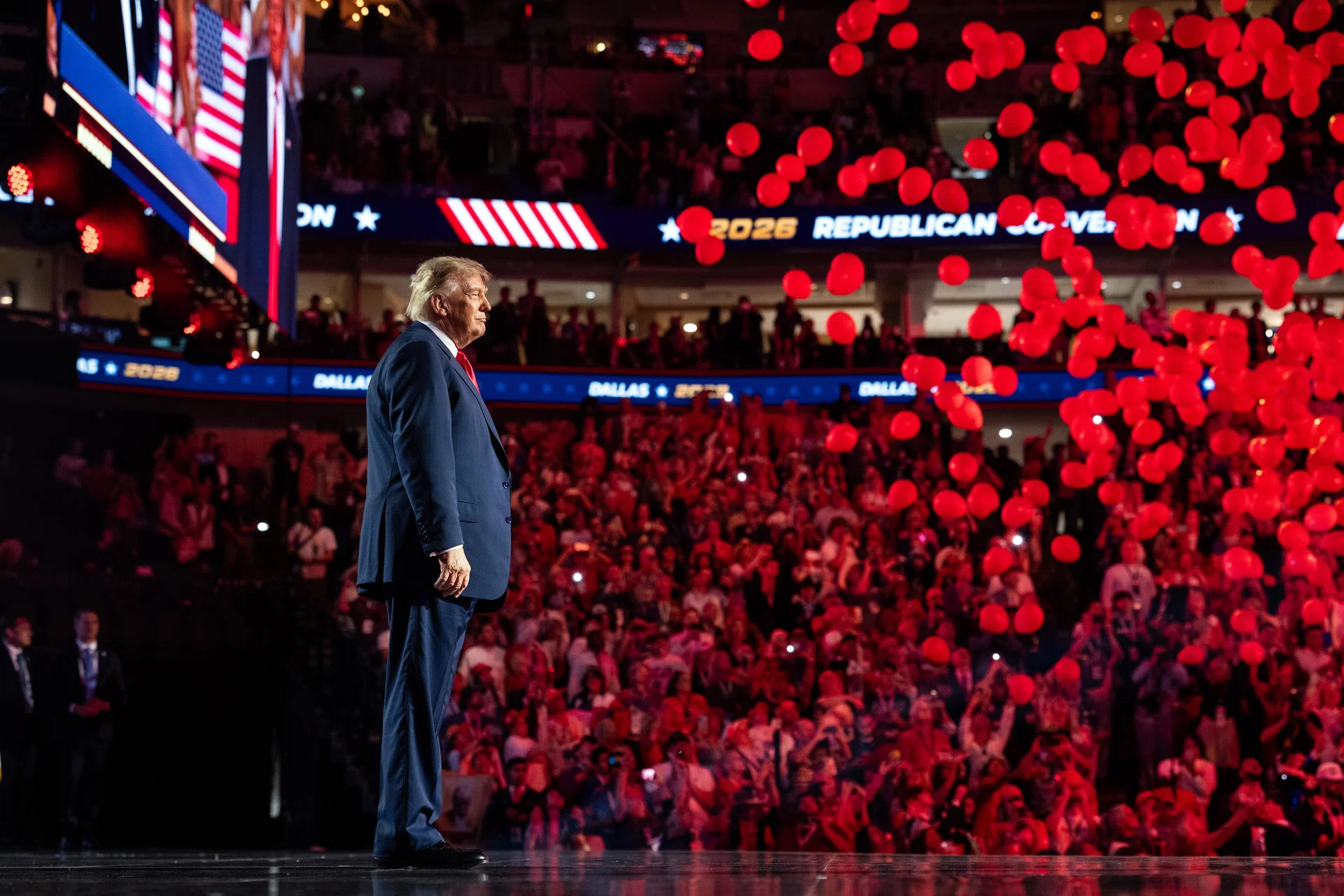
Telling Republicans to “pretend my name is on the ballot”, as Trump did during the unusual Sep 9 to 10 Republican midterm convention in Dallas, is a high-risk strategy.
But it is not an irrational one in a highly polarised country. It begins to make more sense if the name of the game is mobilisation more than persuasion.
Voting in the US is not compulsory and data over decades shows that far fewer Americans vote in the midterm elections than in the presidential races. The gap usually hovers at around 15 percentage points.
Two recent outliers are noteworthy. The midterm elections of 2018, during Trump’s first term, produced a backlash against his policies that saw the Democrats gain from an unprecedented turnout, the highest level in more than a century.
Turnout was also high in 2022; the electorate was already unusually mobilised after Trump’s claims of a “stolen” 2020 presidential election and the US Supreme Court’s reversal of the Roe v Wade decision that made abortion rights a pivotal turnout issue.
Nearly half of voters cast ballots early or by mail, another factor that raised participation.
In a less polarised environment, high turnout is an opportunity to persuade swing voters. But in the current one, relatively few voters switch sides. Campaigns often gain more by ensuring their own coalition returns to vote by stoking anger or fear, or appealing to race or other aspects of their identity.
Trump’s plunging popularity has rattled Republicans, who fear his voters will sit out the coming elections.
His approval rating ranges in the low to high 30s, depending on which poll you trust. That is roughly the same as his predecessor Joe Biden’s when he left office and at least five points lower than Biden’s term average.
Underlining the dim view of the Trump presidency is that only 36 per cent of Americans think their country is headed in the right direction. That virtually guarantees that the vote on Nov 3 will be an anti-incumbency vote.
Trump has little reason to believe that he can win back the millions of young, black and Hispanic voters who made him the president for a second time. Likewise, independent voters, unaffiliated with either party and accounting for around 45 per cent of US adults, have lost faith in Trump after swinging for him in 2024.
With those odds, persuasion is harder and mobilisation cheaper.
White working class voters form the largest chunk of Trump’s Make America Great Again movement – some surveys show as many as 62 per cent of Republicans embrace that label.
Their disgruntlement with “forever wars” and the cost of fuelling up their pickup trucks notwithstanding, they are not disloyal to Trump.
But they are typically reluctant to show up to vote in midterm elections. “Pretend I am on the ballot,” is Trump’s rallying cry to these voters.
The US$5,000 “Trump dividend” – if Republicans retain control of Congress – is the added sweetener, although it is promised to every American adult at an eye-watering cost of over US$1 trillion.
To get past the traditional conservative aversion to government handouts, the incentive is branded as returning wealth to the working people.
Trump is also holding out hope for the “soft Republicans” to come home. These centre-right voters feel less loyal to the party.
They may not be open to voting for Democrats, but they could just stay home and worsen the outcome for the Republicans. Hence, they are also a key mobilisation target as Trump prepares to empty as much as half of his war chest of roughly a billion US dollars on advertising.
The Republicans’ messaging has been angled to make the coming election a choice between “common sense mainstream” and the “crazy, commie, extreme” where the Democratic Party is caricatured as radical, economically reckless and culturally un-American.
“Every party has their crazies. The difference is that the Democrat Party is nominating theirs for Congress,” Representative Brandon Gill, a Texas Republican, said to ripples of laughter at the Dallas convention.
Contrasted like that, it becomes easier to vote for an unpopular administration.
An extension of the strategy is asking voters to pretend that Hasan Piker is on the ballot too.
The nattily dressed 35-year-old streamer, with a number of strident opinions, is not seeking political office.
But he advocates for several Democratic Party candidates, including Michigan’s progressive politician Abdul El-Sayed. The Republicans covet the Senate seat El-Sayed is eyeing. Piker was repeatedly evoked, by speaker after speaker, at the Dallas gathering.
The Republicans also expect voters to credit them for some tangible achievements: cutting taxes, reducing waste and fraud, lowering the cost of prescription drugs, fewer people crossing the border illegally and less violent crime.
Conventional wisdom says the president’s party must pay a penalty. In 20 of the 22 midterm elections since 1934, the party of the sitting president has lost seats.
This is particularly true for the House of Representatives, where all 435 seats are up for election at once, allowing a national political mood to sweep across constituencies.
The two presidents who broke the pattern were George W Bush, who rode the wave of national solidarity after the Sep 11, 2001, terrorist attacks, and Bill Clinton, because the economy was so good in 1998 that the voters forgave his personal conduct in the Monica Lewinsky affair.
Polls are not prophecies, but they say that seven weeks before the Nov 3 midterm elections, the Democrats are favoured to take the House while the Senate is edging towards a toss-up.
Trump has tried to engineer a win in the House by urging redistricting across Republican-ruled states. That has reduced the number of competitive districts and is calculated to protect eight more House seats for Trump’s party.
That is a bigger deal than it looks.
Most House districts are won by the party that already holds them and in 2026 just 21 races are toss-ups – rated as winnable by either party – by the non-partisan Cook Political Report. This reality also underlines why turnout matters so much.
To clinch a majority of 218, the Democrats would need to win 12 toss-ups on top of 206 seats that currently lean in their favour. To prevent that, the Republicans need to win 10 while keeping the 208 that lean red.
Slim House majorities have, in fact, been the norm for decades. The Republicans currently have a mere four-vote majority in the 435-member House. In 2022, they had a 10-seat edge, while the Democrats had an 11-seat advantage in 2020.
Of course, there are few iron-clad rules in politics and a “blue wave” could wash away such conventions.
In the 100-member Senate, only a third of seats are up for election in any cycle.
The Republicans had been counting on an easy run, since most of the 22 seats they are defending lie in states comfortably won by Trump. No longer. Cook now rates only 16 as firmly in the Republican column, while five are rated as toss-ups and one is leaning Democratic.
But to reach the 51-seat majority, the Democrats need to keep the 13 currently in their corner and pick four more seats in historically Republican territory – like Alaska, Iowa, Ohio and Texas. And they must defend one, Michigan, that has become a toss-up. It is a difficult task.
No matter how cleverly designed, Trump’s mobilisation strategy may come up short against the widespread disillusionment with his administration and the enthusiasm welling up among the Democratic voters who outnumbered the Republicans in state primaries. That portends well for the opposition turnout.
Affordability, the direct result of the war on Iran and tariffs, remains voters’ top concern, which Trump dismisses as “made up”.
Voters miffed by the price of beef, petrol, electricity and childcare are unlikely to take that kindly.
Each of those essentials is much more expensive than it was when Trump came to office in January 2025.
The macro picture is not prettier. Trump’s 18 months in power have produced an overall economic growth rate at barely above 2 per cent, less than the average 2.75 per cent recorded during Biden’s last three years in office.
Manufacturing employment has fallen by around 90,000 jobs since Trump was sworn in. The trade deficit in goods and services has not dropped significantly, while the budget deficit and national debt have grown.
But are the Democrats well positioned to cash in?
The generic congressional vote, which captures a broad preference for the party rather than for individual candidates in the race, gives them an advantage of around seven points in both the House and Senate races. This is not enough, according to analysts who say an edge of roughly 8.5 points would be required for a significant majority.
The big problem for the Democrats is that Americans hold almost equally unfavourable views of both parties. The civil war within their party is a self-goal.
After defeating several moderate incumbents, the energised progressive wing is in no mood to listen to senior establishment leaders like Representative Hakeem Jeffries and Senator Chuck Schumer.
In particular, the challenge comes from the Democratic Socialists of America (DSA), a political and activist group within the party that espouses opposition to the corporate economy, and seeks universal healthcare, free higher education and an anti-Zionist foreign policy.
Some of its more extreme positions, like wanting the Senate abolished and the police defunded, are not fully embraced by prominent members including representatives Alexandria Ocasio-Cortez and Rashida Tlaib and New York City Mayor Zohran Mamdani.
Democratic voters too are restive, unhappy that the party’s traditional centrist or compromise-oriented strategies have failed to beat back right-wing populism decisively over the last few elections.
The reach towards the political centre and a sense of party unity is jarringly missing in both parties at this time. The idea is alien to Trump’s divisive, confrontational politics. In the deeply blue urban areas where progressives have had splashy wins, there is little electoral incentive to appeal to centrist or independent voters.
Overall, the declining enthusiasm for Trump has not translated into increased enthusiasm for Democrats, notes Ruy Teixeira, a political analyst who has studied the transformation of party coalitions and is an expert on Democratic Party politics.
“There are a lot of people who express disapproval for Trump, but it’s soft disapproval. It doesn’t look like they’re all going to pull the lever for the Democrats. It’s a mitigating factor, I’d say, for the Republicans, that things aren’t quite as dire as they look,” he said.
The voters might, for instance, be uneasy about Trump’s deportation policy, but the progressive cultural stances may scare them more.
As the elections come closer, the DSA might become a bigger liability for the Democrats.
For now, the movement is free-riding off the turmoil against Trump, Teixeira said.
“They’re able to take advantage of the fact there’s this wide open field for anyone to be as crazy as they want, and still not really affect Democrats’ chances overall that much.”
Will public opinion swing sharply once the Republicans launch multimillion-dollar attack ads targeting DSA’s extreme positions? We will see.
But the biggest unanswered question, when a handful of districts and states can decide the balance of power in Congress, is whether turning the midterms into a referendum on Trump will excite more Republican supporters or frighten more Democratic voters into showing up. THE STRAITS TIMES
Decoding Asia newsletter: your guide to navigating Asia in a new global order. Sign up here to get Decoding Asia newsletter. Delivered to your inbox. Free.
Can Bali swop beach capital for global capital without the skyscrapers?