Can countries deploy weapons in space? Here's the loophole the US is using
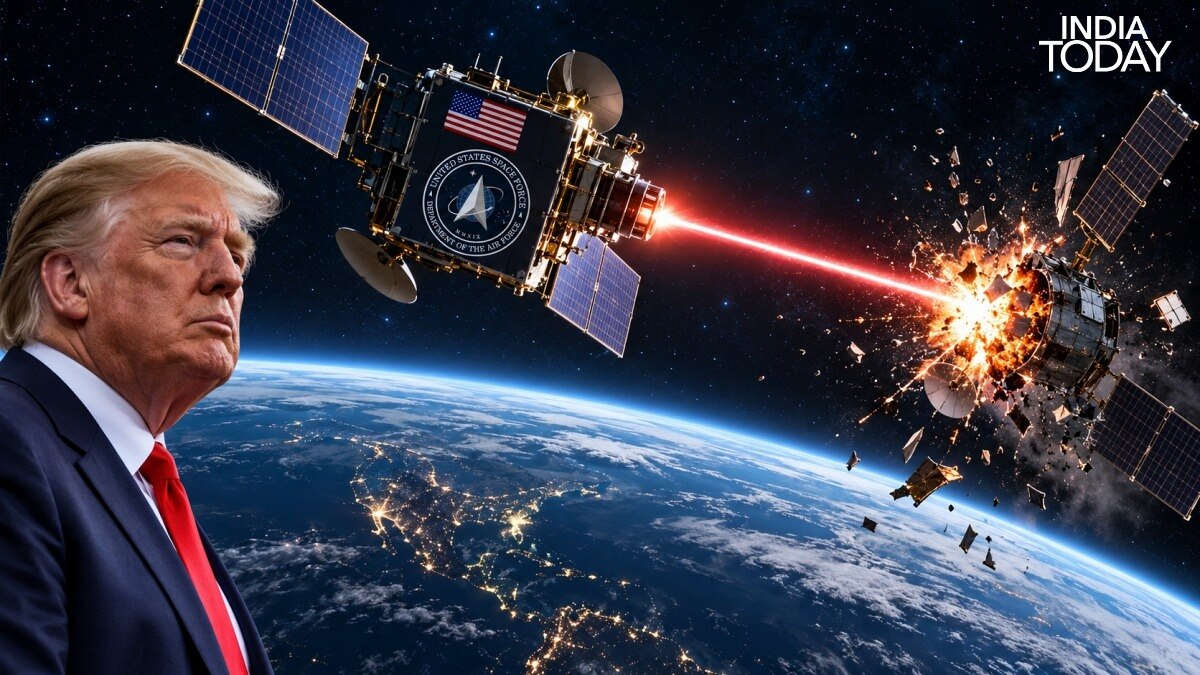
The United States has publicly acknowledged for the first time that it has deployed weapons in space, raising fresh questions over a decades-old international treaty that was designed to prevent an arms race beyond Earth.
US Air Force Secretary Troy Meink said on September 14 that the United States now has “on-orbit space control weapons” capable of defending the Joint Force against hostile action.
The US Space Force later confirmed that these capabilities can involve both kinetic and non-kinetic means, including the disruption, degradation or destruction of an adversary’s capabilities. However, Washington has not disclosed what weapons are deployed, how many are in orbit or when they were placed there.
Meanwhile, Gen. Dan Caine, chairman of the Joint Chiefs of Staff, even added that American forces must be ready to operate as far as the region around the Moon.
IS THE US VIOLATING INTERNATIONAL LAW?
The answer is more complicated than a simple yes or no.
The key legal framework is the 1967 Outer Space Treaty, which has been ratified by the US and more than 100 other countries.
Article IV prohibits countries from placing nuclear weapons or other weapons of mass destruction in Earth orbit, installing them on the Moon or other celestial bodies, or stationing them in outer space.
It also prohibits military bases, weapons testing and military manoeuvres on the Moon and other celestial bodies.
But there is a major gap in the treaty: it does not explicitly ban conventional weapons from being placed in Earth orbit.
That is the loophole at the centre of the current developments.
The treaty was negotiated in the 1960s, before many of today's counter-space technologies existed. Its explicit prohibition focuses on nuclear weapons and other weapons of mass destruction, leaving conventional orbital weapons and several forms of counter-space capability outside an express ban.
That could include systems designed to interfere with or disrupt satellites rather than physically destroy them.
Electronic warfare, jamming and other non-kinetic capabilities can potentially disable an adversary's space infrastructure without firing a conventional projectile.
The US Space Force says its operations are conducted in compliance with international law, including the Outer Space Treaty and the law of armed conflict.
The distinction is therefore between militarising space and placing weapons in space.
Countries have operated military satellites and other military systems in orbit for decades. What the treaty clearly prohibits is the stationing of nuclear weapons and weapons of mass destruction in space, not every military capability.
The US admission therefore does not automatically establish a treaty violation. Instead, it exposes a long-standing legal gap in the international rules governing conventional weapons in orbit.
China has urged Washington to stop expanding military capabilities and preparing for war in outer space, while Russia has called for space to remain free of weapons.
The bigger question now is whether the 1967 rules are sufficient for a space environment increasingly filled with satellites, electronic warfare and weapons capable of targeting them.- EndsPublished By: Sibu Kumar TripathiPublished On: Sep 17, 2026 16:17 IST