Can the newest sovereign wealth fund avoid others’ mistakes? - Semafor
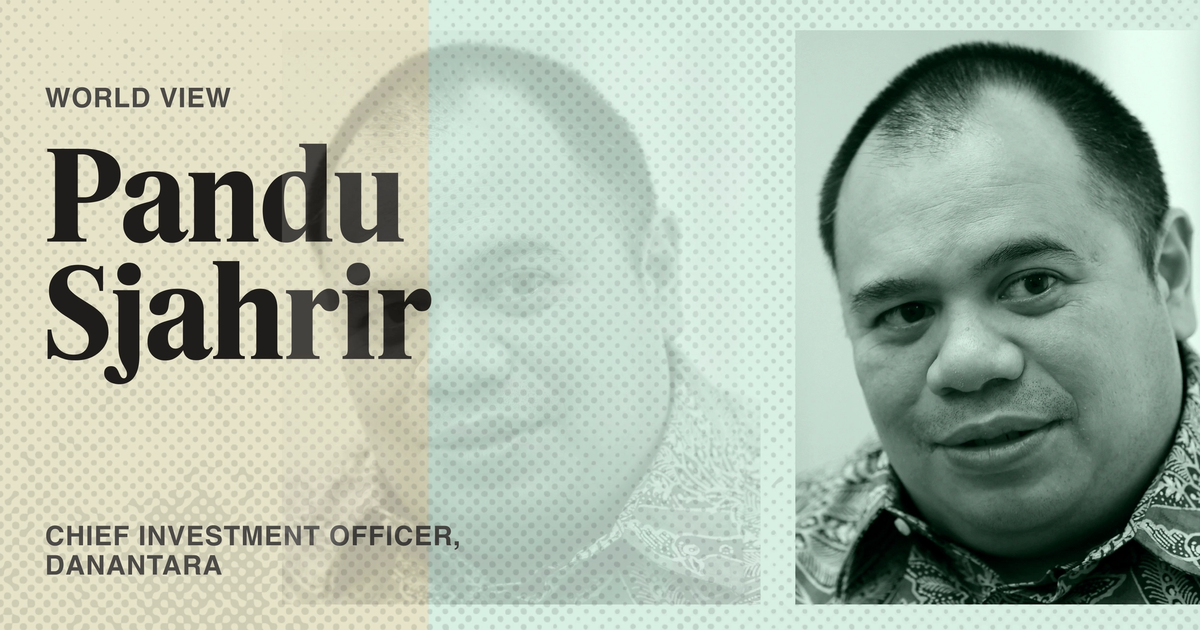
“These are national resources that are now being monetized for the nation,” Pandu Sjahrir tells me when we meet.
Sjahrir is the chief investment officer of the global sovereign-wealth club’s newest member, Indonesia’s Danantara. But it’s a sentiment popular these days with, among others, US Treasury Secretary Scott Bessent, who has talked often of “monetizing the asset side” of America’s balance sheet. (Starting, possibly, with Yosemite?)
Danantara was founded in 2025 and values its holdings at about $1 trillion, making it about as big as Saudi Arabia’s Public Investment Fund. It’s a young learner trying to compress what Sjahrir calls the “walk, run, sprint” trajectory of more established government investment vehicles while avoiding their mistakes; Saudi Arabia lost billions trying to make a splash in Silicon Valley, while Malaysia’s 1MDB collapsed in a corruption scandal. Graft and political influence are particular concerns among international investors whose goodwill Indonesia, which runs both a budget deficit and a trade deficit, needs.
Sjahrir, who comes from Jakarta by way of Andover and the University of Chicago, has a two-sided mandate: to restructure more than 1,000 state-owned enterprises — half of them unprofitable — into dividend payers that can eventually go public; and to invest internationally in ways that bring economic benefits, like jobs and export-bearing industries, not just financial returns, back to Indonesia. A recent deal will see Danantara take a slice of meatpacking giant JBS’ Australian business in exchange for JBS helping to build Indonesia’s meat industry.
Danantara has hired Neuberger Berman to help select deals and managers, is preparing to make its first allocations to hedge funds later this year, and is sending some of its own executives to secondments with Wall Street firms, Sjahrir said.
“I’m trying to learn from all the other sovereigns,” Sjahrir said. When asked whether he’s worried about being seen by Wall Street as easy money, he says: “I cannot change what they think. My focus is: Can we deploy capital well, make good returns, and are they bringing something to the table for us? Perception shifts.”
This interview has been edited for clarity and brevity.
Liz Hoffman: The power dynamic between sovereign wealth funds and Western partners is changing fast. How do you think about what you’re getting back for the money you’re handing to Wall Street?
Pandu Sjahrir: I’m trying to learn from all the other sovereigns. We’re the youngest. We just got so big so fast, and I realized you have to learn to walk, then run, then sprint.
What did you learn from the ‘walk’ phase?
There’s a reason [global asset managers and companies] exist. They know what they’re doing. So partner with them, but say, ‘if we become a customer or partner of yours, can you also bring some of that skill set back to our country?’ Our country is large enough — 300 million people, fifth-largest in the world. It can also be an addressable market for you. It’s a good trade.
One thing Western money managers want is access to financial markets that have been off-limits in the past. Is that something Indonesia is open to?
Yes. America’s greatest asset has been its public markets. This is one of the models all of us want to replicate. So we’ve offered: Invest with us, name the valuation, come into our stock market — and then tell us how to change it to compete, to make it bigger. We’re willing to offer something very good, because a stock market is a monopolistic business. The only thing we ask in return is: Can you help us improve it?
We’ve started deploying capital with selected fund managers. But in each one, we want partnership. We’re also, in the second half of this year, sending some of our guys to train with these managers.
What’s in it for them to train your people?
In five years, these guys will be the best we have and most likely in director or managing director roles. It’s up to the [private-equity firms] whether they want that future investment-committee member, the one who will be saying yes or no, to be in their corner. It’s the cheapest investment a GP can make.
How do you keep them from seeing you as dumb money in the meantime?
I cannot change what they think. My focus is: Can we deploy capital well, make good returns, and are they bringing something to the table for us? Perception shifts.
That was a painful lesson for a lot of the Gulf sovereigns. They spent the 2010s throwing money around because Wall Street was making them feel special and they got little back strategically.
That’s why we do direct deals only where we have the expertise. If we do a nickel deal for downstream processing, we’re quite good at that. But if you tell me, Pandu, do a deal with an LLM company or a data center in Texas — I don’t think we’re the right party for it.
In every jurisdiction outside of Indonesia, we always partner. We’re doing a JV with UAE — they’re very good because of their experience, so why not partner on AI together? We’re doing a deal with CIC out of China — $1 billion to invest in general partners together, because access in China is restricted and I need someone who knows the landscape.
You went to school at UChicago. That’s a very specific type of economics education.
Very pure. My second year, I took [Nobel laureate] Gary Becker’s class. He said to us: ‘If you get an A-minus or above, you’ll work under me. B-plus, you’ll probably get your Chicago PhD. B, you’ll be a professor at Yale, Harvard, or Stanford. C-plus, you’ll most likely go into private equity or investment banking.’