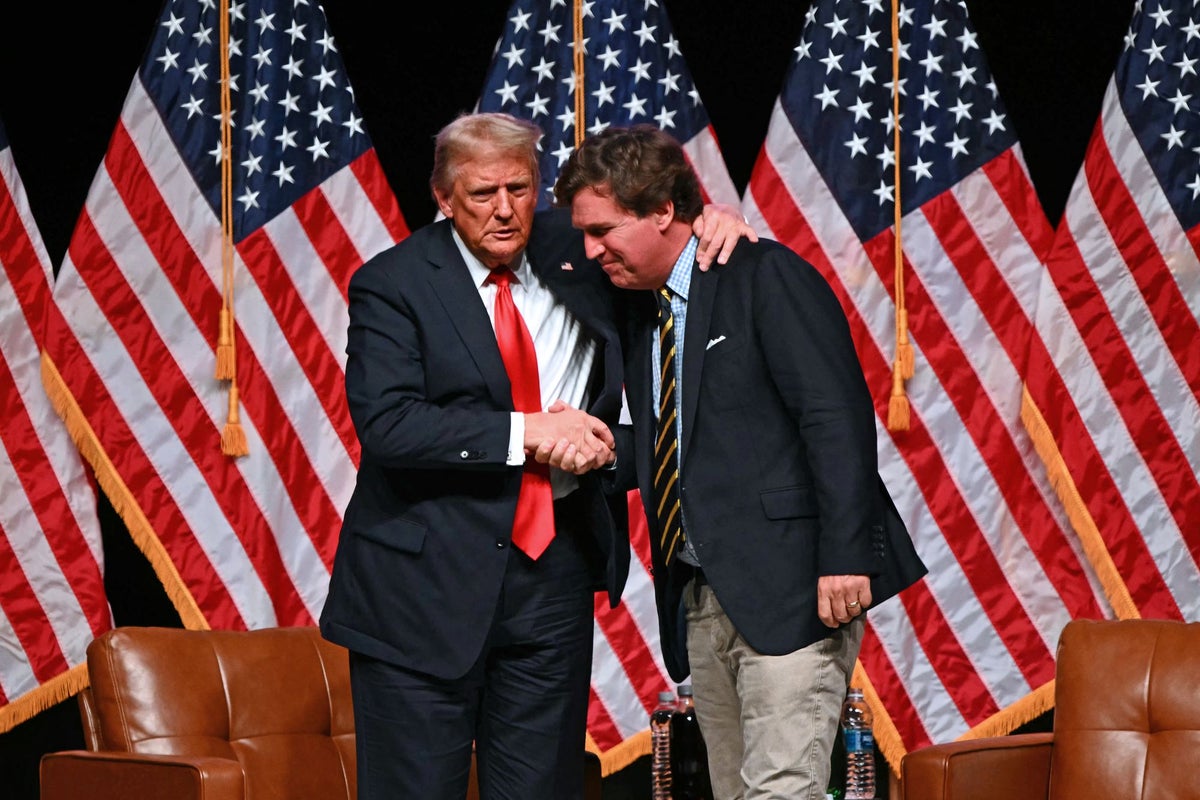
Canada made plans on what to do if Trump invaded, Mark Carney reveals
Want to bookmark your favourite articles and stories to read or reference later? Start your Independent Membership today.
Canadian Prime Minister Mark Carney indicated that he took steps to prepare for the unlikely prospect of a U.S. invasion following President Donald Trump’s repeated remarks about making Canada the “51st state.”
Carney, the leader of the Liberal Party of Canada, made the remarks during an interview with The New York Times on Wednesday while he was in Manhattan for the United Nations General Assembly.
When asked whether he took Trump’s “51st state” comments seriously, the prime minister intimated that he had thoroughly considered the possibility of an American attack — though he didn’t provide details.
“I think you have a responsibility in these roles to look at extreme tail risk,” Carney, an economist who previously led the Bank of Canada and the Bank of England, told the Times. “That’s just risk management. That’s not a base case, but it would be irresponsible not to.”
Relations between the U.S. and Canada, longtime allies and key trading partners, have rapidly deteriorated following Trump’s return to office — in large part as a result of the Republican president’s threats.
Trump began publicly expressing his desire to make the Great White North a part of the United States in late 2024.
“Many Canadians want Canada to become the 51st State,” he wrote on Truth Social in December of that year. “They would save massively on taxes and military protection. I think it is a great idea. 51st State!!!” The same month, he referred to then-Prime Minister Justin Trudeau as “Governor.”
In May 2025, Trump said it was “highly unlikely” that he would use the military to annex Canada by force.
Two months later, fresh off his election, Carney traveled to the White House and told Trump bluntly that Canada is “not for sale.” The GOP president replied: “Never say never, never say never.”
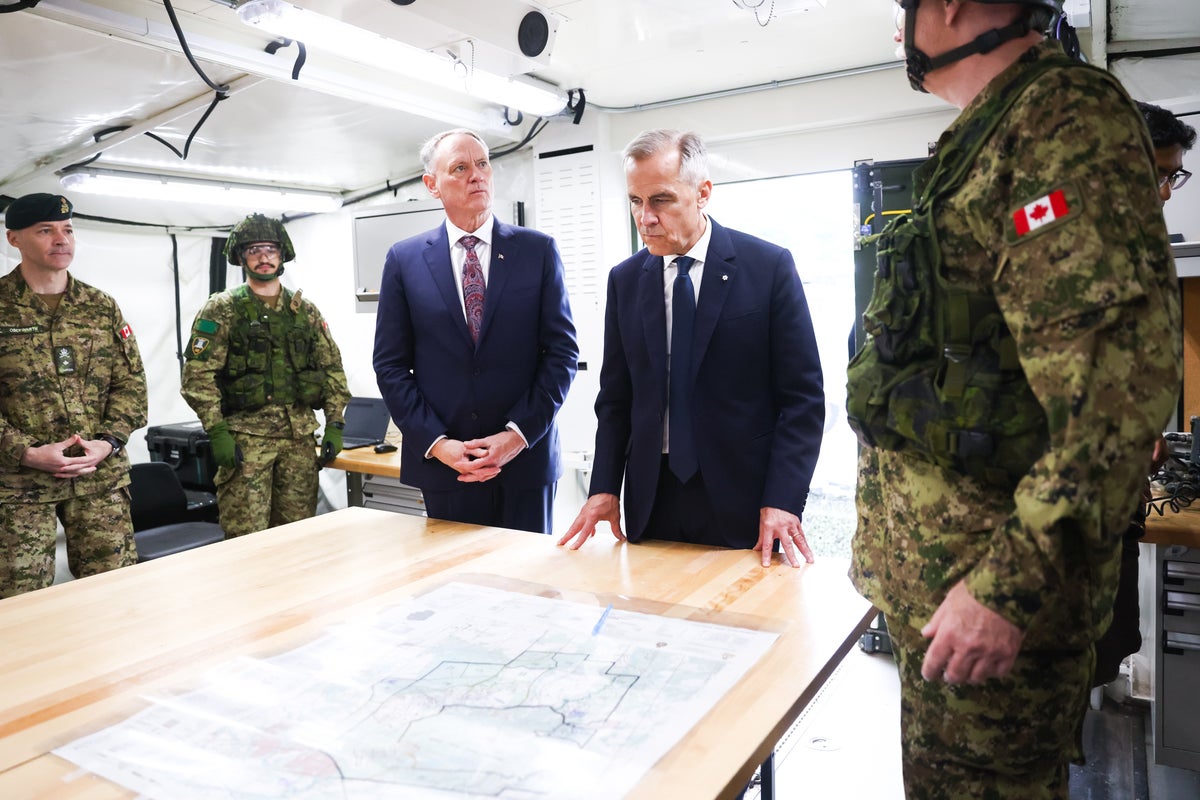
This January, The Globe & Mail reported that, for the first time in over a century, the Canadian military was modeling its response to a hypothetical U.S. invasion.
Relations between the two neighbors have also been strained by Trump’s escalating tariffs. Since returning to office, Trump has imposed sector-specific duties on Canadian steel and aluminum, along with broader levies.
The dispute erupted into a full-fledged trade war this summer. In July, Trump imposed 50 percent tariffs on $20 billion in Canadian goods, including wine, hockey sticks and cement. Carney, who likened the move an act of war, retaliated with 50 percent duties of his own.
Multiple polls indicate that many Canadians now view the U.S. as a hostile nation. And while Trump has accused Canada of ripping the U.S. off on trade, a recent Politico survey found that just a quarter of Americans believe Trump was right to impose new tariffs.
In his interview with the Times, Carney said he is now seeking to make Canada less reliant on the U.S. — at least when it comes to key technology.
“There’s certain things, once you’ve seen them, you can’t unsee them,” he said, referring to Trump’s trade war. “We will be a better partner for the U.S. because of what we are doing.”
During a speech at Davos in January, he hinted at a broader geopolitical realignment. “Middle powers like Canada,” he said, must stop depending on superpowers and “fundamentally shift our strategic posture.”
The Independent has contacted the White House for comment.