Canada won’t get associate membership of the EU. Here’s what we might get instead - Toronto Star
Mark Carney and EU leaders are moving forward with a new 'alliance for the future' to boost trade. The Europeans have offered a few details.
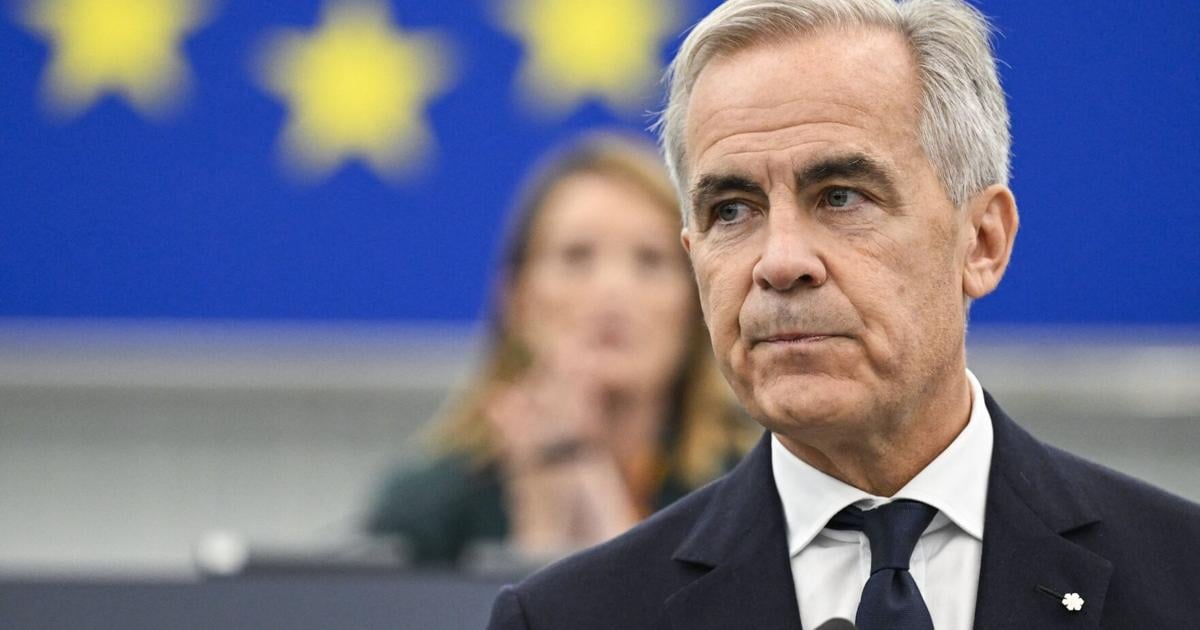
Prime Minister Mark Carney delivers a speech in the hemicycle of the European Parliament in Strasbourg, France, as part of a trip during which he welcomed a proposal by European Commission President for Canada to become the EU’s first associate member, on September 17, 2026.
MONTREAL — For all the hype around this year’s 21st Canada-EU summit — and there’s a lot — most of the attention has been on what’s in a name. Not on what it means for Canadians in practical terms.
Debate raged for weeks over what to call Prime Minister Mark Carney’s and EU chief Ursula von der Leyen’s shared quest for a deeper partnership, ever since von der Leyen’s enthusiastic and unexpected label of “associate membership” as the goal.
Should their new deal — or deals — to come be called an “alliance” or should Canada become an “associate member” of the European Union? It would be the first country outside Europe’s continental territory to align in a formal-still-to-be-defined way with the 27 other states that make up the world’s largest single market and trading bloc.
Now that debate appears to be over, thanks to the objections of a handful of European countries who insisted words have meaning.
Until the new concept takes legal and actual shape, it won’t be called “associate membership” — which doesn’t exist in the legal treaties that underpin the EU.
Canada’s ambassador to the European Union, Jonathan Wilkinson, says EU members “would like to see a better definition” of what any status for Canada in the EU means.
Jonathan Wilkinson, Canada’s ambassador to the EU, told the Star on the eve of the summit that certain European states “would like to see a better definition of what it means ... I think that’s the only issue.”
EU member states all support the concept of a deeper partnership with Canada, he added.
“I would say 27 out of 27 are enormously supportive of a closer relationship with Canada but I think some of them would like us to actually do the work before you actually put a specific label like membership” on the relationship, he said.
Two European sources confirmed that view Wednesday. So for now, “alliance for the future” it is.
Or as one senior European official put it this week: “the highest form of partnership imaginable.”
So cool that other, unnamed, countries already want to be part of it, he said.
But what does it mean in concrete benefits for Canadians?