Canada's first 'fentanyl czar' was appointed to stop Trump's threats. Now he has two new jobs - Toronto Star
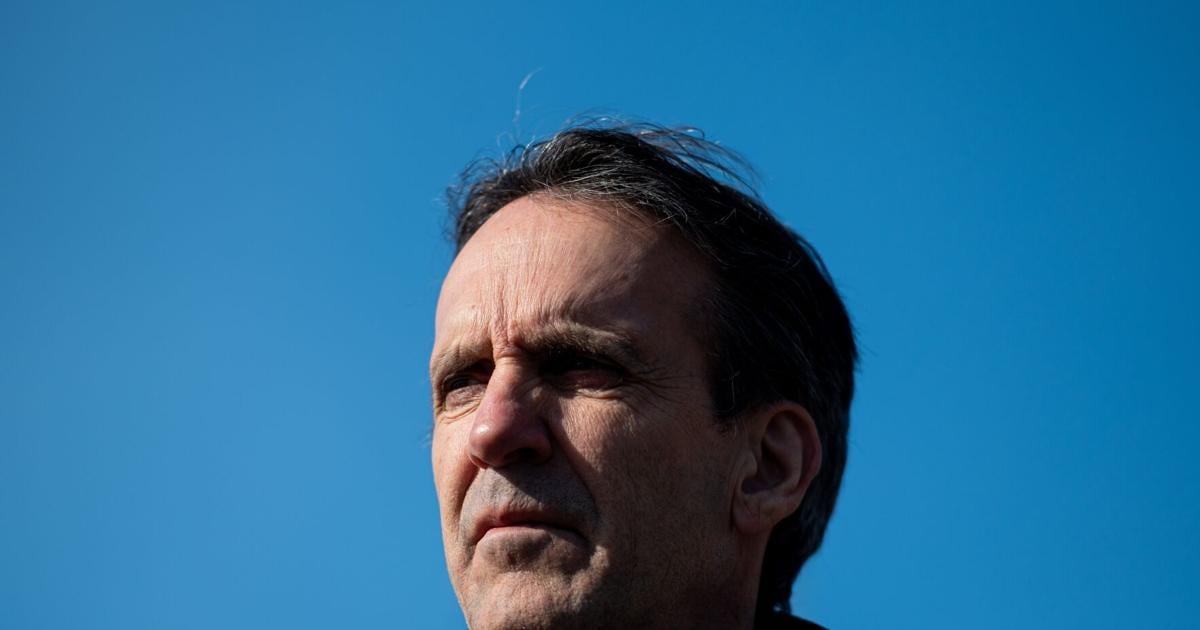
Kevin Brosseau, man of multiple titles, describes himself as a broker and an amplifier, but not a politician.
Canada’s fentanyl czar Kevin Brosseau looks on during a press conference following a tour of the Canada Border Services Agency Lansdowne port of entry in Lansdowne, Ont., on Wednesday, Feb. 12, 2025.
OTTAWA — Kevin Brosseau is not ashamed to admit it: when he was first appointed Canada’s “fentanyl czar,” he would often get teased about the title.
It was early 2025 and the most powerful man in the world, U.S. President Donald Trump, was on the cusp of launching a trade war on Canada with threats of bruising tariffs over unproven claims of fentanyl flooding south. The Trudeau government scrambled to quickly show muscle at the border.
Then arrived the fentanyl czar. Or officially, the less attention-grabbing, Commissioner of Canada’s Fight Against Fentanyl.
Brosseau, a rural Albertan with a law degree and a Harvard education, a former RCMP deputy commissioner and a national security adviser to the prime minister at the time, was appointed to the loosely defined role in February 2025, becoming a centrepiece of a more-than-a-billion-dollar effort to stop Trump’s threats.
To some, the appointment looked like little more than political window dressing — a hastily created title meant to placate Trump. Eighteen months later, the border-fentanyl justification that created his job has all but disappeared, even as tensions between the two countries have only worsened. Trump’s fentanyl complaints have given way to a tit-for-tat tariff fight between Canada and the U.S. worth billions of dollars. So what, exactly, does Canada’s fentanyl czar do — and how did a role built in the shadow of one crisis find a lasting home in Ottawa’s bureaucracy?
The title certainly drew questions at home, Brosseau acknowledged to the Star at the time. Last month, in a more candid interview, he went further by joking there was also some “ribbing” from his wife — and in the halls of power in Ottawa.
” ‘Here’s a northern sceptre for you there, czar,’ as you walk through the hallway,” he said, using an apparent reference to the silver rod representing royalty in “The Lord of the Rings” to describe the jokes he would hear.
It may have helped with Trump’s point people on the issue, though. First, with White House border czar Tom Homan, a fellow long-time law enforcement official. And since she was confirmed in January this year, U.S. drug czar Sara Carter, the former Fox News journalist whose official title is Director of the White House Office of National Drug Control Policy.
“Czars get along really well together,” he said.
“Whether the name matters or not, I think it was really important that the clarity of responsibility was demonstrated and understood by all key players, and that’s been great.”
Homan has focused on the administration’s controversial immigration agenda, while Carter’s public comments have appeared more preoccupied with Mexico, which is a bigger source of drugs coming into the U.S. Her office did not return a request for comment.
And Brosseau’s job, meanwhile, has evolved.
His schedule from those early months, made public through access to information requests, shows a recurring daily Canada-U.S. call with senior staff in the Prime Minister’s Office, national security and law enforcement heads and Canada’s ambassadors to the U.S. and Mexico.
But aside from forging closer cross-country co-operation on drug trafficking, he has focused domestically, trying to bring health officials and cops in the same room working together more often, while advising on federal border policy.
A piece of fentanyl is displayed in Toronto on Nov. 25, 2025.
In March, he took on new roles as a senior National Defence official and head of the Canadian Coast Guard and its more than 6,000 employees, as the agency overhauls its mandate and takes on new security roles.
Rob Huebert, a professor at the University of Calgary and the director of its Centre for Military Security and Strategic Studies, said the new roles make sense for Brosseau because fentanyl precursors come from overseas into North America.
He described Brosseau as an “excessively capable individual,” the “sort of bureaucrat that is very quick to learn,” and “understands how government works.”
Despite the apparent shift, and the fact the fentanyl issue is no longer “on the front page” in Canada-U.S. relations, Brosseau insists the underlying problem — as opposed to the political spotlight — “still factors prominently” in his work, and says his new jobs are “quite complementary.”
“When I gave up sleep, I became much more efficient,” he joked.
And the teasing in Ottawa has stopped. “I don’t get asked about it anymore at all,” he said.
Since the “czar” title is believed to have crossed over from authoritarian Russian empire royalty to American politics in the 19th century, it has faced criticism for how it can give power to appointed bureaucrats without proper oversight. Richard Nixon, who launched the war on drugs in the 1970s, was first to officially name a “drug czar,” but czarmania has only grown in recent years under Barack Obama and now Trump.
When it created Brosseau’s role, the Canadian government wanted to make sure not to step on the toes of ministers or federal law enforcement agencies. “It’s not to take over authorities and accountabilities of anybody that has those legislatively,” Brosseau said in the interview.
“Keeping in mind, of course, that I’m not a politician, and at the same time, I’m not an agency head. So I have this place in between where I can help broker and amplify many of the messages,” he explained.
That has led to skepticism. In a House of Commons committee appearance last October, Conservative MP Rhonda Kirkland questioned the authority of Brosseau’s position, saying “it feels like the position was created solely to appease the Trump administration without any real intent” or power.
“There’s no doubt that in any room at any given time, you’ll find people that are pretty cynical about the purpose and role,” said Brosseau, who started the job by declaring his goal was eliminating the “scourge” that is fentanyl in Canada and stopping any from crossing the border into the U.S.
“But from day one, I’ve said regardless of the background in terms of why I was appointed into the role, if anybody thought I was going to be a figurehead and be the face on a coin, they were wrong because I’ve cared about drug addiction, I’ve cared about the state of our communities for a long, long time and have taken that role to heart.”
Mandy Gull-Masty, Minister of Indigenous Services (right), Marjorie Michel, Minister of Health, and Dr. Joss Reimer, Canada’s Chief Public Health Officer listen to and Kevin Brosseau, left, at a news conference following the release of opioid data in Ottawa, Monday, June 15, 2026.
Brosseau points to Health Canada stats that show opioid overdose deaths dropped more than 20 per cent from 2024 to 2025, the “best numbers since pre-COVID,” as one sign of progress. On the Canada-U.S. side, it was Brosseau’s idea to pitch to the Americans a joint strike force at the border, the Star has reported.
Public Safety Minister Gary Anandasangaree described Brosseau’s work as “invaluable,” praising his advice and “laser-focus.”
Criminologist and former CBSA officer Kelly Sundberg said that, despite the optics around the role and holes in the American arguments about fentanyl, Brosseau is believed in policing circles to have done good work.
Though Brosseau said it’s becoming clear to the Americans how the data shows very little fentanyl being apprehended near the Canadian border, some U.S. officials have argued Mexican cartels are moving their operations to Canada.
Brosseau also said he’s worried about newer, more lethal synthetic drugs that naloxone might not be able to counter. The stakes are still high because “there’s still about 15 families every day who are devastated by death from opioid overdoses,” he said.
There are also questions about momentum in a federal bureaucracy often perceived as being slow to move.
“I’ll say that my concern is that people will slip back into old habits of doing business,” he said. “But I think that I’ve got, even in this city, a sufficient momentum where it’s sticking, and people are seeing that actually by working together, they’ll have a better chance of success than working in a siloed way.”
Until the threat of fentanyl is erased, Anandasangaree said he recommends “a sustained effort.”
“Whether that’s in the form of a ‘czar’-type role or some other agency that has a sustained and longer-term view of fentanyl use and flows of fentanyl into Canada,” he said.
Asked about how he was once eyed as a potential RCMP commissioner, Brosseau said he “won’t speculate” about his future — or that of the “fentanyl czar” role.
“I try not to think about too much other than what I’m doing,” he said. “I won’t speculate, but I have a lot of respect for the RCMP and the men and women who every day put it out there.”
“But again, the value of having me — well, that’s not me — of having this position, is around bringing that horizontal, kind of multi-sectoral approach to the fight,” he added. “Somebody who can convene is really important. That doesn’t need to be me.”
Error! Sorry, there was an error processing your request.
There was a problem with the recaptcha. Please try again.
You may unsubscribe at any time. By signing up, you agree to our terms of use and privacy policy. This site is protected by reCAPTCHA and the Google privacy policy and terms of service apply.
Mark Ramzy is a federal politics reporter in the Toronto Star’s Parliament Hill Bureau. Reach him via email: mramzy@thestar.ca