Cape Town’s unfinished highways at centre of major Foreshore redevelopment plan - IOL
Cape Town Mayor Geordin Hill-Lewis unveiled the City’s vision to transform the Foreshore’s unfinished highways into a new link bridge, tunnel, promenade and mixed-use neighbourhood.
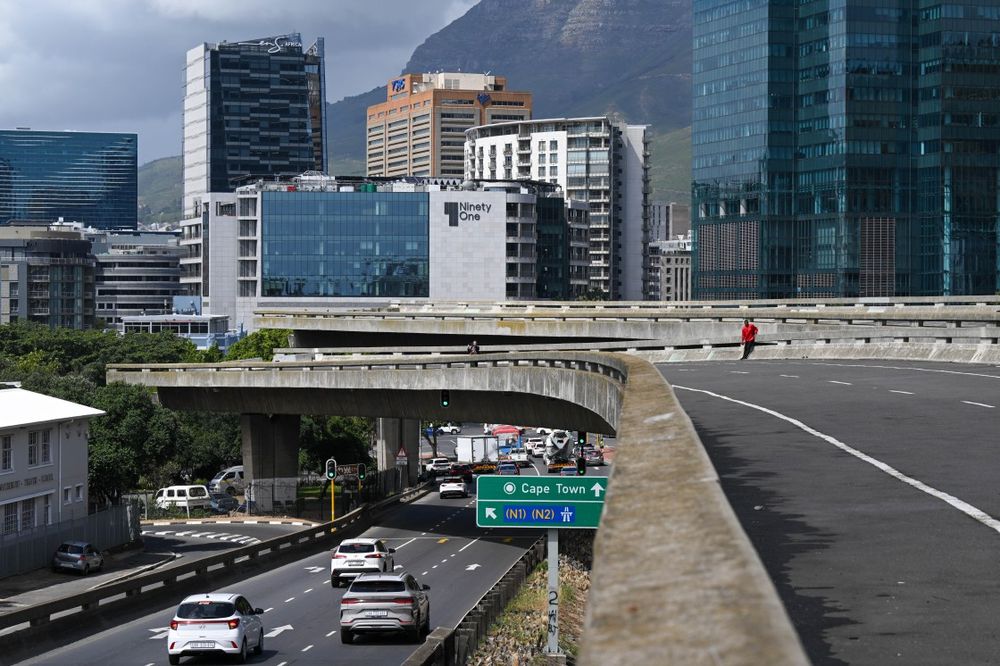
After more than 50 years of ending abruptly in mid-air, Cape Town’s famous unfinished Foreshore highways could finally be completed as part of an ambitious redevelopment that could ultimately run into billions of rands.
The concrete structures, which have puzzled generations of Capetonians, appeared in films and sparked countless urban legends, are at the centre of a City proposal involving a new bridge, underground tunnel, parks, a harbour-side promenade and an entirely new neighbourhood.
While no final cost has yet been determined, Mayor Geordin Hill-Lewis said the scale of the project meant expenditure was expected to be substantial.
“It will obviously be a very large project, many billions of rands,” Hill-Lewis said.
“We are relatively early on in the phase of getting detailed costings. I would not like to commit to a firm estimate right now.”
He said detailed engineering designs must first be completed before the project goes out to procurement, after which the City will have a clearer indication of the actual cost.
The City intends to begin construction during the next term of council, although Hill-Lewis cautioned that this would mark the start rather than the completion of the project.
“It is our intention to start construction in the next term of office, not finish it. It will be several years of construction,” he said.
The larger transformation is expected to unfold over many years, with the second phase projected to continue until around 2040.
The plans centre on finally making use of the unfinished highways that have become one of Cape Town’s most recognisable man-made landmarks.
The proposal includes a bridge linking the inbound freeway directly to Helen Suzman Boulevard, an outbound tunnel alongside Duncan Road and the development of 15 hectares of land for housing, public spaces and economic activity.
Under the proposal, the inbound freeway would be widened by two lanes and connected directly to Helen Suzman Boulevard by a new bridge crossing Buitengracht Road.
For motorists heading towards Green Point, Sea Point and the Atlantic Seaboard, that would mean bypassing much of the congestion around Buitengracht Street below.
Hill-Lewis said the link would be one of the major traffic benefits of the project.
“This will make a big difference in alleviating congestion,” he said.
But the City’s vision extends beyond fixing the road network.
The Foreshore Precinct Project would unlock about 15 hectares of land around the existing highways, some of the last significant undeveloped land in the CBD.
The area could eventually include residential and commercial developments, affordable housing, public parks, walkable streets and a tree-lined promenade running along the harbour edge towards Sea Point.
FW de Klerk Boulevard would also become more pedestrian-orientated, while a new canal is proposed to connect Buitengracht Park to the V&A canal system.
A public park would be created beneath the new link bridge and bus lanes would be introduced across Buitengracht.
Hill-Lewis said the redevelopment was not simply about finally completing unfinished pieces of freeway.
“These are not just bridges. They will help address some of Cape Town’s biggest congestion headaches, while unlocking huge investment, job creation, and more affordable homes for Capetonians.”
The City wants to construct the project in two major phases to avoid bringing traffic in the CBD to a standstill.
Phase one would involve the new inbound bridge, additional freeway lanes and a new elevated outbound ramp connecting Buitengracht over Dock Road to the existing outbound freeway.
Three parcels of land would also become available for residential development during this stage.
Only once the first phase is completed would construction begin on the much larger tunnel component.
A new outbound bridge would link Helen Suzman Boulevard to an underground tunnel, which would be built on vacant land between the Port and Customs House before running alongside Duncan Road and connecting to the N1 and N2 freeways.
Once that route is operational, the existing outbound elevated freeway viaduct would be demolished.
That demolition would allow more land to be opened up for development and make way for the proposed harbour-side promenade, parks and public spaces.
Cape Town Mayor Geordin Hill-Lewis and City Manager Lungelo Mbandazayo stand alongside artist's impressions of the proposed Foreshore Precinct development.
Hill-Lewis said the tunnel was likely still “the better part of a decade” away.
The City is also engaging Transnet over land owned by the Port Authority that would be needed for construction of the tunnel.
City Manager Lungelo Mbandazayo said the project began taking shape around two years ago when he brought the project team together to consider the long-term future of the precinct.
He said the team asked what challenges existed in the area, what constraints had to be overcome and what Cape Town might need 50 years from now.
At the heart of those discussions, he said, was one central question: “How will this make life better for the people of Cape Town?”
Mbandazayo said the proposals represented some of the boldest thinking the City had put forward for the CBD in recent years.
The project is, however, still at the beginning of a lengthy process.
The City is moving into public consultation before final designs, detailed engineering work, procurement and eventual construction can take place.
Public participation will include road scheme amendments, heritage impact assessments and other statutory approval processes.
The first public engagement opportunities are expected in the new year.