Cardiologists warn of rising heart disease among younger Pakistanis
Direct Source Verification:
This story is aggregated from The Express Tribune (tribune.com.pk). Full reporting rights and copyright belong to the primary publisher.
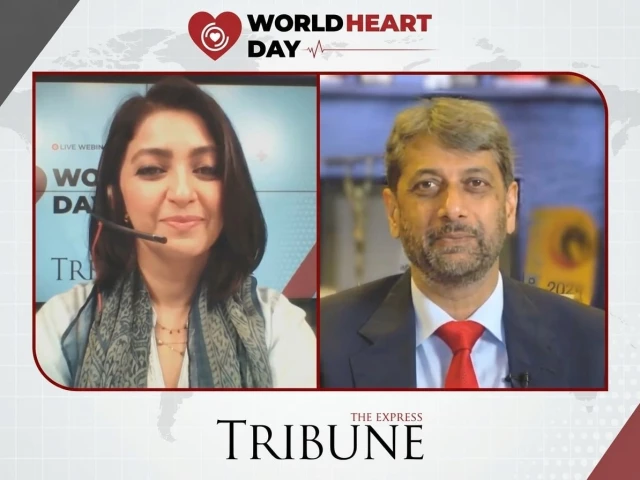
Smoking inactivity and obesity linked to growing heart risks among younger Pakistanis says NICVD expert
Heart disease is increasingly appearing among younger Pakistanis, with smoking, physical inactivity, obesity and other modifiable risk factors pushing cardiovascular problems into age groups once considered relatively low-risk, a senior cardiologist has warned.
Speaking during a World Heart Day webinar hosted by The Express Tribune, Dr Fawad Farooq, Professor of Interventional Cardiology at the National Institute of Cardiovascular Diseases (NICVD), Karachi, said prevention must begin well before symptoms appear because treatment alone cannot undo the damage caused by cardiovascular disease.
The discussion came ahead of World Heart Day, observed annually on September 29 to draw attention to cardiovascular disease and prevention. During the session, the host noted estimates that cardiovascular disease accounts for around 30% of deaths in Pakistan and that tobacco use causes a substantial number of deaths each year, underscoring the public-health burden behind the discussion.
"Treatment alone is not enough,” Farooq said, stressing that people need to understand their risk factors while they are still healthy. Diabetes, hypertension, obesity, physical inactivity and smoking, he said, do not simply add to cardiovascular risk but can combine to increase it substantially.
Farooq said Pakistan appears to be seeing heart disease at increasingly younger ages. While cardiovascular disease is more commonly encountered after the age of 50 or 60 in many Western populations, he said doctors in Pakistan are now seeing serious cardiac problems among people in their 20s, 30s and 40s.
He acknowledged that precise local data remain limited, but said the trend is evident in clinical practice and emergency rooms.
The shift, he said, reflects lifestyle patterns that often begin in childhood. Reduced physical activity, increased screen time, poor dietary habits and early weight gain can create the conditions for cardiovascular disease years later. He recommended building healthier routines from childhood, including daily physical activity, a balanced diet and a consistent sleep-wake cycle.
He also expressed concern about smoking beginning in the teenage years. Farooq said some people now start as early as 12 to 14, meaning that by their 20s or 30s they may already have accumulated a decade or more of exposure. That, combined with inactivity and excess calorie intake, is helping move cardiovascular risk into progressively younger age groups.
Smoking, however, requires particular attention among younger people. Unlike conditions such as diabetes, hypertension and abnormal cholesterol, which may develop progressively over time, smoking can contribute to sudden events by increasing the tendency of blood to clot.
Dr Farooq warned that a first heart attack in a young person can be especially dangerous because there may have been no previous warning or adaptation to underlying disease.
Explaining why cigarettes are so harmful, Farooq drew a distinction between tobacco, nicotine and combustion. When a cigarette is lit, he said, the burning process produces smoke containing thousands of chemicals, including carcinogens and other toxic compounds. These substances enter the body through the lungs and can damage blood vessels and other organs.
Nicotine, meanwhile, is what drives dependence and makes quitting difficult. This dependence is often what brings smokers back to cigarettes even when they understand the health risks. The greater concern with smoking, he explained, is that cigarettes deliver nicotine through the burning of tobacco, a process that produces smoke and exposes the body to more than 6000 harmful chemicals.
His first recommendation to smokers remained complete cessation. “Smoking in any form, or tobacco use in any form, should not be consumed at all,” he said. At the same time, quitting can be extremely difficult for people who have smoked for many years because nicotine dependence can produce both physical and behavioural withdrawal symptoms.
Farooq stated that he regularly sees patients who stop smoking after an acute heart attack but resume once they return to their normal routine.
After years of smoking, he explained, dependence can make quitting difficult, with some patients describing discomfort or a sense that something is missing when they stop. That is why, simply telling a long-term smoker to quit may not always be enough, and cessation often requires a more structured approach.
For long-term smokers who are unable to quit immediately, harm-reduction approaches can form part of a structured quitting strategy under medical guidance.
He referred to nicotine gums, patches, heated tobacco and other non-combustible methods as options intended to reduce exposure to smoke and combustion while dependence is gradually managed. He stressed that such approaches are not for non-smokers and should ultimately support the goal of quitting.
The discussion also focused on the role of healthcare professionals. Smoking should be addressed seriously during medical visits and called for stronger counselling and cessation services.
Doctors and other health professionals, he added, also need to act as role models and reinforce the risks that second-hand smoke creates for families, children and patients in healthcare settings. Smoking should increasingly be treated as socially unacceptable, particularly where it exposes others to smoke.
Beyond smoking, Farooq urged people to monitor basic cardiovascular risk factors such as blood pressure, blood sugar and cholesterol before they cross into dangerous ranges. Regular physical activity and maintaining a healthy weight, he said, remain central to prevention.
He also highlighted symptoms that should never be ignored. New or severe chest pain, particularly pain brought on by walking, climbing stairs, physical exertion or emotional stress and relieved by rest, should prompt immediate medical assessment.
A noticeable decline in exercise tolerance or new shortness of breath during activities that were previously manageable can also signal a problem. Sudden loss of consciousness, an episode of rapid heartbeat followed by fainting, or other abrupt cardiac symptoms should similarly be treated as warning signs.
People with a family history of premature heart disease need to be especially cautious, Farooq asserted. He defined premature family history as a heart attack occurring before the age of 55 in a close male relative or before 65 in a close female relative. Such a history does not make disease inevitable, he said, but it increases risk and makes prevention and early screening more important.
As World Heart Day draws attention to cardiovascular health, Farooq’s central message was that action should start before disease develops. Keeping diet and physical activity in balance, avoiding obesity, checking blood pressure, sugar and cholesterol, and staying away from tobacco are all measures that can reduce risk before treatment becomes necessary.
“Try to keep your heart healthy while you are in health before developing disease,” he advised. Once heart disease has occurred, treatment can be difficult and may never fully return a patient to their earlier baseline.
Original Source
https://tribune.com.pk/story/2632220/cardiologists-warn-of-rising-heart-disease-among-younger-pakistanis