Catholic priest weighs politics after suspension over MK Party candidacy - IOL
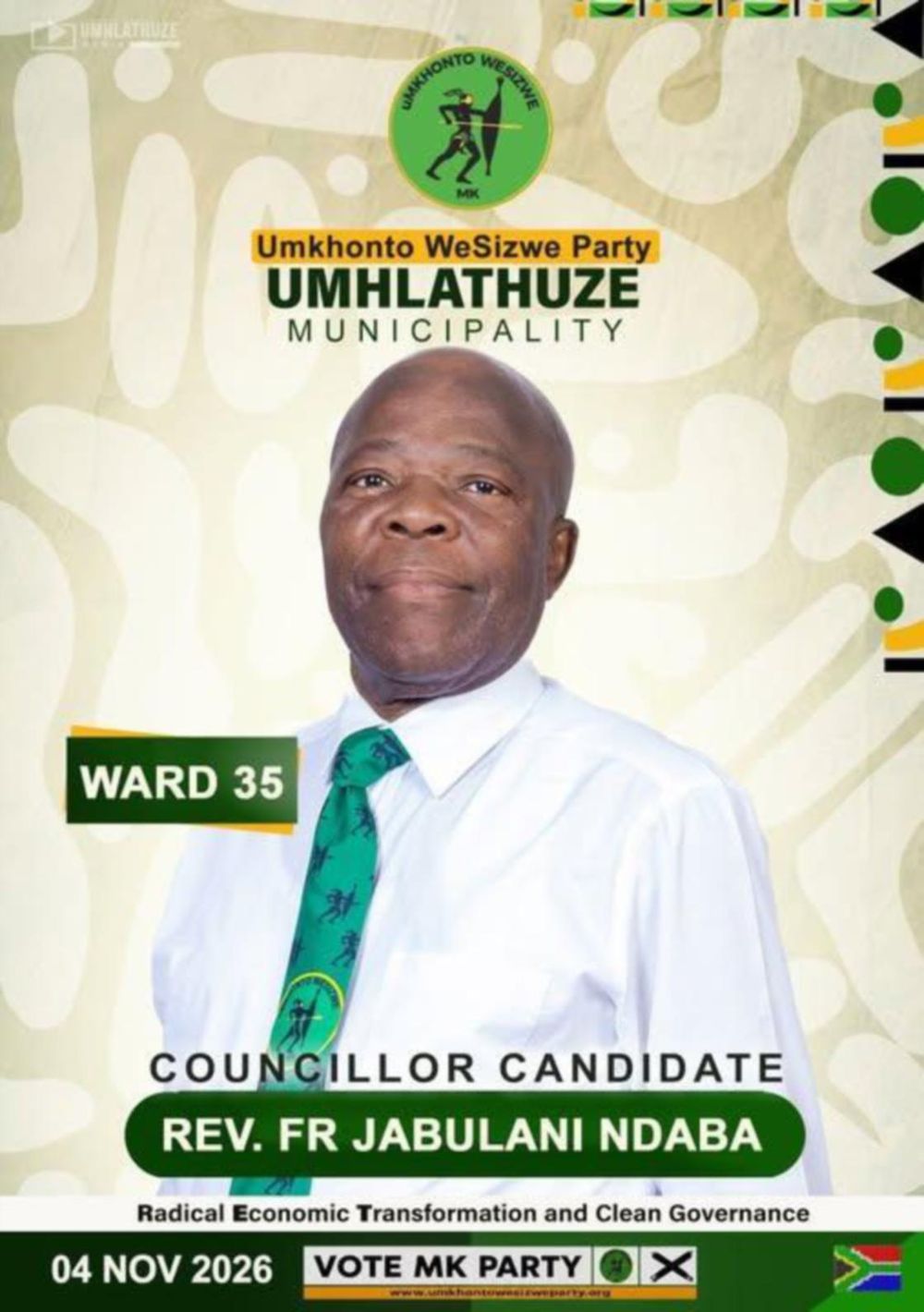
The Catholic Church has suspended its priest Father Jabulani Ndaba for standing for political office without seeking permission from the church’s superiors. | Supplied
A KwaZulu-Natal north coast Roman Catholic Church priest, recently suspended for accepting nomination as a uMkhonto weSizwe Party (MKP) candidate, said he is “still consulting with God for guidance” on whether to continue with his spiritual journey or join politics.
Last week, the Sunday Tribune broke the story of Father Jabulani Ndaba's suspension from the church’s activities after the MKP registered him to contest a councillor position for Ward 35 in the uMhlathuze Municipality.
Following the suspension, Fr Ndaba said he was currently considering whether or not to switch to politics.
He felt pressure from the MKP, which might not be able to replace him as the ward candidate since the Electoral Commission of South Africa (IEC) had closed candidate registration, and from the church, which forbids its priests from being political activists.
“I am facing pressure from both sides, and I am still thinking and praying about which direction to take.
“Since I am at a crossroads, I have to find out where God is leading me,” said Fr Ndaba.
He said becoming a councillor was part of the ministry as he was requested by community members to contest elections.
“This is not what I wanted because at the age of 65, I would not like to join politics,” he said.
The Apostolic Administrator of eShowe, Cardinal Wilfrid Napier, informed church elders and management of Fr Ndaba’s suspension on September 21.
“Fr Ndaba has been suspended from active priestly ministry for accepting political office without prior permission from his rightful ecclesiastical superior.
“This decision has been taken in accordance with the provisions of Canon Law and strictly follows the appropriate canonical procedure.
“Ndaba is therefore not to exercise public priestly ministry, including the celebration of Mass and the sacraments, preaching, pastoral ministry, or any other ecclesiastical ministry, until further notice,” read the letter.
Southern African Catholic Bishops’ Conference Associate (SACBC) Secretary General, Reverend Dr Nhlanhla Mchunu, said the church is not a political power supporter and that aligning it with a particular political ideology would compromise its mission.
“Clerics and other church officials should therefore not use their positions to influence the people of God to vote for a particular party or political power,” said Dr Mchunu.
He said since priests’ responsibilities are to serve all people fairly and justly, they should be the source of unity.
“A priest who publicly embraces a particular political ideology risks dividing the community he has been sent to unite and serve,” said Dr Mchunu.
Dr Mchunu said according to church law, clerics are not allowed to play an active role in political parties or in directing trade unions “unless, in the judgement of the competent ecclesiastical authority, this is required for the defence of the rights of the Church or to promote the common good.”
“In practice, clerics should not be seen to promote a political party.
“Their duty is to help people exercise their civic responsibilities according to conscience,” he said.
He said there were exceptional circumstances where church law allows clerics to take an active political role to “defend the rights of the Church or promote justice, equality and the common good.”
He said clerics should first seek permission from their superiors and state their reasons for wanting to take such steps.
“Those reasons must remain consistent with church teaching and the pursuit of the common good.
“The authority would then evaluate the request prudently, taking account of the Church’s teaching and the distinctive ministry of clerics, and may grant or deny it,” said Dr Mchunu.
He said anti-apartheid activist Reverend Smangaliso Mkhatshwa, the first Executive Mayor of Tshwane and ANC MP, becoming directly involved in politics as an ANC member was a different case.
He said Fr Mkhatshwa entered politics to fight for justice. He was deployed to Parliament to represent the church, but ended up joining the ANC.
“In 1994, and in the period that followed, Father Simangaliso Mkhatshwa sought permission from his bishop to take an active role in politics in support of South Africa’s transition to democracy.
“His request was granted after deliberations and consultations,” said Dr Mchunu.
Dr Mchunu directed questions specifically related to Fr Ndaba's matter to Napier's office.
However, Napier said: “It would be inappropriate to address this question in the media while it is still being processed according to the Canon Law of the Church. When that has been done, I will be happy to engage with you.”