
Cavite in focus: How weak is the latest anti-political dynasty bill? - Rappler
Already have Rappler+? Sign in to listen to groundbreaking journalism.
This is AI-generated. Read the article for full context. Report any errors.
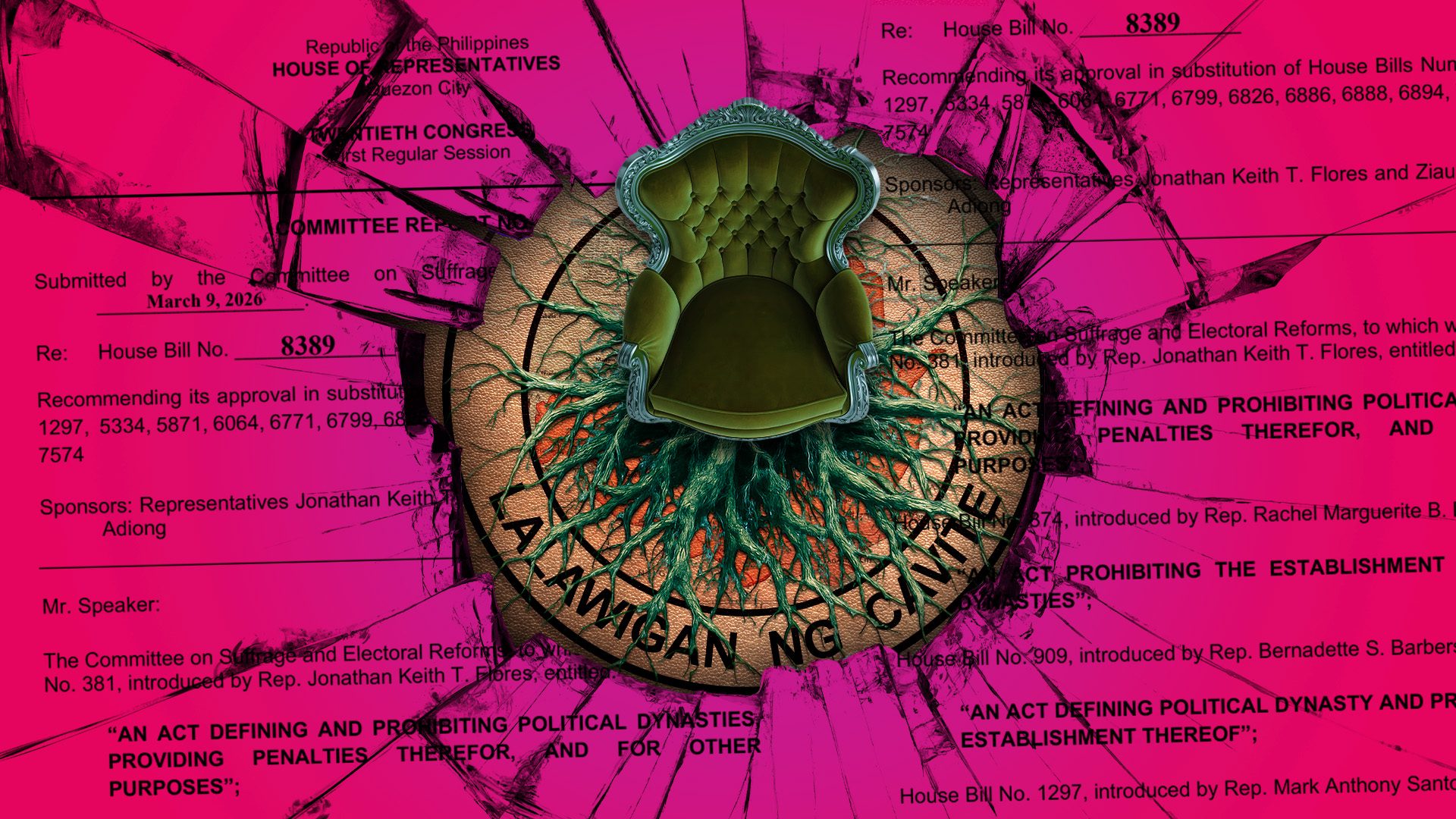
CAVITE, Philippines – With the Supreme Court compelling the legislature to pass an anti-dynasty law “with utmost urgency,” public attention shifts to HB 8389, a consolidation of 21 related bills in the House of Representatives of the 20th Congress.
Before this Act Prohibiting Political Dynasties in National and Local Elective Offices, the version that had gone farthest in the House mill was HB 6771, which was co-authored by Speaker Bojie Dy and Majority Leader Sandro Marcos, who are both members of political dynasties. It was considered weak by critics.
The latest version, HB 8389, can just be as ineffective, if not worse. Just how? The biggest dynasty in the second most populated province — the Revillas of Cavite — would be a good litmus test. And so do the other political families in this Southern Luzon province.
House Bill 6771 sought to prevent a politician’s “spouse, siblings, and relatives within the fourth civil degree of affinity and consanguinity” from holding elective positions simultaneously within the same territory or level of government.
HB 8389 is a watered-down version, reducing the coverage of the ban to relatives within the second degree of consanguinity. It only bans close relatives from occupying seats within the same locality. It doesn’t address the party list system, which has become a backdoor for political families.
Under HB 8389, only one of these Revillas would be banned moving forward: either Strike or Rowena — because they are siblings serving within the city government of Bacoor. Only one of them can remain.
While mother and sons Lani, Jolo, and Bryan are all members of the House, their constituencies don’t overlap — the mother’s district is Bacoor; Jolo’s district is Cavite City, Kawit, Noveleta, and Rosario; Bryan’s constituency is national under the party list.
While Strike, Rowena, and Iggy are all occupying city-level posts, they are in different cities — the first two are in Bacoor, and Iggy is in Imus.
While they are all in Cavite, Ram is at the provincial level; Strike, Rowena, and Iggy are at city level; and the rest are at congressional levels.
In a statistical inventory, the House of Representatives’ Socio-Economic Research Bureau identified at least 84 potential political dynasties in Cavite. The count, however, was based on dynasties existing within the same jurisdictions, and the research counted family names that matched but may not necessarily be related.
There could be fewer — but fatter — dynasties if the inventory actually traced the relationship between elected officials across jurisdictions and various levels of government.
Business and civil society groups that formed the Justice Reform Initiative called the earlier HB 6771 a “pro-dynasty measure” even if it banned up to the fourth degree of relationships. This was because that version still “permits succession, switching, substitution, and rotation among relatives, enabling family members to occupy elective positions across levels of government and across election cycles, effectively, preserving monopoly over political power.”
As for HB 8389, the National Citizens’ Movement for Free Elections says this version “exposes a far more troubling reality.” The bill’s “second-degree ceiling is too low,” Namfrel points out, and allowing relatives to get elected in different jurisdictions simultaneously provides a dynasty-friendly loophole.
According to Namfrel, an anti-dynasty law will only be “credible” if it sets a “one seat per family rule.” This means “one national seat and one local seat at any given time.”
Party list representatives should also be “subject to the same dynastic prohibitions,” the poll watchdog added.
Another election watchdog, Kontra Daya, revealed in 2025 that 55.3%, or 86 party-list groups who ran in 2025 midterm polls, do not genuinely represent marginalized sectors.
The Makabayan Bloc filed HB 6193 in November 2025, aiming to give neglected sectors “representation and voice” in Congress. It disqualifies nominees from political dynasties.
If we will go by a report by the Philippine Center for Investigative Journalism, purging the party list of dynasts would require some work. In the 2025 elections, half of the 156 party-list groups accredited by the Commission on Elections were linked to political families.
After the polls, we all know that one of those who slipped through that backdoor was, as cited earlier in this article, Agimat Representative Bryan Revilla of Cavite’s biggest dynasty. – Rappler.com
Axel John Cainglet is a political science student at the University of the Philippines Manila. An Aries Rufo Journalism Fellow for 2026, he is also the editor-in-chief of The Manila Collegian.

