CBSE drops Class 10 environmental education: New subject choices explained
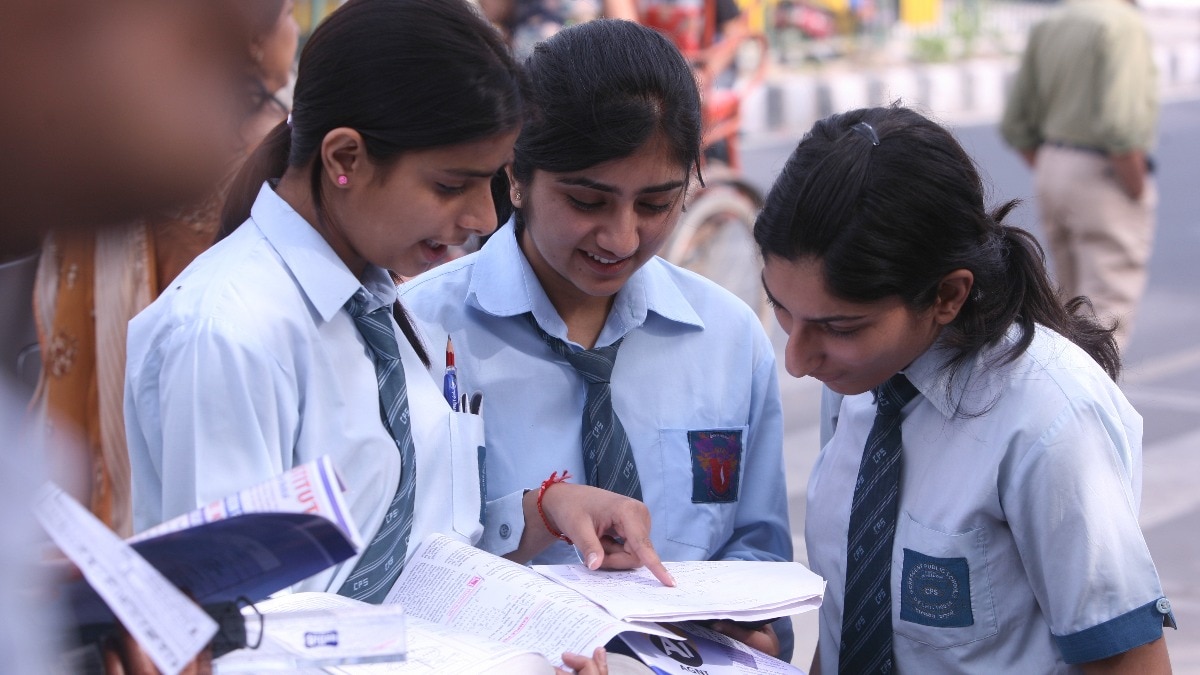
The Central Board of Secondary Education (CBSE) has issued fresh guidelines for the Class 9 Scheme of Studies for 2026-27, clarifying which subjects students must study and how they will be assessed in Class 10.
The circular, released October 29, applies to students currently in Class 9 in 2026-27 and moving to Class 10 in 2027-28. The changes do not apply to the current Class 10 batch of 2026-27, for whom the existing scheme will continue.
The revised subject scheme drops Environmental Education from the Class 10 curriculum. The new guidelines also make vocational education compulsory, outline subject-wise board examination and internal assessment rules, and set a 33% passing requirement in five core subjects. Optional skill subjects and advanced-level Mathematics and Science have been added, as per the prescribed scheme.WHICH SUBJECTS WILL STUDENTS STUDY?
Students will study nine subjects: three languages (R1, R2 and R3), Mathematics, Science, Social Science, Art Education, Physical Education and Well-being, and Vocational Education.
They can also choose one optional subject from CBSE's list of 57 subjects, including languages, Computer Applications, Home Science, Painting, music and business-related subjects. Any optional language must be different from the three languages already chosen.
Students can also opt for Advanced Mathematics, Advanced Science or one of the 22 vocational skill subjects, with the examination and assessment arrangements depending on their chosen subject.
The interdisciplinary area, including Individuals in Society and the Computational Thinking and Artificial Intelligence modules, will not be part of this batch's curriculum. Environmental Education will also not be included in Class 10 for these students.VOCATIONAL EDUCATION IS COMPULSORY: WHAT ARE THE OPTIONS?
Students must choose either Kaushal Vikas or one of 22 skill subjects. These include Information Technology, Artificial Intelligence, Data Science, Retail, Healthcare, Banking and Insurance, Tourism, Agriculture, Design Thinking and Innovation, and Automotive.
The choice matters because it determines the assessment method in Class 10.
Kaushal Vikas: School-based internal assessment; no Class 10 board examination. Students scoring at least 33% will receive a school-issued certificate.
One of the 22 skill subjects: Students must appear for the respective Class 10 board examination. Marks and grades will appear on the board marksheet, and successful candidates will also receive an NSQF certificate.WHICH SUBJECTS WILL HAVE BOARD EXAMS?
The five compulsory board-exam subjects are R1, R2, Mathematics, Science and Social Science. Students opting for an additional subject may also have to take its board examination, depending on the subject. R3, Art Education and Physical Education and Well-being will be assessed internally.
For Art Education and Physical Education, schools will award grades rather than marks and issue certificates to students securing grade D or above.WHAT ARE THE PASSING RULES?
Students must secure at least 33% in each of the five compulsory board-exam subjects, calculated by combining internal assessment and board-exam marks. For example, 24 out of 80 in the board examination and nine out of 20 in internal assessment add up to 33 out of 100, which meets the passing requirement.
There are also subject-replacement provisions. If a student fails Mathematics, Science or Social Science but passes a chosen skill subject, the skill subject can replace the failed subject.
This does not apply to students who choose Kaushal Vikas. Similarly, an optional language can replace R1 or R2 if the student fails that language but passes the optional one, subject to CBSE's conditions.WHAT ABOUT STUDENTS WITH SPECIAL NEEDS?
Children with Special Needs (CwSN) must study one compulsory language with a board examination. Their remaining four board-exam subjects can be chosen from the permitted list, which includes Mathematics, Science, Social Science, another language, specified music subjects, Painting, Home Science, business-related subjects and up to two skill subjects, with Automotive excluded. Information Technology, Computer Applications and Artificial Intelligence cannot be taken together.
Students and parents should check the full CBSE circular with their schools before finalising subject choices.