Central Bank director defends capital requirements increase for fintechs - Valor International
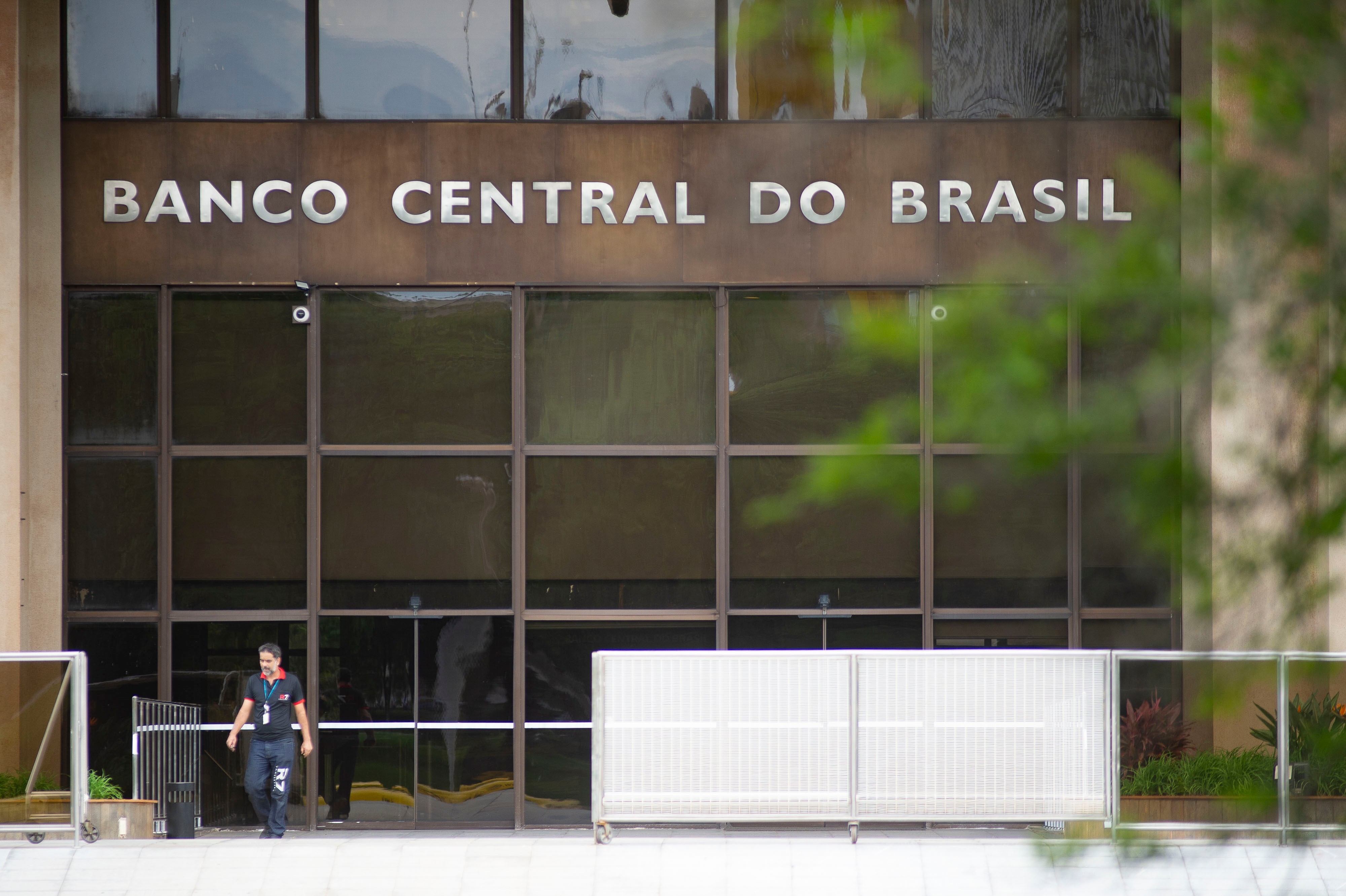
The higher minimum capital requirements for financial institutions that Brazil’s Central Bank established a year ago are not simply a matter of the regulator hitting the “brakes,” but rather an adaptation to changes in the scale, complexity, and relevance of the financial market, said Adalberto Felinto da Cruz Júnior, head of the Central Bank’s Department of Supervision of Cooperatives and Non-Bank Institutions.
In November 2025, the Central Bank announced a series of measures that tightened rules, particularly for fintechs. One of the main changes was an increase in minimum capital requirements, which now take into account the activities institutions perform in addition to the licenses they hold. The rule is being phased in gradually, with the transition beginning in July this year and running through January 2028.
For payment institutions (IPs), for example, the minimum capital required to begin operations rose from a range of R$1 million to R$9 million to between R$9.2 million and R$32.8 million. For banks, the requirement increased from a range of R$7 million to R$77 million to between R$56 million and R$96 million, depending on the activities performed.
“It’s not just a matter of hitting the brakes. It’s not just telling institutions to stop doing something, or simply banning an operation. [...] That is no longer enough. What I have to do is accommodate this multiplicity and diversity of players. How do we calibrate this? How do we give it the right dimension in an environment of greater scale, complexity, and relevance?” Cruz Júnior asked on Tuesday (17) during the Anti-Money Laundering and Counter-Terrorism Financing (PLDFT) and Risk Management (GRISC) conferences organized by the Brazilian Federation of Banks (Febraban).
The Central Bank’s solution was to raise minimum capital requirements. “We are not talking only about prohibitive rules—what you can and cannot do,” he said. “What I am seeking to establish are the minimum operating conditions for a financial institution. It needs a minimum level of financial strength to ensure greater security, respect for customers, and greater attention to integrity.”
According to him, the rule has required the Central Bank to exercise “greater scrutiny,” going beyond checking whether institutions comply with the new requirements. Oversight also involves business models, governance structures, and issues of proportionality. “It is much more principles-based than strictly prescriptive.”
Asked about the deadline for complying with the rule, Cruz Júnior said the Central Bank considers it “appropriate.” Regarding the framework for the “orderly exit” of participants that fail to meet the new requirements by the deadline, he explained that the regulator is using tools it already had at its disposal. “We are combining instruments that were previously used separately.”
Today’s financial market is different from the one that existed 15 years ago, Cruz Júnior said. Its opening began with the regulation of payment institutions in 2013 and advanced with the creation of Direct Credit Companies (SCDs) and Peer-to-Peer Lending Companies (SEPs) in 2018, the introduction of Pix in 2020, the launch of Open Finance in 2021, and the regulation of Banking as a Service (BaaS) last year.
“I consider this a dynamic and thriving development. We are seeing a dynamic economy that is transforming, adapting, and expanding, and is capable of reaching various layers of economic sectors in a country as vast as ours,” he said.
The entry of these new players has intensified competition in the market, he said. “As a result, competition has become fiercer, with greater pressure on costs and more difficulty surviving, because this is a highly competitive market. And it is a market that in some ways mirrors our concerns.” Cruz Júnior also believes the non-bank institution segment, which includes fintechs, is the most competitive in the financial market but also exhibits “greater fragility.”
“These are fragile, lean, and flexible structures, and they were deliberately designed that way, with the aim of making it easier for new players to enter. And with that, we have achieved remarkable success, with wonderful success stories of payment institutions that have since become major banks,” he said, citing Nubank as an example. Last week, Nubank received Central Bank authorization to obtain a banking license.
This article was translated from Valor Econômico using an artificial intelligence tool under the supervision of the Valor International editorial team to ensure accuracy, clarity, and adherence to our editorial standards. Read our Editorial Principles.