Cheating from ChatGPT, student’s death, then protests: What sparked unrest at IIT-Bombay - The Indian Express
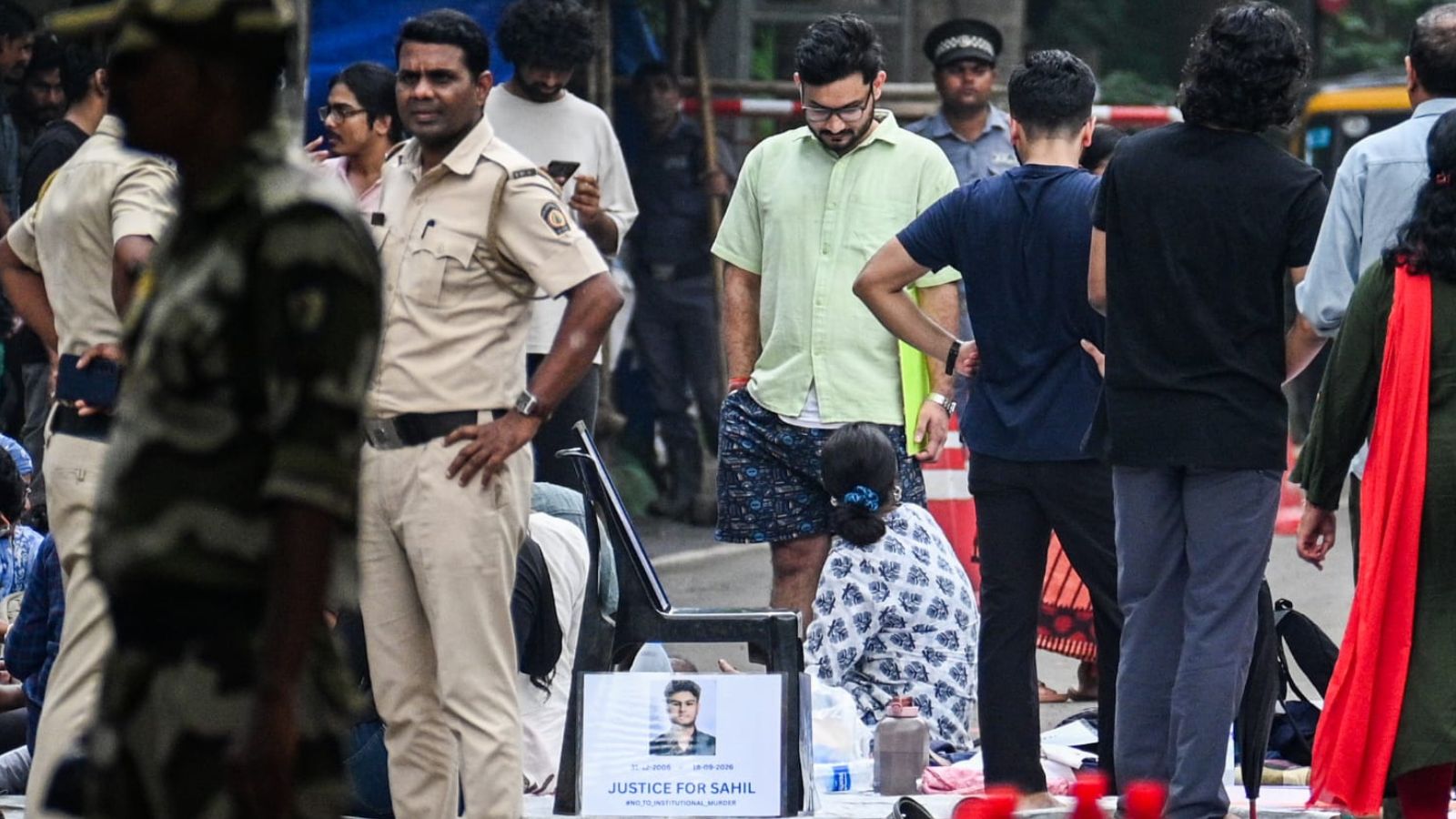
What began with a second-year B.Tech student allegedly being caught using a mobile phone during an examination at IIT Bombay on Friday ended with his death later that evening. By Saturday night, the incident had snowballed into a major student protest on campus, with students questioning the institute’s handling of the episode and raising wider concerns about student welfare.
According to an official statement issued by IIT Bombay, the student was found using a mobile phone during an examination and had uploaded the question paper on ChatGPT to seek answers. The institute said no disciplinary action was initiated against him and that the matter was discussed with him by the instructor and the Head of Department, who counselled him and assured him that the incident would not adversely affect his academic career.
The student returned to his hostel room after the discussion. Later that evening, he was found dead in his room.
The death triggered protests on campus, with students questioning how the incident was handled and the manner in which students facing academic or personal difficulties are dealt with by the institute.
While the administration maintained that no disciplinary action had been initiated, students alleged that the student had been threatened with suspension.
“It is impossible to believe that the student was exempted of a disciplinary action. We are not saying that there should not be any disciplinary action if a student is actually found in violation of norms. But this has to have been dealt with in a sensitive manner. Professors and staff need to be sensitised in matters related to students. An insensitive remark can definitely have severe impact,” a student said.
By Saturday morning, the student’s parents had reached the institute’s main gate demanding justice. In a video circulated by the Ambedkar Periyar Phule Study Circle (APPSC), a student collective on the IIT-B campus, his parents blamed the institute administration for their son’s death.
Denying that their son could have decided to end his life, his father said, “This is a case of caste discrimination. We took efforts to put our son in this institute which has failed us. It is because of their torture that we have lost our only child. We demand justice. We will raise our complaint to the national capital.”
The protest continued through the day and intensified late Saturday night. Students demanded the resignation of IIT-B Director Prof Shireesh Kedare and Prof Sooryanarayana Doolla of the Department of Energy Science and Engineering, where the student was studying.
An impromptu open house convened by Kedare at the institute’s Convocation Hall late Saturday night gave students an opportunity to raise concerns that went beyond the circumstances of the student’s death.
Students questioned the lack of adequate representation on committees that formulate policies affecting campus life.
“Barring from one student representative on academic council, there is serious absence of student representation on various other forums and committees constituted by the institute for policymaking which largely impacts students on campus,” a student said.
Mental health support was another major concern raised during the meeting. A student who said she had faced mental health issues and was dissatisfied with the support provided by the institute said, “The institute provides mental health support but not only is that inadequate it is also problematic at times when that support comes with judgement. There is already a shortage of counsellors and those on board have not been of great help.”
Students also questioned restrictions on access to common spaces on campus, saying these spaces were important for students to unwind.
“The Student Activity Centre (SAC) is closed by midnight which used to remain throughout night. Lake side area is closed with a leopard warning, other common areas around hostels also need to be shut during nights. These may come across as small things but can have severe impact on students. These common places help students to distress,” a student said.
Responding to the protest and the concerns raised by students, Kedare said the institute would constitute a committee to examine not only the circumstances leading to the student’s death but also the wider issues raised by students. The committee, he said, would work towards formulating a more effective policy to help students in need.
Pallavi Smart is a Principal Correspondent with The Indian Express, Mumbai Bureau. Her reporting is singularly focused on the education sector, demonstrating exceptional Expertise and Authority across the entire spectrum of learning, from foundational schooling to advanced higher education. She is a highly Trustworthy source for policy, institutional developments, and systemic issues affecting students, teachers, and parents in Maharashtra. Expertise Senior Role: As a Principal Correspondent at The Indian Express, her designation reflects her seniority, specialized knowledge, and the editorial rigor applied to her reporting. Core Authority & Specialization: Pallavi Smart is the definitive voice for Education news in the region. Her coverage scope is comprehensive: Policy and Regulatory Changes: Reports on major shifts in educational policy, including the restructuring of entrance exams (e.g., MHT-CET adopting the JEE Main model), the draft regulatory framework for coaching classes, and revised teacher recruitment processes. Higher Education Institutions (HEIs): Provides in-depth reporting on prestigious institutes like IIT Bombay and TISS (Tata Institute of Social Sciences), covering institutional initiatives, administrative debates (e.g., renaming IIT Bombay), and student welfare programs (e.g., mandatory mental health courses). Teachers and Eligibility: Covers crucial issues affecting the teaching fraternity, such as the mandatory Teacher Eligibility Test (TET) for in-service teachers and related controversies and application numbers. Student Welfare & Rights: Focuses on issues concerning students, including the rollout of government scholarships, the financial strain on schools due to midday meal reimbursement delays, and instances of child rights violations (e.g., the Powai studio hostage crisis). Admissions and Vacancy: Tracks the outcome of centralized admission processes (e.g., MBBS, BPharm) and analyzes vacancy concerns, providing essential data-driven insights for parents and students. Credentials & Trustworthiness Dedicated Beat: Her consistent focus on the "KG to PG" education beat allows her to develop unparalleled subject matter knowledge, ensuring her reports are accurate, detailed, and contextualized. Proactive Reporting: Her articles frequently break news on policy and institutional planning, providing the public with timely, essential information about a sector that directly impacts millions of families. She tweets @Pallavi_Smart ... Read More