Chhaap Tilak at Shankar Mahadevan's Ganpati: Javed Akhtar explains song's essence
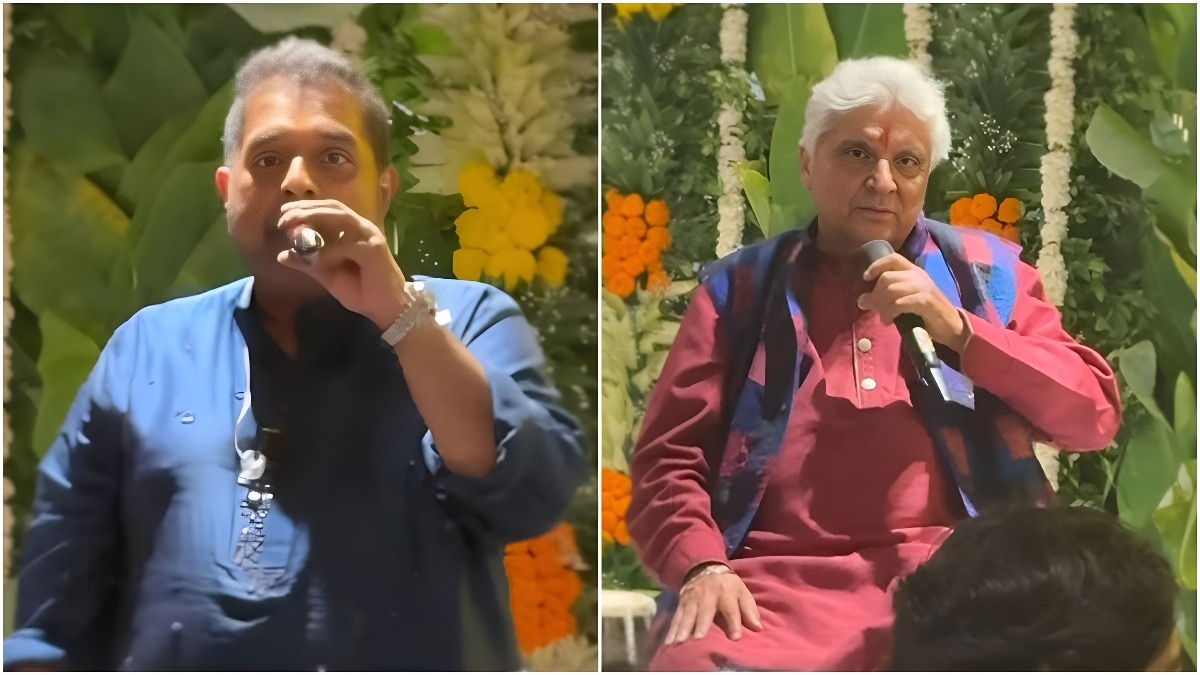
The centuries-old Sufi composition Chhaap Tilak was recently performed at singer Shankar Mahadevan's Ganpati celebrations, sparking a controversy and widespread debate on social media. Some users on X questioned Mahadevan's choice of the song, its religious context and even described it as a song about conversion. India Today spoke to noted lyricist Javed Akhtar, who was present at the event and rubbished the claims, calling these people "illiterate and ignorant."
Speaking to us, Akhtar explained the significance of the song and its imagery. The veteran lyricist and screenwriter said the composition is ultimately about rising above religious identity and seeking an absolute connection with the divine.
The discussion around Chhaap Tilak centres on its opening line, which refers to the removal of the singer's chhaap and tilak after meeting the beloved's gaze. The song is traditionally understood as a piece of Sufi devotional poetry associated with Amir Khusrau's spiritual relationship with Hazrat Nizamuddin Auliya. Scholars have also interpreted the song's central imagery as the devotee losing the sense of individual self in mystical union.What does Chhaap Tilak mean?
Explaining the words, Javed Akhtar pointed out that while most people understand the meaning of tilak, the word chhaap is less familiar.
“You know, chhaap...most people don't understand. They understand what tilak is but what is chhaap? And why the poet is putting chhaap and tilak together. Now chhaap is when some people who pray five times a day, do their namaz. After years, ultimately they develop a chhaap on the forehead. A mark is up there of that...and then they keep on doing sajda and ultimately, kind of spot is made, a scar that is called chhaap."
Akhtar said the combination of chhaap and tilak is important to understanding what Khusrau was trying to convey.
He further explained the significance of the line about meeting the eyes of the spiritual guide.
“Actually, it is ultimately addressed to the supreme power. . Look at me, look into my eyes. No, the peer, the Sufi, the guru is the symbol...is a kind of representative of that supreme being. So look at me, look into my eyes and take away my religious identity and just make me totally pure. There should be nothing between you and me," he said explaining the meaning of mose naina milaike.
Akhtar said the essence of the composition is therefore about surrendering one's separate identity in the pursuit of a spiritual connection.
“Make me your own and let there be no other identity in me. So that is the meaning of it," he added.‘They are illiterate, ignorant people'
Asked what he made of people allegedly misconstruing the lyrics, Akhtar was blunt. “They are illiterate, ignorant people, that's all," he said.
He then referred to another part of the composition to explain why he believes reading it simply through a religious-conversion lens misses its larger theme.
Akhtar pointed to the line about prem bhati and madhva, imagery of being intoxicated by the wine of love, and argued that the song's language is fundamentally about spiritual love.
“If by any stretch of imagination, it had any religious connotation, and obviously it is written by somebody whose name is Muslim, Amir Khusrau, who was really a poet who had come from Indian soil. He has written madira...madira."What is the controversy around Chhaap Tilak
Singers Richa Sharma and Sneha Shankar performed the song at Shankar Mahadevan's home. The performance became a talking point online after some social media users objected to Chhaap Tilak being performed at the star-studded Bhajan Sandhya hosted at Mahadevan's home during Ganpati celebrations.
One X user claimed the song was about conversion and questioned Shankar Mahadevan's choice of song. “Ganpati celebrations at Shankar Mahadevan's house by singing ‘chhaap tilak’ the utter stupidity & ignorance is outstanding,” the user wrote.Ganpati celebrations at Shankar Mahadevan's house by singing "chap tilak" the utter stupidity & ignorance is outstanding. @Shankar_Live this is a song of conversion. Chap tilak chin liya....Khusro is happy @ converting Hindus. It isn't referential or spiritual in anyway. pic.twitter.com/3xakzKR7WZ— Yogini (@yoginisd) September 24, 2026
Another comment read, “Expected better from SHANKAR MAHADEVAN. Sad. These artists can be so so dumb.”
There were also comments accusing Hindus of singing a song without understanding its meaning.
At the same time, several users pushed back against the criticism. Some explained that the composition is rooted in Sufi devotional imagery, while others described it as an expression of spiritual love and surrender rather than a call for religious conversion.
A scholarly reading of the poem similarly places its imagery within Sufi mysticism. One academic discussion describes Khusrau's verse as depicting the poet's self becoming immersed in that of his spiritual guide, while another describes the composition as combining Sufi mystical philosophy with devotional imagery drawn from the wider Indian cultural landscape.
Chhaap Tilak is widely associated with Khusrau's devotion to Nizamuddin Auliya, with its central imagery drawing on the language of love, surrender and spiritual transformation. Academic and literary accounts have noted how Khusrau used the language of romantic love to express his relationship with his spiritual master.
For Akhtar, the social media controversy also reflects a larger frustration with the way people approach cultural and artistic works today.
“They are unhappy people who are capable of so much of venom. Actually, they are very unhappy people with their own lives.”
The debate around the performance has consequently opened up a larger conversation about how centuries-old poetry is interpreted in the present day and whether its spiritual metaphors should be read through the lens of modern religious identities.- Ends
A film buff who has no qualms in being called a couch potato. The lockdown has turned me into a K-drama addict. Apart from watching, writing and reading about films and series, I also love to cook and explore new places.