China has done cloud seeding 27,000 times: Can it work in Delhi? Expert answers
As Delhi struggles with another spell of hazardous air pollution, cloud seeding is once again being considered as a possible way to bring temporary relief.
China, however, has taken the technique much further, carrying out nearly 27,000 cloud-seeding operations since 2013. Could Delhi replicate that experience? Delhi's Humayun's Tomb is seen shrouded in a blanket of pollution as AQI rises in the capital. (Photo: PTI)
Speaking to India Today, Economist Michael Greenstone, who created the Air Quality Life Index (AQLI), said evidence from China's experience shows that cloud seeding can increase rainfall in targeted areas, lower air pollution and even reduce extreme temperatures.
"I want to emphasise, it's [cloud seeding] a short-term measure, and it's at the expense of your neighbour," he said.WHAT CHINA'S 27,000 EXPERIMENTS REVEAL
Greenstone pointed to research examining nearly 27,000 cloud-seeding operations in China since 2013.
The findings show that the technique can increase rainfall in areas where it is carried out. According to him, the research also found reductions in PM2.5 pollution for up to 10 days after operations, alongside a reduction in extreme temperatures.
Cloud seeding works by releasing substances such as silver iodide into suitable clouds. These particles help water droplets or ice crystals form and grow, potentially triggering rainfall. The material can be released using aircraft or ground-based launchers. An aircraft fires flares during a cloud-seeding trial, in New Delhi. (Photo: PTI) In China, local governments took the initiative, with some acquiring anti-aircraft missile launchers to fire silver iodide into clouds instead of relying on aircraft.
Repeated operations also helped authorities learn how to carry out the process under different conditions.
But Greenstone warned that increasing rainfall in one area could reduce precipitation in neighbouring locations over the following days.
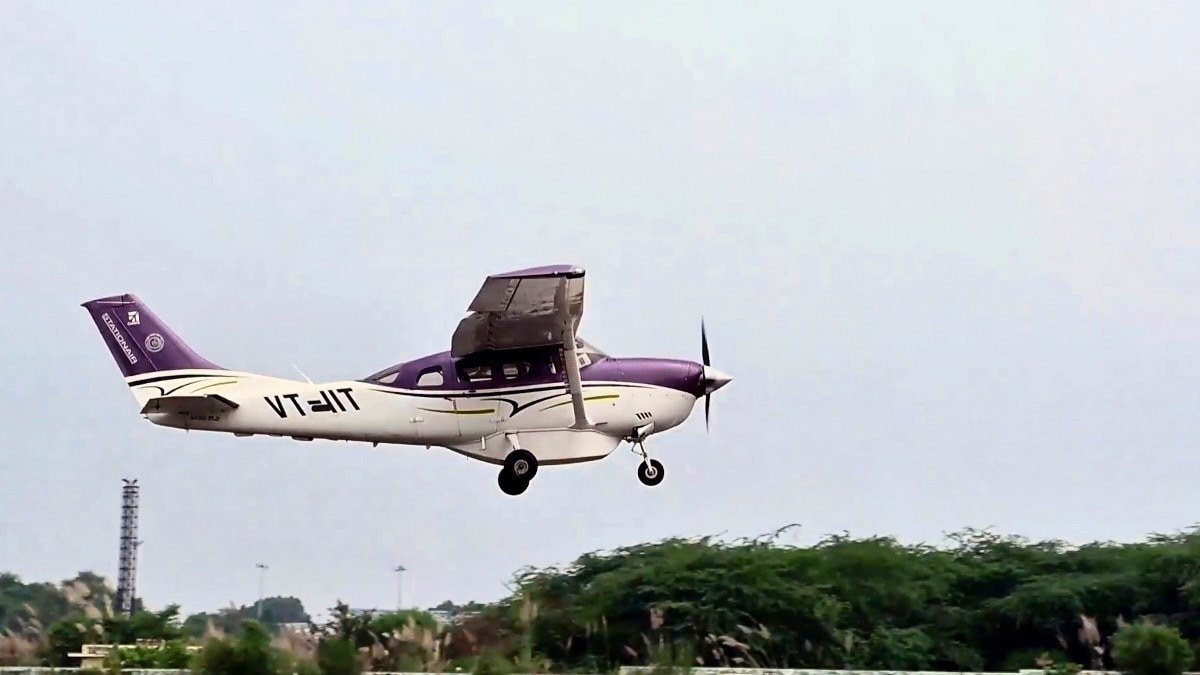
"Cloud seeding can be a very effective tool in locations that are under extreme duress. But it shouldn't be lost that it's stealing precipitation from your neighbour," he said. Â A Cessna aircraft took off from Meerut Airport for Delhi and released cloud seeding flares in different areas. (Photo: PTI) CAN DELHI MAKE CLOUD SEEDING WORK?
Delhi first experimented with cloud seeding in October 2025 through a collaboration between the Delhi government and IIT Kanpur.
Two rounds of trials were conducted, but they failed to produce rainfall. The government is now considering further trials after Diwali and Chhath Puja, following two more trial rounds near the airport in October-November 2026.
The renewed interest comes as Delhi's pollution worsens, with its average AQI reaching 367 on November 5.
Greenstone said he could not judge whether Delhi abandoned cloud seeding too early, but maintained that it can work locally, but it can't replace regulations and long-term measures.
"The level of air pollution is not a law of nature. That is a choice. It's a choice by governments," he said. "So when governments decide they less [pollution] it's certainly possible to get." View this post on Instagram Shared post on TimeEmbed Instagram Feed Generator - Ends