Christa Pike execution fails after 2 attempts: How do lethal injections go wrong? - The Indian Express
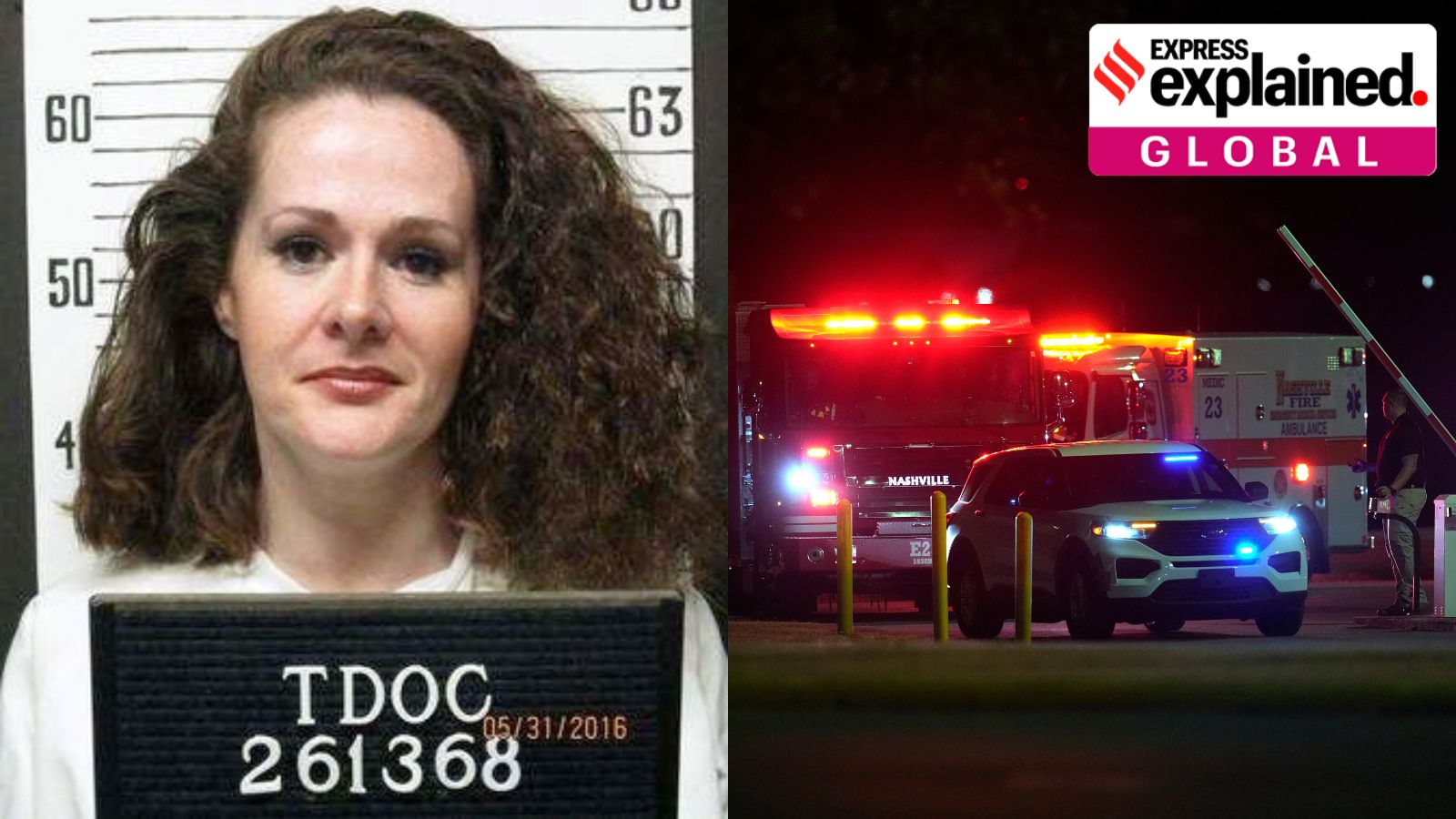
Authorities in the US failed to execute a 50-year-old woman on Tuesday despite twice administering a lethal drug through injection.
Christa Gail Pike, who had been sentenced to death for killing her classmate at the age of 18 in 1997, would have been the first woman executed in the US state of Tennessee in more than 200 years. Following the failure to carry out the sentence, Pike was taken to a hospital. Tennessee’s Governor has ordered a probe and her legal team has moved the state’s Supreme Court seeking a halt on the execution.
But botched executions in the US are nothing new, regardless of the range of methods that are authorised by different states. A study of 8,776 executions in the US between 1890 and 2010 found that 276 (around 3%) of them were botched.
The latest case, however, was an unprecedented failure, according to a death penalty expert quoted by the Associated Press. This is because no convict has ever survived once the lethal-injection drugs were actually administered.
What are the different methods of execution followed in the US? What is the protocol when it comes to lethal injection, the most common method? What methods do other countries follow? And why has the death penalty itself been a subject of debate in this current case? We explain.
Countries that provide for capital punishment generally operate on the principle of minimising suffering — though the punishment itself is ethically controversial.
In the US, capital punishment is legal in 27 of 50 states. These states authorise different, sometimes multiple, methods of execution — lethal injection, electrocution, nitrogen gas, firing squad, and hanging.
The lethal injection method, which was adopted in 1982, became the primary execution method in the 2000s; it is authorised by all 27 states that retain the death penalty.
The lethal injection method itself follows two broad approaches: a three-drug protocol or a one-drug protocol.
In the first approach, a sequence of drugs is administered to a convict intravenously — first a sedative or an anaesthetic that is meant to render them unconscious, then a paralytic drug that stops muscle movement, and finally potassium chloride, which causes a cardiac arrest.
But as drugmakers grew unwilling to supply drugs, saying they were meant to save lives and not take them, many US states shifted to more accessible single drugs such as pentobarbital and midazolam — Tennessee adopted pentobarbital in 2024.
Pentobarbital is a barbiturate, a type of drug that can slow down activity in the brain and nervous system, and can be fatal in high doses on its own. But critics say pentobarbital and midazolam can cause excruciating pain, which would violate the principle of reducing pain and cruelty.
In the case of lethal injections, convicts are secured to a table or gurney and IV lines are attached to them. This is where the problems come in.
The Death Penalty Information Center (DPIC), a non-profit organisation that documents capital punishment in the US, lists out example after example of lethal injection executions being botched — either failing to kill a convict, delaying their death or causing them unnecessary agony — primarily because execution teams failed to connect or maintain IV lines.
While there are multiple examples of such failures, one particularly harrowing case from Alabama in 2022 is illustrative of just how wrong things can go when execution teams lack sufficient competence.
In this case, officials tried and failed multiple times to place an IV line on the convict, Joe Nathan James Jr., before finally managing to put him to death three-and-a-half hours later — resulting in the longest botched lethal-injection execution in the US.
An expose in The Atlantic magazine from the same year called the execution “lengthy and painful”, and a doctor who attended the autopsy said the execution team that carried it out “was unqualified for the task in a most dramatic way”, notes the DPIC.
In fact, the Christa Pike case was the second time this year that Tennessee has been unable to carry out an execution: In May, state officials called off the lethal injection of one Tony Carruthers after executioners tried and failed for over an hour to place an IV, AP reported.
This, precisely, is the reason why India’s government has never accepted calls to introduce the lethal injection method. It has consistently argued in the Supreme Court that the lack of medical infrastructure and healthcare professionals makes hanging an administratively predictable method.
In the US, several national and state medical organisations prohibit their members from participating in executions owing to ethical considerations. This means correctional officers are often given the task, says the DPIC.
Apart from placing or maintaining IV lines, many other things can also go wrong with the lethal injection method, such as inadequate dosages. The study mentioned at the outset of this article, which was carried out by an Amherst College professor named Austin Sarat, found that 7.12% of all lethal injection executions went wrong.
This is not to say that other execution methods are without flaws. But more on that later.
The Tennessee case used the single-drug procedure. According to AP, the state’s execution protocol calls for a secondary set of drug syringes to be administered “if the inmate is not deceased” after the first set. It does not spell out what happens if the subject is alive after the second set — which is what happened in Pike’s case.
Media witnesses said Pike remained awake after the first dosage and, at one point, raised her head and asked prison officials if her arm was supposed to feel that way. An hour after that, officials administered a second dose of pentobarbital. But she was heard snoring for several minutes after that — following which the microphone was cut, witnesses were escorted away and Pike was taken to a hospital.
Pike’s lawyers have now moved the Tennessee Supreme Court seeking to halt and stay the execution, saying she was in “unnecessary agony” and it was violating her right to be executed free of cruel and unusual punishment. Tennessee Governor Bill Lee halted the one remaining execution for the rest of the year. He said in a statement that he has ordered “a comprehensive, third-party review to determine exactly what occurred”.
Robin M Maher, executive director of the DPIC, told the AP that seven other people have survived medical problems due to an execution team’s failure to access a vein to administer lethal injection drugs, but no one has stayed alive after receiving the drugs used in such executions.
Pike and her boyfriend, Tadaryl Shipp, were convicted of the fatal stabbing and beating in 1995 of 19-year-old Colleen Slemmer, their classmate at a job training facility in the city of Knoxville in Tennessee, according to AP.
Pike cut Slemmer with a box cutter and beat her with a large chunk of asphalt. Shipp, meanwhile, carved a pentagram, a star-shaped symbol associated with Satan, into her body.
Shipp was 17 when the crime happened and received a sentence of life in prison with the possibility of parole. Pike was sentenced to death. As the execution date drew near, debate renewed over the death penalty for young offenders.
After the killing, Pike was diagnosed with bipolar disorder and post-traumatic stress disorder. In her clemency petition, she said she only wanted to fight Slemmer but killed her in a frenzied attack when she couldn’t “put the brakes on.”
Pike did not deny committing the killing, but her supporters argued that the state should consider her age at the time, her mental illness and her allegations of severe sexual abuse.
Since the Supreme Court reinstated the death penalty in 1976, 18 women have been put to death, representing about 1% of all executions, according to the DPIC.
Pike would have been the 30th person executed in the US this year after Florida carried out an execution on Tuesday.
What can go wrong with other methods of execution?
The search for a relatively “humane” method of execution has led to varied practices, each carrying its own scientific and ethical controversies.
Besides lethal injections, the other authorised methods in the US are the electric chair, nitrogen gas, firing squad and hanging. Each comes with its own dangers.
Electric chair: The electric chair passes a high-voltage electrical current through the body, causing cardiac arrest. But the Supreme Courts of Georgia (2001) and Nebraska (2008) ruled that its use violates their state constitutional prohibitions against cruel and unusual punishment. The study also found that 1.92% of electrocutions were botched.
Nitrogen gas: Alabama and then Louisiana are the only US states that have performed an execution using nitrogen gas, according to the DPIC. The first one in Alabama took place as recently as January 2024. The convict, 58-year-old Kenneth Smith, was fastened to a gurney and forced to breathe in pure nitrogen through a respirator. While the state’s attorney general had claimed that it was an effective and humane method, the execution took roughly 22 minutes, and onlookers were left distressed by the visible suffering Smith was going through.
Firing squad: In recent years, some in the US have backed bringing back the old-fashioned firing squad execution method. Among the backers were US Supreme Court Justice Sonia Sotomayor, who said it is a more humane method of execution. In terms of the cold efficiency of ensuring death, they are indeed effective. But prosecutors in a 2019 US federal case said, citing an anesthesiologist, that painless deaths by firing squads are not guaranteed. Inmates could remain conscious for up to 10 “severely painful” seconds depending on where bullets strike.
Hanging: Hangings are extremely rare in the US. Since 1977, only three hangings have taken place in the country, with the most recent one in 2010.
Hanging, however, is the primary method in many other countries, such as India, Singapore and Japan. It relies on a “long drop” to snap a person’s neck, theoretically resulting in instant death. But a drop that is too short can fail to break the neck and result in prolonged strangulation. Conversely, a drop that is too long can risk decapitating the person. Saudi Arabia, meanwhile, carries out executions by beheading with a sword. It is highly reliant on the executioner’s precision.