
CISF, AI monitoring, security experts: How NTA is changing after NEET leak - The Indian Express
After the alleged NEET-UG paper leaks exposed weaknesses in NTA’s exam-conduct system, the Centre is rebuilding the agency with stronger security, specialised staffing, tighter SOPs, and technology, while still evaluating a possible shift to computer-based testing.
The Centre laid out the details in a recent affidavit in the Supreme Court, part of the National Testing Agency’s restructuring after a difficult stretch marked by paper-leak allegations and re-exams, including the 2024 NEET-UG controversy, which put the agency’s exam-conduct systems under scrutiny.
Officials said that, as part of the ongoing overhaul, NTA is also implementing the organisational restructuring recommended by the K Radhakrishnan-led committee, constituted in 2024 after the NEET UG paper leak controversy.
In the affidavit, the Centre said the High-Powered Steering Committee (HPSC) has been monitoring implementation of the High-level Committee of Experts (HLCE) recommendations through in-person meetings, presentations, and periodic reviews of measures and steps taken from time to time.
“The Director General, NTA, has been apprising the Committee of the progress made. During the course of these reviews and deliberations, HPSC assessed the various steps taken towards implementation of the HLCE recommendations. Dr K Radhakrishnan has filed his own affidavit in May before the court indicating the steps taken to implement the recommendations made by the HLCE,” it said.
As part of implementing the HLCE recommendations on human resources and organisational structure, NTA is being “strengthened to a functional-vertical structure”.
“The functional-vertical structure enables domain-specific capability-building within each core area of competence, whereas in the earlier structure, the human resources of NTA were deployed into specific exam-wise verticals,” the affidavit said.
The Centre also informed the court that, based on the HLCE recommendations for the professional cadre, NTA is recruiting domain specialists for the expert cadre across the verticals of Technology, Human Resources, Assessment R&D, Test Centres, Candidate Experience, Information Security, Test Security, and Vigilance.
“The selection process for these professionals is underway,” it said.
The Centre also said the Terms of Reference (ToR) of the High Power Task Force, constituted under the chairmanship of Nandan Nilekani, includes recommendations to strengthen and institutionalise NTA’s governance mechanisms, from organisational structure to human resource management and the statutory framework.
The Nilekani-headed committee was constituted a couple of months ago after protests against the alleged NEET UG paper leak that erupted in Jantar Mantar, leading to the resignation of education minister Dharmendra Pradhan and a CBI probe.
“The recommendations of this Task Force regarding the organisational structure of NTA will be duly taken into account in the institutional restructuring of NTA,” the Centre said.
The affidavit also stated that a secretary-level officer has been posted as Director General (DG) of the NTA, under whose leadership the agency’s reforms and restructuring are being undertaken.
It added that the government is actively considering upgrading the DG post from joint secretary level to additional secretary level, along with creating five senior positions at the joint secretary level.
Two joint directors were also posted under the Central Staffing Scheme in May 2026, while 14 officers, one joint secretary, four directors, one joint director (deputy secretary level), two deputy secretaries, two under secretaries, two section officers, and two assistant section officers, were also brought into NTA in August 2026.
The affidavit said the restructured team now has bureaucrats and officials from different cadres, including the IAS, IPS, IRS, Indian Statistical Service, Indian Ordnance Factory Service, and Indian Supply Service, bringing specialist expertise across multiple domains in line with the HLCE recommendation for a multi-disciplinary, cross-cadre leadership team.
“The full new institutional establishment of the NTA, covering the entirety of the Government cadre, and the professional cadre required for the strengthened mandate, is presently under active consideration and will be operationalised after due consideration of the final recommendations received from the HPTF,” it said.
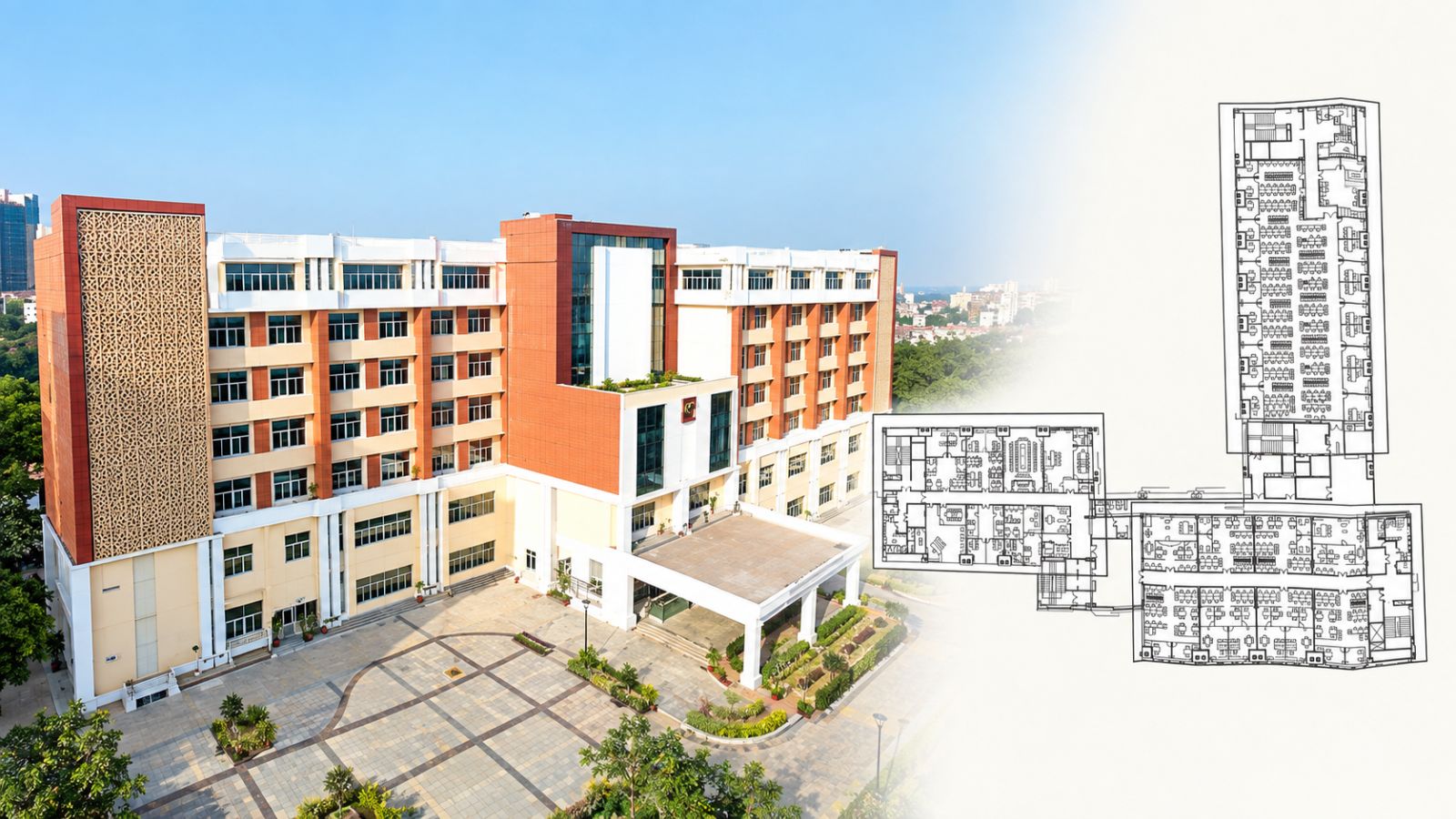
The Centre said NTA has been allotted 55,524.53 square feet of office space at the Government of India Press building at Minto Road in Central Delhi.
“Confidential operations have been shifted in the last month to the newly allotted government office building of NTA…the allotments will ensure that the functional verticals and the apex leadership of the NTA will be in a secure government premise. This will also ensure that the confidential operations division can be structured with the level of security that has been mandated by the HLCE,” the affidavit said.
It also said that the security arrangements for the Confidential Area have been strengthened and consolidated, and a comprehensive security protocol is being prepared for the facility.
Additionally, the Central Industrial Security Force has provided security cover at the new office, deploying 39 personnel. These personnel are responsible for access control and screening measures, including frisking using an X-ray baggage screening machine and Door Frame Metal Detectors (DFMDs).
The Centre added that it has designated a dedicated chief information security officer (CISO) and advertised the position of general manager, Information Security, and the selection process is at an advanced stage.
The Centre said that SOPs, as recommended by the HLCE, have been defined for NTA’s key operational processes and are being applied across the examination cycle.
The SOPs cover question-paper setting, translation, printing, packing, tracking, movement, examination-day protocols, opening of trunks, examination centre security, and the return movement and computation of results.
It said the complete SOP has not been made public for security reasons.
The Centre said that NTA has already implemented several measures to strengthen exam security and preparedness, including secure question-paper handling and transport, Aadhaar/face authentication, frisking, CCTV and AI monitoring, mobile jammers, multi-tier oversight, coordination with state and district authorities, grievance redressal, and data analytics to detect malpractice.
It added that the High-Powered Task Force (HPTF) is currently examining four broad issues: possible migration of NEET-UG from pen-and-paper to computer-based testing, including its impact on rural, women and low-connectivity candidates; a national CBT infrastructure strategy to expand and standardise exam centres; further structural, cadre and governance reforms in NTA; and other HPTF-mandated issues including student well-being, an inclusive examination framework and a time-bound implementation roadmap.

