CJI on accountability: Should we put every complaint against judges on a website?
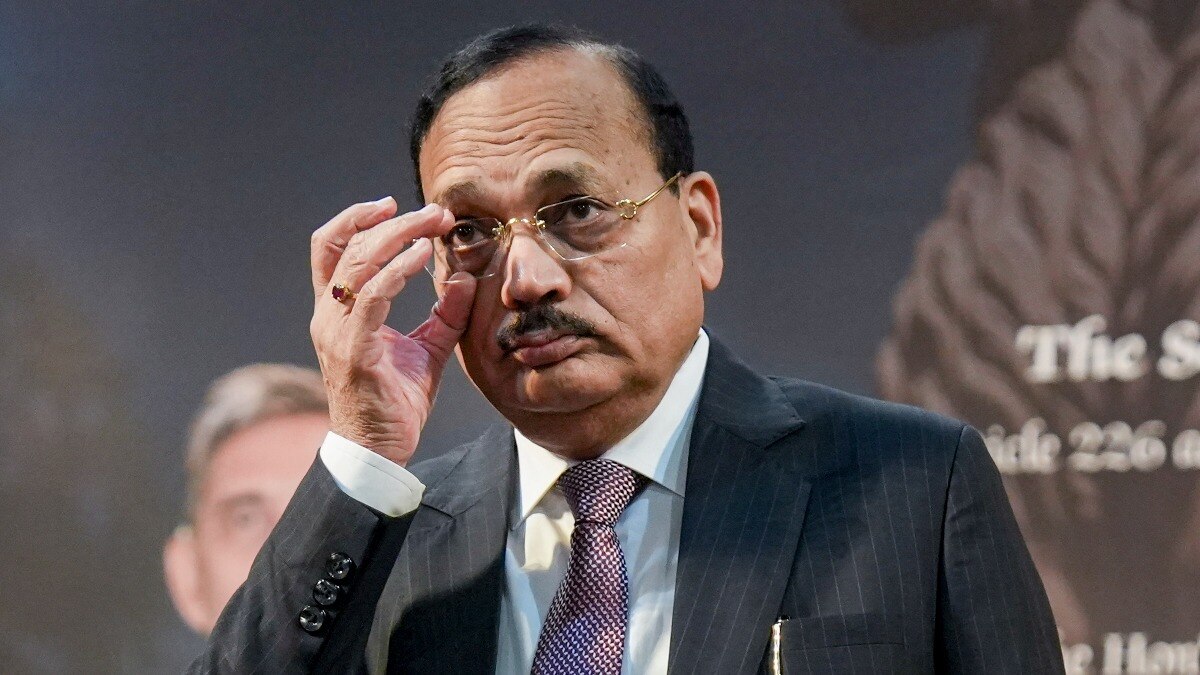
Chief Justice of India (CJI) Surya Kant, speaking at the Ram Jethmalani Memorial Lecture, defended the existing mechanism for dealing with complaints against judges, saying it was “timely and robust”, while acknowledging that judicial institutions must remain open to reform.
His remarks came amid concerns raised at the lecture over transparency and accountability in the judiciary, including the handling of complaints against judges.
“Judges face complaints at every stage. Should we have every complaint on a website?” CJI Surya Kant asked, arguing that the mechanism for dealing with such complaints was already well established.
The CJI said he agreed that “reform must be the rule” and that institutions “cannot become stagnant”, but added that there were some issues that might not be prudent to address from a public platform.
His remarks came after Senior Advocate Mahesh Jethmalani raised concerns over declining public confidence in the judiciary and cited an India Today-CVoter survey in which 48% of respondents said they had no trust in the judiciary.
Jethmalani also raised the issue of the Justice Yashwant Varma cash controversy, questioning why an FIR had not been registered even after Varma had resigned. He said there was a need for a database of complaints against judges of the High Courts, subordinate courts and tribunals, including their outcomes, to ensure transparency and public trust.
Jethmalani also called on the Bar to act against “fixer lawyers” allegedly involved in fixing judges and corruption. “It's time that the Bar should have lawyers who know the law and not lawyers who know the judge,” he said.
Senior Advocate Harish Salve, too, questioned the handling of the Justice Varma cash controversy, saying the law should have been allowed to take its course.
Referring to the Ramaswamy judgment, Salve said the protection against complaints was meant to prevent judges from being harassed by litigants, whereas in the Varma case “there was actual cash found”.CJI ON COLLEGIUM SYSTEM AND JUDICIAL REFORM
The CJI also addressed questions around the collegium system and judicial reform, saying he had “legal answers” to questions about the historical background of how the collegium system was developed and how it has worked.
He said there was “hardly any impediment” between the collegium and the executive and spoke about how deliberations between the two take place.
On administrative reforms, including the handling of complaints, he said the existing mechanism was “timely and robust”, while stressing that “everything is subject to reforms”.
Salve, however, called for a broader rethink of the institutional balance in the judiciary. He said the NJAC judgment was “so completely flawed” and questioned a system in which judges appoint judges.
“India is the only state where judges appoint judges,” Salve said, arguing that there was a need to “restore the separateness of institutions and restore the balance of institutions.”
He said the judiciary had become powerful enough to take away the government's power to appoint judges and to “discipline itself”, and argued that the system needed a “reset”.
Salve also criticised the Supreme Court's expanding role, questioning why the Indian Supreme Court was so frequently in the news and whether the common man should have to approach the top court for basic grievances. He argued that justice should be delivered at the first interface and that the judicial system needed to be rebuilt “from the ground up”.
He cited the 2G and Jain Hawala cases as examples of court-monitored investigations that ultimately ended in acquittals, arguing that investigative agencies could feel compelled to reach a particular conclusion when investigations were monitored by courts.
Salve stressed that criticism of the judicial system should not be seen as disparagement, saying problems had to be aired and discussed to be solved.advertisementCJI ON PUBLIC TRUST, FAIRNESS AND ACCESS TO JUSTICESurya Kant also drew a distinction between public trust and public approval, saying the two were not the same.
He said a court did not earn trust by delivering the outcome the public wanted. Rather, it earned trust when even people who lost a case walked away believing that the process had been fair.
He stressed the importance of procedural fairness, saying that winning a case did not itself give a court legitimacy.
The CJI also said institutions remained clean by being repeatedly exposed to scrutiny and remaining clean despite that exposure, adding that institutions had to be willing to face scrutiny.
On access to justice, he said it was not enough for a courthouse to exist somewhere in a district. An ordinary citizen must be able to reach the justice system and have confidence that “reaching is not half the battle”. He noted that access to courts had historically been difficult because of both physical barriers and complicated procedures.- EndsPublished By: Sayan GangulyPublished On: Sep 14, 2026 20:28 IST