
Climate finance could reach $1.3tn by 2035, roadmap says - Valor International
The goal of mobilizing $1.3 trillion a year in climate finance for developing countries by 2035 is within reach, but not without a fundamental shift in how global capital flows. Under current trends, funding would reach only about $460 billion annually, leaving an $840 billion shortfall. A major overhaul of financing mechanisms, however, could unlock between $1.27 trillion and $1.41 trillion a year by 2035.
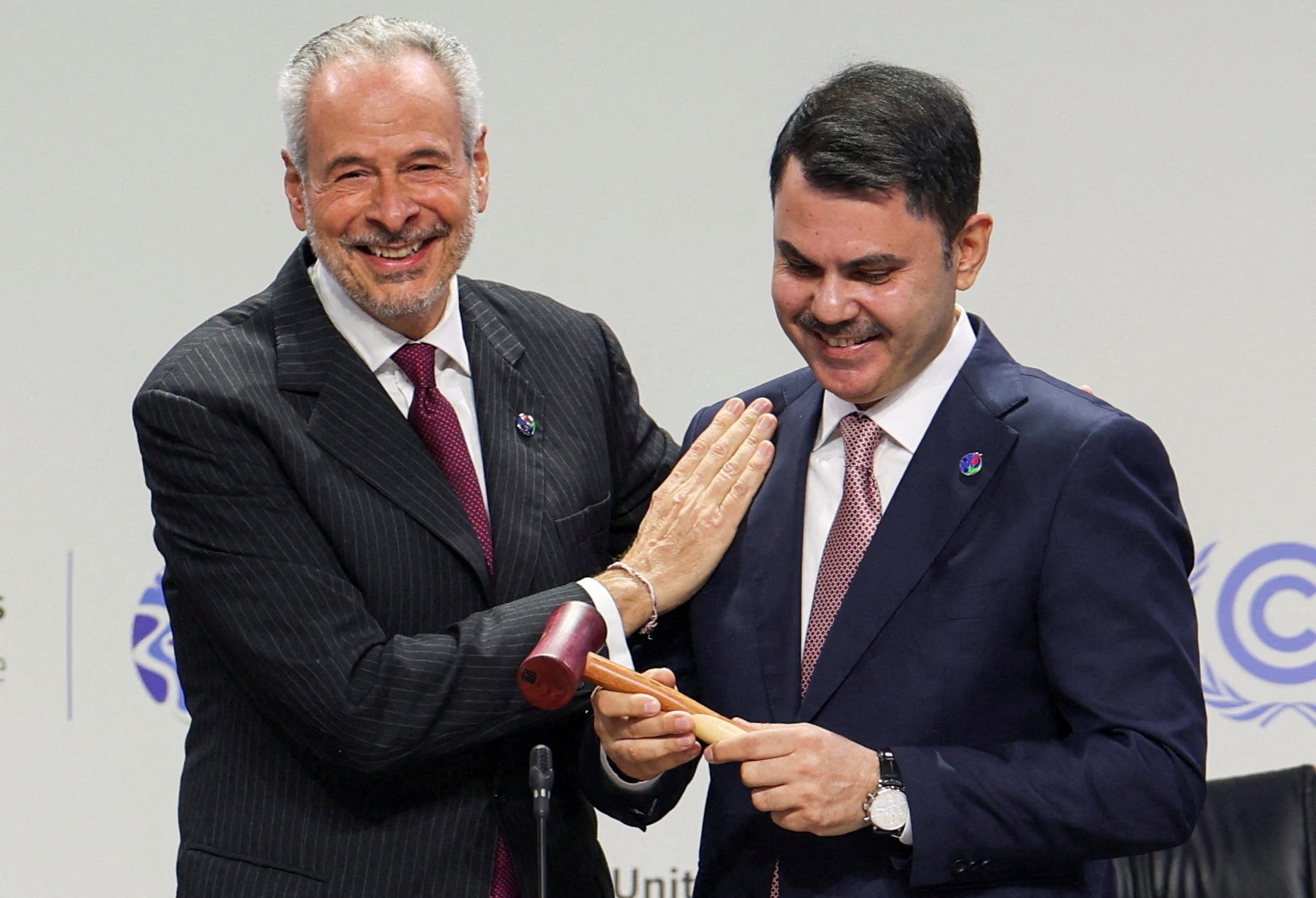
That is the central message of the Implementing the Baku to Belém Roadmap to 1.3T, the final document delivered by Brazil's COP30 presidency before handing over leadership to the Turkish-Australian co-presidency on Monday (Nov. 9) in Antalya, Turkey.
By passing the climate finance blueprint to the organizers of COP31, COP30 President André Corrêa do Lago brings to a close a four-year effort to put economic considerations at the heart of the global climate agenda.
The initiative began taking shape in 2023, when 19 development banks from Amazon-region countries formed the Green Coalition at the Amazon Summit in Belém to finance a sustainable bioeconomy.
In 2024, under Brazil's G20 presidency, the Climate Task Force brought together two traditionally separate negotiating tracks for the first time: the sherpa track, involving diplomats and environment and foreign ministers, and the finance track, comprising finance ministers and central bank governors.
In 2025, as Brazil prepared to host COP30, a group of finance ministers produced a report that laid the groundwork for the Baku to Belém Roadmap to 1.3T. The document was a joint responsibility of Mukhtar Babayev, president of COP29, and Corrêa do Lago, his COP30 counterpart.
Although COP30 merely "took note" of the roadmap, the "Mutirão Decision" adopted in Belém elevated climate finance to a priority.
At COP29 in Baku, countries had called on all parties to work together to mobilize $1.3 trillion annually from all sources for developing nations. Belém went further, strengthening the diplomatic language to its highest level and marking a legal and political advance.
Paragraph 48 of the Global Mutirão Decision "decides" — the strongest term in diplomatic language for establishing an obligation — to "urgently advance actions to enable the scaling up of financing for developing country Parties for climate action from all public and private sources to at least USD 1.3 trillion per year by 2035."
For Brazil's COP30 presidency, that language created a need to demonstrate how the commitment could be put into practice. The result was the new Implementing the Baku to Belém Roadmap to 1.3T released Sunday (Nov. 8) in Turkey.
The earlier $300 billion financing commitment for developing countries, also included in the Baku decision, "becomes the pathway, not the goal," one source said.
In recent days, Corrêa do Lago has therefore handed over a series of roadmaps intended to guide the world away from fossil fuels, halt and reverse deforestation and forest degradation, and, finally, secure the funding developing countries need to decarbonize their economies, adapt to extreme weather and build more resilient societies.
In his farewell address at Monday's COP31 opening ceremony, the Brazilian diplomat told delegates from nearly 200 countries gathered in Antalya that "the climate agenda is a development agenda" and that "the transition cannot create or deepen inequalities."
"We must remember every day the victims of climate change, whether in Brazil, Nepal, countries in Africa or Europe," Corrêa do Lago continued, drawing attention to the world's poorest and most vulnerable populations.
The new financing roadmap sets out in detail where the money could come from.
The 2025 document contained more than 75 proposed measures organized around five areas for transforming the global financial architecture: replenishing, rebalancing, rechanneling, revamping and reshaping.
Replenishing involves expanding grants, concessional finance and low-cost capital.
Rebalancing focuses on creating fiscal space and making debt sustainable for developing countries, many of which emerged from the pandemic even poorer and with little fiscal capacity to service their debt, let alone improve the business environment to attract investment or adapt to the climate crisis.
Rechanneling seeks to make capital more affordable and mobilize transformative private financing.
Revamping focuses on strengthening institutional capacity and coordination to scale up climate investment portfolios, while reshaping involves changing financial systems and structures to ensure more equitable capital flows.
In practical terms, this includes incorporating climate risks into Basel III, the international banking regulatory framework developed in response to the 2008 financial crisis to make the financial system more resilient to financial shocks and economic instability.
The new document goes a step further by estimating how much each public and private funding source could generate.
It examines everything from public funding, grants and concessional resources to private investment and South-South cooperation. It also explores innovative mechanisms, including the Tropical Forest Forever Facility (TFFF), taxes on fossil fuels, multinational corporations and the ultrawealthy, the use of International Monetary Fund reserve assets, and debt relief for developing countries.
In 2024, external climate finance flows to developing countries totaled $261 billion a year.
Under a business-as-usual scenario, with no significant policy changes, that figure would rise to between $458 billion and $461 billion by 2035, leaving a gap of roughly $840 billion against the $1.3 trillion target.
Implementing the roadmap's proposals, however, could not only close that shortfall but potentially exceed the goal, bringing annual financing to between $1.27 trillion and $1.41 trillion.
The document provides detailed projections for individual funding sources.
External private climate finance, for example, currently stands at $94 billion a year. Without major changes, it would rise to $229 billion by 2035. With the interventions proposed in the roadmap, that amount could reach $882 billion annually.
The chapter on innovative revenue sources considers taxes on aviation, particularly luxury air travel and private jets, as well as levies on international shipping.
It also examines taxes on fossil fuels, including proposals under discussion to tax extraction, production and exports, windfall profits and carbon-intensive activities. Other possibilities include levies on financial transactions and cryptocurrencies.
Beyond identifying potential funding sources and policy innovations, the roadmap establishes a framework for turning its recommendations into action.
The implementation structure was developed with a United Nations group of high-level economists led by British economist Nicholas Stern of the London School of Economics.
The aim is to translate the roadmap's recommendations into concrete measures for individual countries, thematic coalitions focused on energy, adaptation, agriculture, a just transition and nature, as well as financial institutions.
A separate mechanism, developed with the Climate Policy Initiative (CPI), an organization specializing in climate finance analysis, will track progress on the roadmap's recommendations and proposals using four indicators.
The Climate Finance Action Compass will assess scale, speed, reach and impact.
Scale will measure whether the volume of financing meets actual needs. Speed will track whether capital flows are increasing quickly enough to meet the 2035 target. Reach will examine whether funding is arriving where it is needed most, while impact will assess whether the resources are producing results.
Brazil's COP30 presidency wanted not only to deliver a roadmap but also to leave behind mechanisms capable of tracking changes in financing flows and ensuring transparency.
"In 2025, we worked on a grammar. We wanted everyone to speak the same language. In the previous document, we said what climate funds should do and the direction multilateral banks could move in," one negotiator explained. "This year, we worked on the arithmetic, to improve the numbers."
The effort to refine estimates of how much international climate finance could be made available to developing countries stemmed from a recognition that existing projections relied on widely differing methodologies.
Estimates of the potential revenue from carbon markets, for example, ranged from just $2 billion a year to as much as $4 trillion.
Brazil's work drew on hundreds of contributions from countries, universities, researchers, economists and civil society organizations.
"The central message is that achieving the $1.3 trillion goal requires coordinated action by governments, financial institutions, investors and other stakeholders, within and beyond the UN climate negotiations," the document states.
"Mobilizing more finance, making it accessible and ensuring it reaches the countries and communities that need it most are essential to accelerating implementation of the Paris Agreement.”
The question now is whether — and how — the international community will adopt the roadmaps, and whether COP31 in Turkey will bring them together under its action agenda.
In his farewell remarks, Corrêa do Lago reflected on what distinguished Brazil's approach to the climate negotiations.
"Some people told me that COP30 was a somewhat different COP: that most COPs are characterized by tactics, while COP30 was about strategy."
Tactics, he noted, concern short-term actions, while strategies address longer-term horizons.
"I very much like that definition, and I believe nothing demonstrates it better than the Global Mutirão Decision that we all agreed on the final day of COP in Belém," Corrêa do Lago concluded.
The journalist traveled to COP31 at the invitation of the Institute for Climate and Society (iCS).
This article was translated from Valor Econômico using an artificial intelligence tool under the supervision of the Valor International editorial team to ensure accuracy, clarity, and adherence to our editorial standards. Read our Editorial Principles.


