CNN’s Kaitlan Collins Reports Natalie Harp to Blame for White House Ban - Newsweek
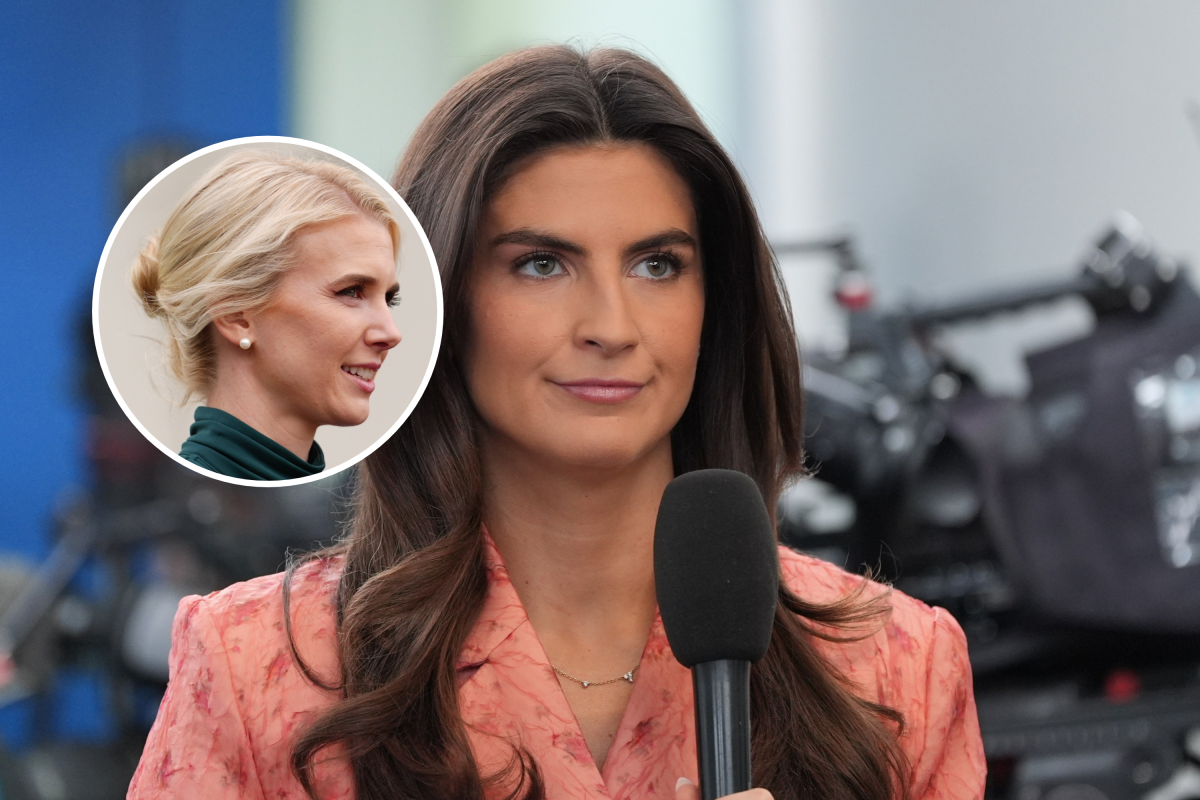
CNN's Kaitlan Collins reported Monday that Natalie Harp, a close aide to President Donald Trump, showed him media coverage that ultimately led to the decision by the White House to deny CNN, MSNBC and Politico access.
According to Collins, who cited unnamed sources in a report for CNN, a Politico graphic and television clips shown to Trump by Harp "infuriated" the president.
CNN also reported that Trump's key advisers, including chief of staff Susie Wiles and Vice President JD Vance, were not in the White House when Trump came to his decision Friday.
Harp has been a constant presence by Trump’s side for years. Her relationship with the president has come under the spotlight after Democratic Senator Jon Ossoff, who is in the middle of a reelection campaign, mentioned her by name in a speech criticizing the president.
The three news outlets that Trump banned from the White House last week are now filing a First Amendment lawsuit in a bid to restore their access.
In a post on Truth Social on Monday morning, after the lawsuit was confirmed, Trump wrote, "The White House is not instituting an assault on the Free Press, something which I cherish. It is instituting an assault on the FAKE NEWS, something that has grown like Cancer in our beloved United States of America.
"It is corrupt, purposeful, pervasive, fully coordinated, and totally out of control. It is a threat to our National Security, and must be stopped, NOW!"
Bryan Boughton, who runs the Fox News Washington bureau and is the current TV pool chair covering the White House, said Monday in an email, ”This is to advise that, effective today, the TV pool will not be covering events designated as pool coverage of the President.”
He continued, “This follows the White House’s position preventing CNN from fulfilling its assigned pool duties. There will be no replacement pool put in place.”
Vance defended the decision, saying the affected organizations would no longer have offices inside the White House unless they began behaving, in his characterization, “like real news organizations.”
The White House directed Newsweek to comments made by Trump at the Oval Office on Friday, when asked for comment about the ban.
Trump had been asked by reporters what the reason was behind the ban. The president responded that there was no specific story he was reacting to, but said, "it’s really just cumulative stories over the last two years. You get sick of it."
The September 2026 ban is therefore the latest in a series of disputes involving Trump and news organizations. The conflicts have taken different forms: individual reporter credential suspensions, restrictions on particular organizations, changes to the presidential press pool and lawsuits challenging government decisions about access.
The organizations argue that the government cannot determine which journalists receive access based on whether officials approve of their reporting. The administration, meanwhile, maintains that the White House has authority to control access to its facilities and has characterized the targeted coverage as false or inappropriate.
The current fight over CNN, MS NOW and Politico follows an earlier legal battle between the Trump administration and The Associated Press that tested how far the White House can go in restricting journalists whose coverage it dislikes.
The AP sued in February 2025 after the White House sharply curtailed the news organization's access to presidential events.
The dispute followed Trump's decision to rename the Gulf of Mexico the “Gulf of America.” The AP continued using “Gulf of Mexico” in its news coverage, while noting Trump's preferred name, and the White House subsequently excluded AP journalists from events in restricted spaces including the Oval Office and Air Force One.
The AP did not argue that journalists have an automatic constitutional right to enter the Oval Office or travel with the president. Instead, it said that once the government opens those limited spaces to some journalists, it cannot exclude one news organization because officials object to its viewpoint.
In April 2025, U.S. District Judge Trevor McFadden agreed at the preliminary-injunction stage. He ordered the administration to restore the AP's eligibility for presidential press-pool and other limited-access events, finding that the AP was likely to succeed on its claims that it had been subjected to viewpoint discrimination and retaliation for its speech. The judge specifically said the ruling did not give the AP an unlimited right to access restricted presidential spaces; rather, the government could not treat the AP differently from comparable journalists because of its viewpoint.
However, the Trump administration appealed, and in June 2025 a divided panel of the U.S. Court of Appeals for the D.C. Circuit stayed the lower court's injunction, allowing the White House to continue controlling AP access while the broader legal fight proceeded
Following the appellate ruling, the AP asked the full bench of the D.C. Circuit to review the panel's decision en banc, but the court declined to rehear the case.
The administration can point to the appellate court's intervention as evidence that presidential control over limited-access events remains a legally unsettled area. The news organizations, meanwhile, can point to Judge McFadden's reasoning that the First Amendment prohibits the government from opening a forum to journalists and then excluding a particular outlet because of its viewpoint.
The most prominent precedent from Trump's first administration involved CNN correspondent Jim Acosta. In November 2018, the White House suspended Acosta's hard pass following a contentious presidential news conference.
The administration accused him of inappropriate conduct involving a White House intern who attempted to retrieve a microphone from him. CNN disputed the administration's account and sued.
A federal judge ordered the White House to restore Acosta's access. The administration subsequently restored his credentials and dropped its effort to permanently revoke them.
The case became a major test of presidential control over press credentials. It also demonstrated that courts could intervene when the White House attempted to remove a reporter's access without providing sufficient procedural protections.
Fox News also filed a brief supporting CNN's legal position in the Acosta dispute, emphasizing the broader implications for White House press access.
Collins has also previously been involved in a White House access dispute. In July 2018, while serving as a CNN White House correspondent, Collins was denied access to a White House event after a tense Oval Office exchange in which she repeatedly questioned Trump about Michael Cohen and Vladimir Putin.
The White House said Collins had shouted questions and refused to leave. CNN characterized the decision as retaliation for her questioning.
The incident generated criticism from press organizations and other news organizations and became another example of the increasingly contentious relationship between Trump and the White House press corps.
Another Trump-era case involved Brian Karem, a White House reporter for Playboy and a CNN political analyst.
Karem's White House credential was suspended in 2019 after a confrontation at a White House event involving former Trump aide Sebastian Gorka. Karem challenged the suspension in federal court.
A judge ordered his credential restored, finding that the administration's rules governing reporter conduct were not sufficiently clear to justify the suspension under the circumstances.
Trump's second term produced another significant press-access dispute in 2025 when The Wall Street Journal was removed from the press pool covering Trump's trip to Scotland.
The action followed the Journal's publication of a report concerning an alleged birthday letter involving Trump and Jeffrey Epstein. Trump denied the report and subsequently sued the newspaper and other parties.
The White House said the Journal's removal was connected to what it described as “fake and defamatory conduct.”
The current dispute has consequences beyond the three organizations directly targeted.
CNN is one of the five major television networks that participate in the traditional presidential television pool, alongside ABC, CBS, Fox News and NBC. The networks rotate responsibility for providing camera crews and distribute the resulting footage among participating organizations.
CNN was scheduled to perform the pool assignment for Trump's Monday travel.
After the White House prevented CNN from carrying out the assignment, the other networks did not replace it. Instead, the pool suspended coverage of designated presidential pool events.
That means the dispute has moved beyond whether individual reporters can enter the White House. It is now affecting the infrastructure through which television networks collectively cover the president.
This is a breaking news article. Updates to follow.
Newsweek’s reporters and editors used Martyn, our AI assistant, to produce this story. Learn more about Martynhere.
Contact Newsweek editors on this story: Gabe Whisnant and Geoffrey Rowland.
![[Ask the Tax Whiz] Pandora’s box: Can PH turn corruption into an economic turning point? - Rappler](https://www.rappler.com/tachyon/2026/09/pandoras-box-economic-turning-point-September-21-2026.jpg)