Code of Conduct talks ‘70% complete’
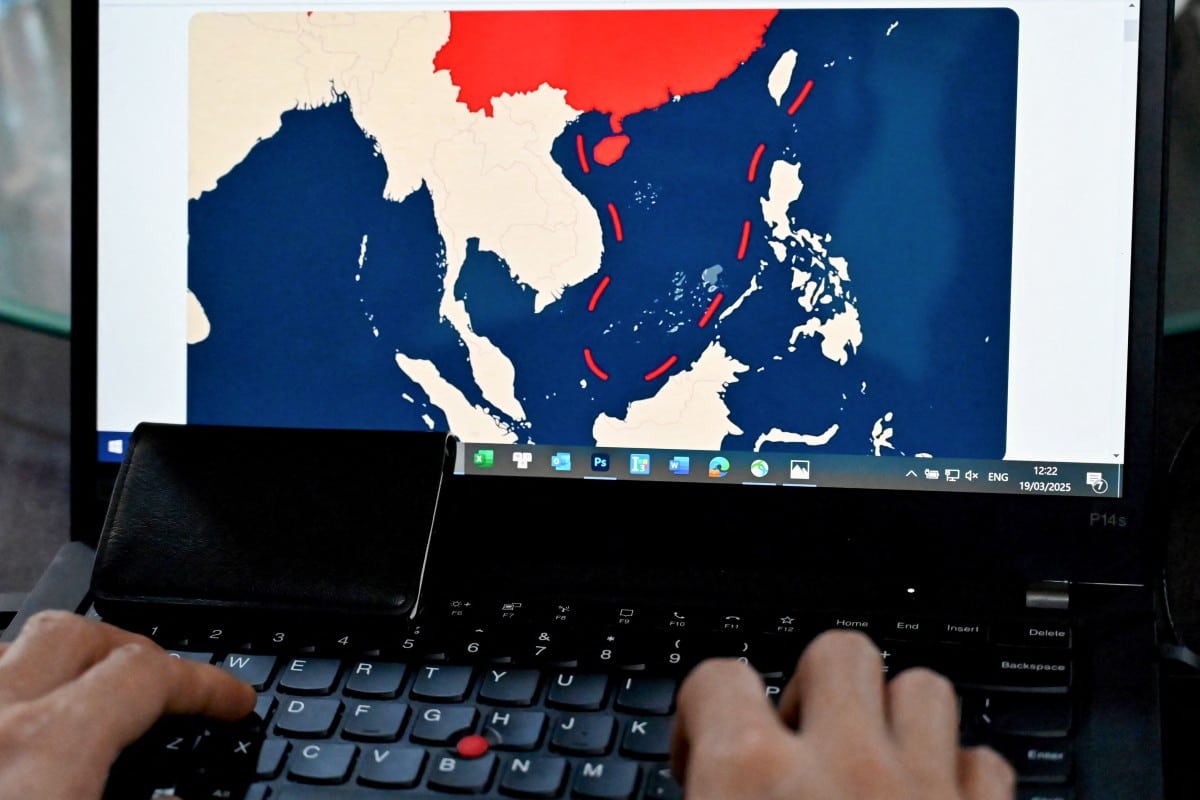
Negotiations on the decadeslong proposal to establish a Code of Conduct (COC) on the South China Sea are “70 percent complete,” a Philippine official said without disclosing what has been discussed between the member states of the Association of Southeast Asian Nations (Asean) and China.
“I would also like to stress that 70 percent of the COC package has already been agreed,” Foreign Assistant Secretary Dominic Xavier Imperial said at a press briefing on Friday ahead of the main Asean Summit on Nov. 15. “I think during the Philippine chairmanship, we can say that that is already good progress when it comes to the COC negotiations.”
Imperial said the 70-percent figure represented the overall progress of negotiations rather than the proportion of paragraphs in the draft agreement that had been approved by the concerned parties.
He declined to specify which provisions remained under discussion, and said negotiators were still working to settle outstanding issues.
Imperial could not also say whether the talks would be concluded during the Philippines’ chairmanship of Asean. “I cannot really preempt how the COC negotiators will conclude this year,” he said.
President Marcos said earlier he wanted the COC finalized during the summit. He called for its urgent adoption at the Asean Summit in the previous year in Kuala Lumpur.
It was the Philippines that first raised the idea of a code of conduct in 1992 following Chinese incursions in its waters. This led, a decade later, to a nonbinding “Declaration on the Conduct of Parties in the South China Sea” between Asean and China.
Foreign Secretary Ma. Theresa Lazaro had identified four outstanding issues in the negotiations: the code’s legally binding nature, geographic scope, relationship with the 2002 declaration and terms of reference.
The Philippines has maintained that the proposed code must be consistent with international law, particularly the United Nations Convention on the Law of the Sea, or Unclos, and must not undermine the rights of countries that are not parties to the agreement.
Asean and China agreed in 2023 to accelerate negotiations and finalize the COC by 2026. Negotiators have been meeting monthly since January under the Philippines’ chairmanship of Asean.
Failure to finalize the COC should not be considered a setback for the Marcos administration despite the country’s Asean chairmanship, said analyst Chester Cablaza.
“An unfinished COC must not be construed as a failure of regional diplomacy. It mirrors the complexity of keeping the peace while Beijing tests the rules at sea,” Cablaza, president of think tank International Development and Security Cooperation, told the Inquirer.
“Even if Singapore chairs the regional bloc next year, there will still be stumbling blocks to finalize the COC. We need strategic patience to achieve elusive peace in our region’s most dynamic waterways,” he said.
Don McLain Gill, a lecturer at De La Salle University’s Department of International Studies and a nonresident fellow of Stratbase ADR Institute, said, “The likelihood of having the COC by the end of this year was already a shaky premise to begin with.”
He urged the Philippines to strengthen its defense capabilities and security posture while deepening cooperation with its partners.
“This goes back to the Philippines needing to prepare, needing to improve its defense capabilities, its security posture, and of course its cohesion at the domestic level,” he said. INQ