Commentary: The old carmakers are running on empty - CNA
Electric vehicles are reshaping car ownership and manufacturing at once – and with it, the global economy, says an energy transition adviser.
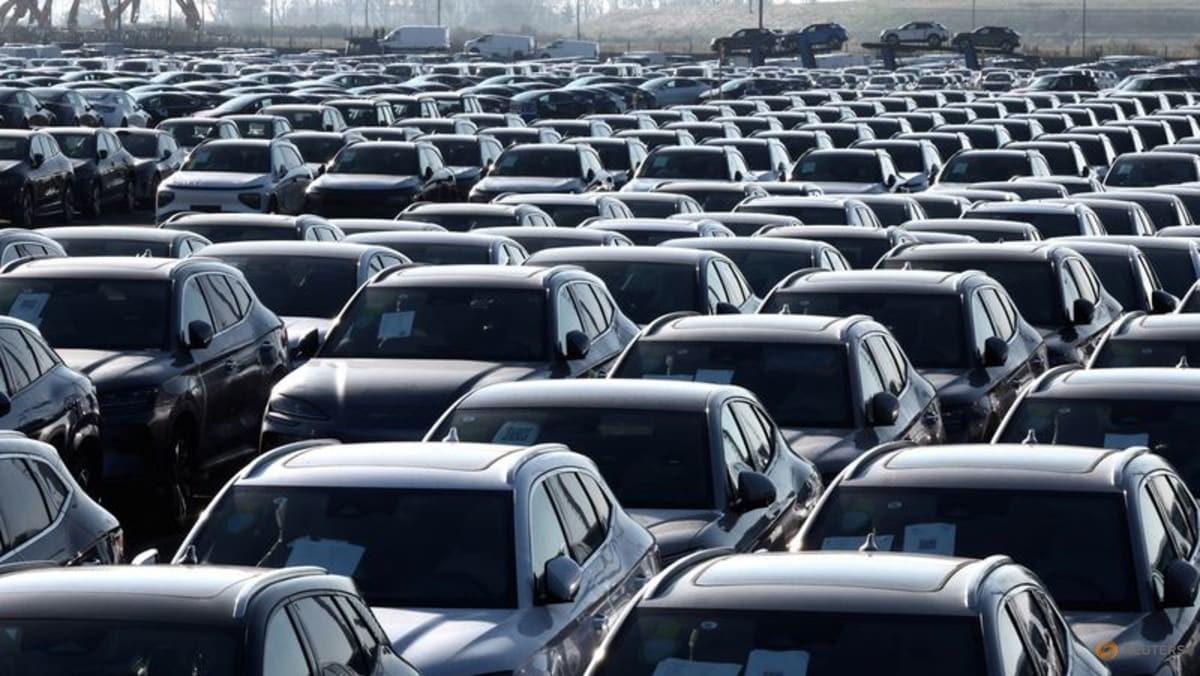
New cars, among them new China-built electric vehicles of the company BYD, are seen parked in the port of Zeebrugge, Belgium, on Oct 24, 2024. (File photo: Reuters/Yves Herman)
CANBERRA: In recent weeks there have been five major developments that point to the future of the global automotive industry. The changes are also a harbinger for wider transformation of the energy consumption that has underpinned modern global politics.
The first shift came in Australia, where battery electric vehicles (BEVs) became the most popular power train for the first time. This is in a country that famously delivered an election victory to a Prime Minister who claimed EVs would end the weekend.
A recent survey by the National Roads and Motorists’ Association found that while EV drivers no longer suffered from range anxiety and were looking forward to more road trips, internal combustion engine vehicle drivers had fuel price anxiety and were pulling back from hitting the great open road.
With EVs some 85 per cent cheaper to run, Australia is accelerating its EV adoption and as Australia is the most open auto market in the developed world, what happens in Australia is a useful global reference point.
CNA Games Guess Word Crack the word, one row at a time Buzzword Create words using the given letters Mini Sudoku Tiny puzzle, mighty brain teaser Mini Crossword Small grid, big challenge Word Search Spot as many words as you can Show More Show Less Second, German car giant Volkswagen announced 100,000 job cuts, reducing models by 50 per cent by 2035 and closing four plants in Germany (unless alternative uses could be found for them).
With the China market no longer providing rivers of gold that had sustained the company for decades and intense competition from more compelling Chinese electric vehicles in its home market, Volkswagen has taken these measures to stay afloat.
As EVs have much fewer parts, this could well translate into further job cuts at related parts suppliers as Europe’s EV transition continues. The car industry is emblematic of a wider decline in European manufacturing, with the sector reported to account for about 7 per cent of Europe’s GDP and linked with almost 14 million jobs.