Commentary: What revised Maju Forest plans could mean for future development decisions - CNA
Framing the outcome in terms of winners and losers risks reinforcing the zero-sum thinking we should move beyond, says NUS landscape architecture professor Yun Hye Hwang.
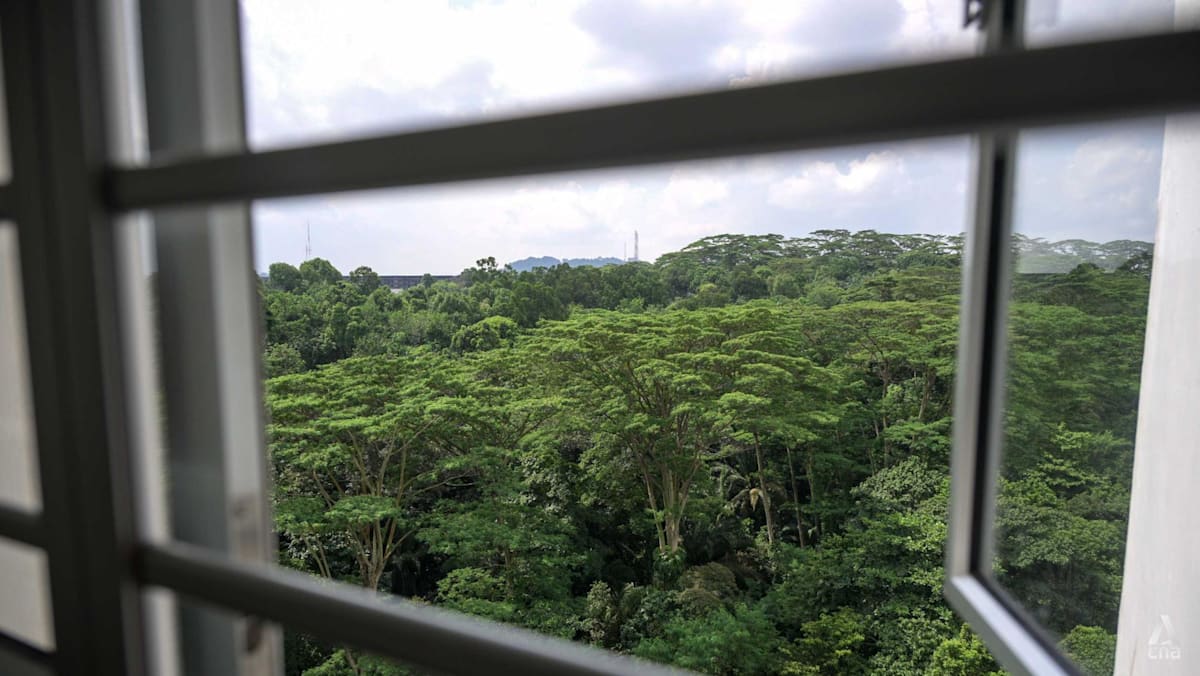
Maju Forest seen from surrounding high-rise housing blocks at the Sunset Way estate in Clementi on Jul 16, 2026. (Photo: CNA/Wallace Woon)
This audio is generated by an AI tool.
Yun Hye Hwang 02 Nov 2026 06:00AM Bookmark Bookmark Share WhatsApp Telegram Facebook Twitter Email LinkedIn Set CNA as your preferred source on Google Add CNA as a trusted source to help Google better understand and surface our content in search results. Read a summary of this article on FAST. Get bite-sized news via a newcards interface. Give it a try. Click here to return to FAST Tap here to return to FAST FAST SINGAPORE: Following environmental studies and public feedback, the Housing and Development Board (HDB) announced on Wednesday (Oct 28) revised housing plans for Maju Forest and Gillman Barracks: The proposed housing supply will be cut by about 1,200 homes across both sites while retaining an additional six hectares of existing greenery.
In land-scarce Singapore, this is a significant decision amid continuing housing demand. Is it a victory for nature groups? In some respects, yes. Their sustained engagement has brought greater attention to the environmental implications of development.
However, framing the outcome in terms of winners and losers risks reinforcing the zero-sum thinking we should move beyond.
In 2020, amid public debate over Clementi Forest, I argued in a CNA commentary that Singapore need not view forest conservation and housing development as mutually exclusive. Instead, I called for collaborative planning involving different stakeholders to explore alternatives that accommodate both.