Congress down but not out in Rajasthan: Civic poll results decoded
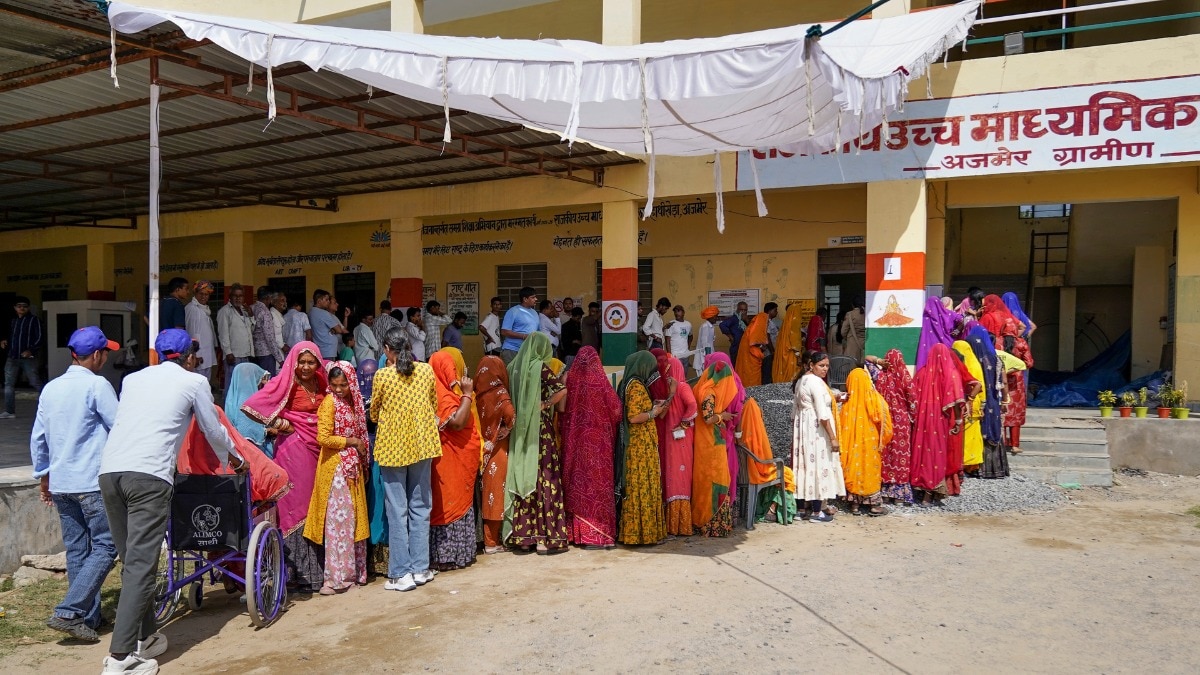
Setbacks for the Congress in the civic poll results in Rajasthan have exposed the party’s organisational weaknesses, yet the narrow vote-share gap with the BJP, wins in Bikaner and Sikar, the deadlock in Jodhpur, and tight contests in Pali, Jalore and Alwar indicate the party still retains a political base to rebuild on for the assembly polls in 2028.
For the Congress, the urban local body election verdict isn’t a defeat that should trigger despair. It is, instead, a reminder that the party is very much in the contest and that its main challenge is to create a disciplined electoral machinery that converts public support into votes.
The BJP emerged as the clear winner across the 309 urban local bodies, but that result hides a much keener contest. With results declared for over 10,000 wards, the BJP’s vote share stood at 35.18 per cent against the Congress’s 34.24 per cent—a mere difference of 0.94 percentage points. The BJP won 4,171 wards and the Congress 3,597.
For a party that has been out of power in Jaipur for years and lost the 2023 assembly elections, the Congress remaining within a percentage point of the BJP in an urban election is significant, say observers. It suggests Rajasthan has not gone the way of Gujarat or Madhya Pradesh, where the Congress has progressively struggled to remain a serious challenger to the ruling BJP.
The civic poll results show Rajasthan remains a two-party state. Independents emerged as a powerful third force but in no way displaced the Congress as the principal force against the BJP. Of the 309 urban bodies, the BJP secured majority control in 148 and the Congress in 104. The two parties were tied as the largest party in another 10 urban bodies.
There are enough examples to show why the overall results needn’t be read as a BJP victory. In Sikar, the hometown of its state president Govind Singh Dotasra, the Congress emerged victorious in the Nagar Parishad and did well in most of the Shekhawati region. It also won in Sachin Pilot’s assembly constituency of Tonk. More significantly, it won the municipal corporation in Bikaner, the hometown of Union minister Arjun Mehgwal.
Then there’s Jodhpur. The city produced an extraordinary 44-44 tie between the BJP and Congress, with Independents holding the balance. The contest also became a test of influence between Union minister Gajendra Singh Shekhawat and Ashok Gehlot, the Congress veteran and former chief minister. Gehlot did not leave his home turf entirely to the local organisation; he campaigned actively and helped block what could have been a comfortable result for the BJP.
That, observers say, is a message the Congress should absorb. Its heavyweights still possess political capital. The question is whether the party can deploy them strategically.
Alwar provides another example. The Congress stopped the BJP from securing a clear majority in the 65-member municipal corporation. The Congress’s Tikaram Jully, who is leader of the Opposition in the legislative assembly, personally managed party candidates, holding individual meetings with them and working to keep the flock together. In Jalore, the Congress is just two seats short of a majority.
These aren’t isolated successes. They indicate the Congress has pockets of organisational and social support across Rajasthan that can still be activated in the run-up to 2028. The party should also recall its performance in the 2023 elections. The Congress had won 70 of the 200 seats and polled 39.96 per cent of the votes—its strongest showing in terms of seats since 1998 despite losing power to the BJP.
The challenge is what the Congress can create out of this. It faces a BJP that not only has ideological prowess in the form of nationalism and Hindutva but has built a cadre that works between elections, mobilises voters at the booth level and pursues a larger political purpose.
The Congress seemingly has no equivalent emotional or ideological proposition at the grassroots. Too often, its politics appears reduced to the pursuit of power and factional competition. This, observers say, is where the party high command needs to think harder about its political messaging in Rajasthan.
Rajasthan’s social and cultural temperament also need to be understood. When senior Congress leaders pick fights over issues such as ‘Manusmriti’ or take positions on food and non-vegetarianism, it arguably exposes itself to being projected as culturally discordant.
The civic poll verdict, therefore, contains a paradox for the Congress. It is a loss but not an existential one. The BJP remains ahead but it has not pushed the Congress to the margins. That is the lesson before the forthcoming panchayati raj polls, which will perhaps be the Congress’s last big opportunity before Rajasthan votes to elect a new legislative assembly in 2028.