COP31 carbon removal push could threaten African farmland, fisheries, activist warns - Premium Times Nigeria
An environmental justice activist has warned that proposals to expand carbon dioxide removal technologies under consideration at the COP31 climate negotiations could threaten African livelihoods, worsen food insecurity and divert scarce climate resources from adaptation projects.
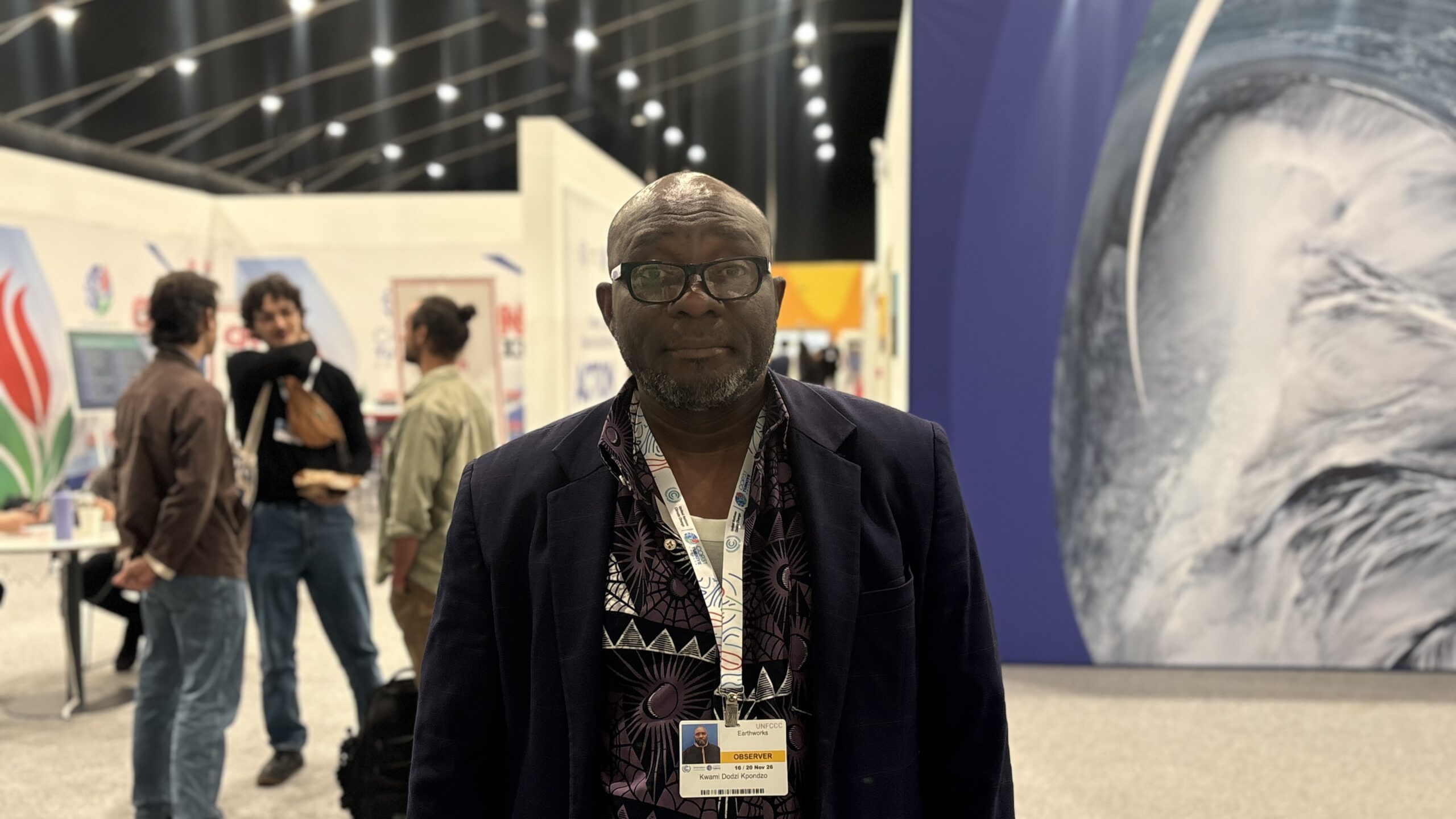
Kwami Kpondzo, an official of the Global Forest Coalition and co-coordinator of the Africa Working Group of the Hands Off Mother Earth (HOME) Alliance, said large-scale deployment of technologies such as bioenergy with carbon capture and storage (BECCS) and marine carbon dioxide removal could impose significant costs on communities already vulnerable to climate change.
In an interview with PREMIUM TIMES in Antalya, Türkiye, Mr Kpondzo argued that the growing emphasis on carbon removal risks allowing major polluters to continue emitting greenhouse gases instead of reducing pollution at its source.
His concerns come as negotiators consider provisions in the first draft of the COP31 cover decision that encourage the expansion of carbon capture and carbon dioxide removal technologies.
The draft calls for efforts to accelerate carbon capture, utilisation and storage (CCUS) to at least 500 million tonnes of carbon dioxide by 2035, while encouraging countries to work towards removing between 1.3 billion and 2.5 billion tonnes of carbon dioxide annually by the same year.
Although the draft recognises that carbon dioxide removal may be needed to return global warming below 1.5 degrees Celsius, it also states that such measures should complement, rather than replace or delay, deep emissions reductions.
The proposals have, however, raised concerns among some environmental groups about the environmental and social consequences of deploying technologies at scale.
Mr Kpondzo said BECCS, which involves growing biomass, burning it for energy and capturing the resulting carbon dioxide for storage, could require extensive areas of land if deployed on a large scale.
He warned that this could put pressure on land used by rural communities for farming, particularly in African countries where smallholder and family farming remain important sources of food and household income.
“If BECCS should work, it needs a huge amount of land. Africa’s economy is based on agriculture, and people need land to cultivate and have food. If land is taken from communities, it means they will not have access to land to cultivate,” he said.
He added that the consequences could extend beyond food production to household income, education and housing, particularly where families depend on small-scale farming to pay for their children’s schooling and meet other basic needs.
Mr Kpondzo also raised concerns about the possible displacement of communities and the use of chemicals in large-scale biomass production, arguing that these could affect soil quality, water resources and biodiversity.
He described the potential consequences as human rights concerns, including the rights to food, water, housing and a safe environment.
The activist also criticised proposals to explore marine carbon dioxide removal, which involves using the ocean or marine ecosystems to absorb and store more carbon dioxide.
He said some approaches being promoted for further research, including ocean alkalinity enhancement and ocean fertilisation, could affect marine ecosystems and the livelihoods of fishing communities.
Ocean alkalinity enhancement involves adding alkaline materials to seawater to increase its capacity to absorb carbon dioxide, while ocean fertilisation seeks to stimulate the growth of marine organisms, such as phytoplankton, which absorb carbon dioxide through photosynthesis.
Mr Kpondzo warned that experiments and eventual deployment could expose fishing communities to risks if they disrupt marine ecosystems.
He questioned why governments should commit substantial resources to researching technologies whose environmental consequences remain uncertain when vulnerable communities urgently need support to adapt to climate impacts.
“We are here to find a solution to the climate crisis, not to put more burden on the community,” he said.
He argued that funding for such research would be better directed towards adaptation projects and community-led practices that work with nature.
Beyond the possible effects on land and marine ecosystems, Mr Kpondzo said expanding investment in carbon removal could further complicate the long-standing demand by African countries for more climate finance, particularly for adaptation.
He argued that funding for carbon removal technologies and carbon market projects should not be treated as a substitute for financial obligations by wealthy countries to support developing nations dealing with climate impacts.
“We need climate debt to be paid, not climate finance,” he said, arguing that countries with greater historical responsibility for greenhouse gas emissions should fulfil their obligations rather than rely on carbon markets to demonstrate climate action.
He said Africa needed more direct investment in initiatives such as agroecology, sustainable forest management and community-led adaptation.
Agroecology applies ecological principles to farming, including practices that improve soil health, protect biodiversity and reduce reliance on chemical inputs.
Mr Kpondzo said funding directed towards carbon capture and removal projects could instead support these approaches, which he believes would provide more immediate benefits to communities.
Mr Kpondzo also questioned whether continued investment in oil and gas extraction would address Africa’s energy access challenges.
He cited Nigeria as an example, pointing to persistent electricity shortages despite decades of oil and gas production.
“Every time I go to Nigeria, I experience power cuts. It is terrible,” he said.
He argued that communities in oil-producing areas continued to bear the consequences of extraction through pollution, gas flaring and black soot, while many people still lacked reliable electricity.
For Africa, he said, the energy transition should prioritise clean, accessible and community-centred electricity rather than systems that continue to depend on fossil fuels or serve primarily the interests of wealthier countries.
He also raised concerns about the extraction of critical minerals needed for renewable energy technologies, saying the process could create new environmental and social pressures on African communities if not governed responsibly.
“We need electrification that will benefit the Global South, not electrification that will benefit the Global North,” he said. “It should be from clean energy, people-centred and democratised.”
The debate over carbon removal is part of wider discussions at COP31 about how countries can respond to the risk of global warming exceeding the 1.5-degree Celsius threshold.
While some proponents argue that carbon removal will be needed alongside emissions reductions to address residual emissions and remove carbon dioxide already in the atmosphere, critics warn that relying on the technologies could weaken pressure on governments and industries to move away from fossil fuels.
The COP31 draft cover decision is not yet an agreed outcome. In a note accompanying the 16 November draft, the presidency said the text was intended to facilitate further negotiations and did not represent consensus among parties.
Mr Kpondzo said African countries should resist proposals that could delay emissions reductions while increasing pressure on communities and natural resources.
He called for governments to prioritise direct cuts in fossil fuel emissions and invest in solutions such as agroecology and forest management.
“We can’t be doing the same thing and expect something different as a result,” he said.