COP31: China's push matters in delivering climate pledges - CGTN
By continuing to browse our site you agree to our use of cookies, revised Privacy Policy and Terms of Use. You can change your cookie settings through your browser.
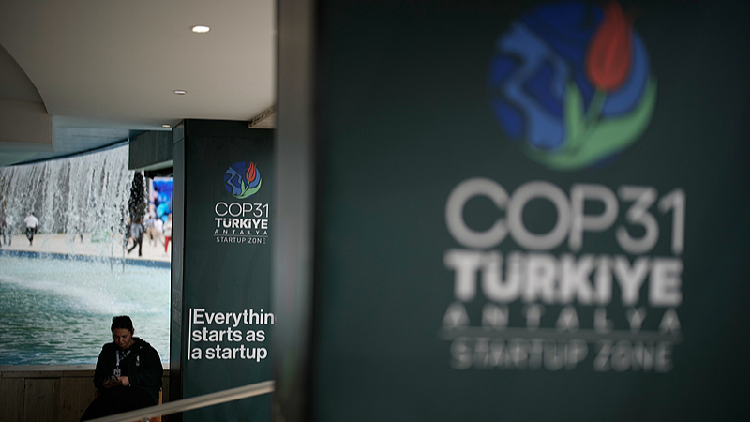
A worker sits at the COP31 UN Climate Summit in Antalya, Türkiye, November 19, 2026. /VCG
Editor's note: Yasiru Ranaraja, a special commentator on current affairs for CGTN, is a researcher on maritime affairs and an expert on Belt and Road Initiative development. He is also the founding director of the Belt & Road Initiative Sri Lanka, an international development organization and think tank in Sri Lanka. The article reflects the author's views and not necessarily those of CGTN.
The world is not short of climate promises but what it increasingly lacks is the political will and practical capacity to turn those promises into reality. As the 31st United Nations Climate Change Conference (COP31) approaches its conclusion in Antalya, Türkiye, on November 20, this uncomfortable truth deserves more attention than another round of ambitious declarations.
The climate risks which the Intergovernmental Panel on Climate Change reports highlighted over the years are becoming a reality. With many countries already confronting floods, droughts and mounting economic losses, the real test of climate cooperation is no longer what governments promise, but what they actually deliver.
This is why China's emphasis on implementation, climate finance and international cooperation deserves closer attention. It raises a fundamental question: Can global climate governance move beyond diplomatic commitments and produce meaningful results for those who need them most?
The consequences of inadequate climate action are becoming increasingly difficult to ignore. According to the Emergency Events Database (EM-DAT), 358 natural hazard-related disasters were recorded worldwide in 2025, claiming 16,607 lives, affecting approximately 110.2 million people and causing nearly $170 billion in economic losses.
However, not all these disasters were related to climate change; but the figures illustrate the enormous human and economic costs of disaster vulnerability. As for developing countries, the consequences often extend far beyond the immediate destruction. A damaged road can disrupt trade, flooded farmland can threaten food security, and rebuilding critical infrastructure can consume resources desperately needed for education, healthcare and economic development.
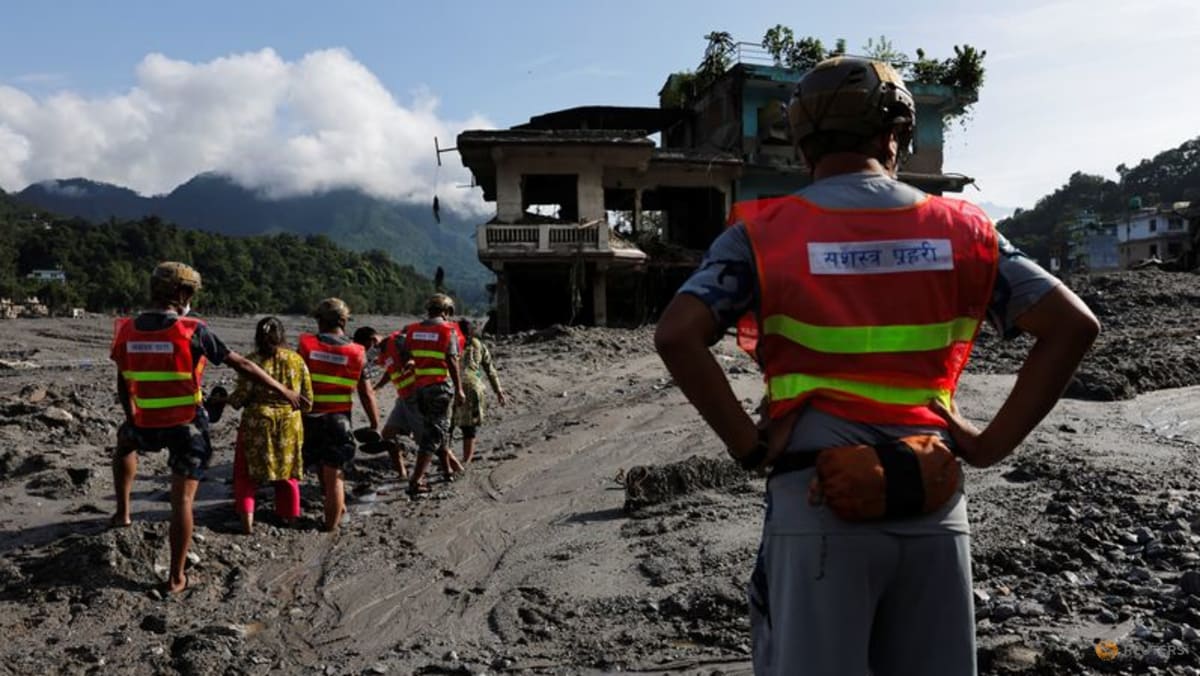
Sri Lanka's recent experience is particularly telling. When Cyclone Ditwah struck in November 2025, devastating floods and landslides affected approximately 2.2 million people, exposing the vulnerability of communities and infrastructure to extreme weather. Similar vulnerabilities were exposed by the devastating August 2026 floods in Nepal, which destroyed roads, homes and vital infrastructure.
Such disasters reveal an uncomfortable inequality: How wealthier economies generally have greater financial and technological resources to prepare and recover, while developing countries often face the difficult choice between rebuilding what was lost and investing in future growth. Climate resilience, therefore, cannot remain a secondary concern in international development and it's increasingly becoming a part of how countries plan their economic futures.
The difficulty of translating commitments into meaningful support lies at the heart of COP31. At COP29 in Baku, Azerbaijan, countries agreed to mobilize at least $300 billion annually by 2035 for developing countries, with developed economies taking the lead.
Yet the real challenge is not merely announcing financial targets but it is ensuring that money becomes available, reaches vulnerable communities and supports projects capable of making a lasting difference. For countries already struggling with debt, climate financing that relies heavily on loans can create additional economic pressure. Grants, concessional financing and accessible funding mechanisms are therefore just as important as the headline figures.
At COP31, on November 16, a draft proposal sought to define the tripling of adaptation finance as at least $120 billion annually by 2035. However, disagreements over financing responsibilities and implementation remain a reminder that promises are easier to negotiate than to fulfill. For developing nations, the issue is straightforward: Climate commitments mean little if the resources needed to implement them remain beyond reach.
China's position carries significance because it connects international climate responsibilities with the practical challenges of development. Its emphasis on common but differentiated responsibilities recognizes that all countries must act, while acknowledging differences in historical emissions, economic capacities and development needs. For countries across Asia, Africa and Latin America, this principle is not merely diplomatic language. It reflects the reality that climate action must advance alongside poverty reduction, industrial development and energy security.
China also brings substantial technological and industrial capabilities to the discussion. According to the International Energy Agency, China added nearly 500 gigawatts of renewable energy capacity in 2025, accounting for more than 60% of global renewable capacity growth.
This expansion matters beyond China's borders, as large-scale production and technological innovation can help lower the costs of renewable energy technologies, creating opportunities for developing economies to accelerate their own transitions.
The CGTN-produced documentary Where Green Power Takes Root has been screened in a continuous loop at the China Pavilion during the 31st United Nations Climate Change Conference (COP31) in Türkiye. The photo was taken on November 11, 2026. /CGTN
Through South-South cooperation, China is helping expand access to solar energy, electric mobility, energy infrastructure and technical expertise, but meaningful cooperation should go beyond supplying equipment. It should also build local skills, strengthen industries and support long-term development. At the same time, unnecessary trade barriers against affordable green technologies risk making climate action more expensive, particularly for countries with limited financial resources.
China's domestic transition is equally important. In September 2025, China announced its 2035 targets including reducing economy-wide net greenhouse gas emissions by 7% to 10% from peak levels and raising the share of non-fossil fuels in energy consumption above 30%.
While coal dependence and deeper emissions reductions remain challenges, China's experience demonstrates how climate action can be connected with industrial innovation and economic transformation. Ultimately, China's international leadership will be judged not only by its advocacy for implementation, but also by the progress it delivers at home and through cooperation abroad.
However, COP31 should not be judged simply by the ambition of its final declaration. Its real significance will depend on whether financing becomes more predictable, technology more accessible and climate commitments more effective. Developed countries are at task to fulfill their financial obligations, while major emitters are pressured to demonstrate credible domestic progress. Developing countries, meanwhile, need the resources and institutional capacity to turn climate strategies into tangible outcomes. China's call for implementation could offer an important contribution to this debate because it shifts attention from announcing ambitions to achieving results.
Finally, for a farmer facing repeated floods, climate diplomacy matters when it protects livelihoods. For a family rebuilding after a disaster, it matters when safer homes and infrastructure become possible. The world already knows much of what needs to be done. The defining question for COP31 is whether governments are finally prepared to deliver.
(If you want to contribute and have specific expertise, please contact us at opinions@cgtn.com. Follow @thouse_opinions on X to discover the latest commentaries in the CGTN Opinion Section.)