Cornell Students Protest, Buildings Sprayed With Graffiti as Backlash Grows - Newsweek
A glass door was smashed and walls were covered with graffiti at Cornell University in the early hours of Monday, as backlash grows over the handling of alleged sexual violence at a fraternity house.
The Day Hall building was left with smashed glass and messages on the walls that read "Smash the patriarchy," and, "At Cornell rapists are protected protesters are expelled."
"We wanted to ensure that Day Hall, the center of Cornell’s administrative function, was not able to continue business as usual," the activists responsible told The Cornell Daily Sun on Monday.
Kyle Kimball, Vice President for University Relations told Newsweek: “We understand the frustration and strong emotions being expressed across our community. Those concerns deserve to be heard, but damaging property is not the answer. We are investigating the vandalism at Day Hall and will address it in accordance with University policy and applicable law.”
Backlash has been growing on campus over an alleged gang rape at a Cornell fraternity that reportedly took place in 2024.
Lawyers for two of the former students denied they participated in a sexual assault, and a lawyer for one of the seven men named in the lawsuit said in a statement to Newsweek on Monday that the claims are "intentionally dishonest" and "morally repugnant."
Prosecutors have confirmed that a criminal probe has been reopened, with New York Attorney General Letitia James appointed as a special prosecutor to review the matter. Cornell has backed the decision to reopen the probe.
On September 16, a woman, known as Jane Doe, filed a civil lawsuit alleging that she had been raped by seven Chi Phi members in 2024 in an incident that involved alcohol and the drug ketamine at a fraternity house.
The lawsuit seeks damages against seven former students, Cornell University and other defendants. No criminal charges have been filed in connection with the allegations.
Lawyers for two of the former students deny wrongdoing, and court records show that some of the accused students, when interviewed by Cornell investigators, described the sexual activity as consensual. The Tompkins County district attorney declined to prosecute in 2024.
When the woman reported the incident at the time, Cornell did take some action. Two of the fraternity members were expelled. One, who had already graduated, was barred from campus and two more were suspended. The remaining men were handed lighter punishments.
Their fraternity, Chi Phi chapter at Cornell, was closed in 2024 following the allegations and remains barred from campus.
Trey Robb, interim executive director of Chi Phi Fraternity, previously told Newsweek in response to reports concerning the Cornell University case that the fraternity "condemns sexual assault and drug and alcohol abuse in the strongest possible terms. Neither has any place in our fraternity or on college campuses."
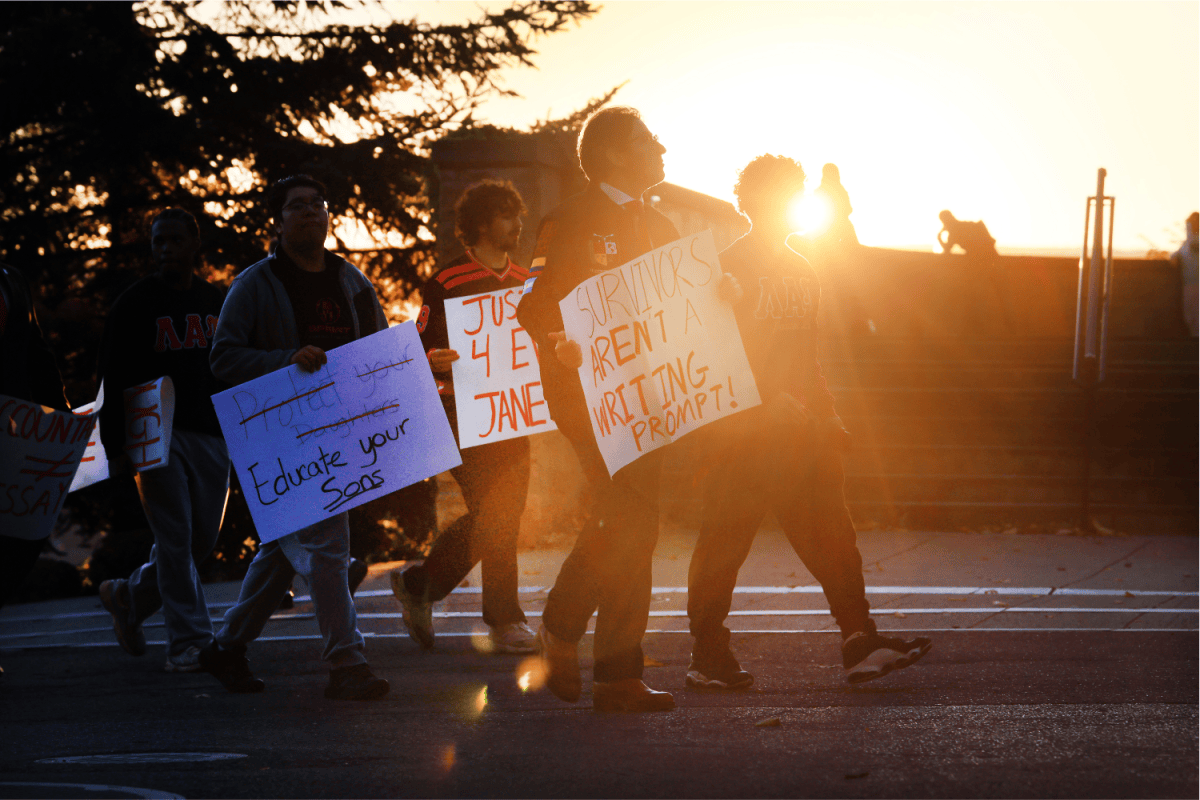
The damage to Day Hall, the main administrative building at the University, occurred in the early hours of Monday, hours before crowds of students and faculty gathered for a "Justice for Survivors" protest at Cornell University, demanding the resignation of President Michael Kotlikoff and systemic accountability over the handling of the alleged assault case.
Many protesters wore purple ribbons and held signs of support, including "Justice 4 every Jane Doe," and, "We want sentences not essays," referring to the claim that the accused men were "afforded the opportunity to mitigate their conduct by submitting essays to Cornell."
Cornell says essays were not the sole disciplinary consequence for any defendant and that its investigation had resulted in expulsions and suspensions.
"Too often, we are met with silence, we are met with statements, we are met with procedures, but not enough support," student Athena Holloway told the crowd. "How much does it take for our university to stand with survivors?"
Other students and faculty members chanted, "Kotlikoff, resign!" amid calls for Cornell President Michael Kotlikoff to step down over the handling of the case.
Kotlikoff released a video apology on Saturday, saying that Jane Doe’s account "raises heartbreaking and troubling issues about sexual assault, dehumanization and aspects of party culture, alcohol and drug use."
Kotlikoff backed an independent external review of the university's handling of the matter, and pledged to examine fraternity culture on campus. He has also apologized to students affected by the allegations and said Cornell would identify areas for improvement.
Another popular chant on Monday was, "Ban the frats."
Cornell students have arranged another protest this week in the form of a seven hour sit-in at the campus’ Toni Morrison dining hall.
"From 1:30 p.m. to 8:30 p.m. at Toni Morrison Dining Hall, we will hold a seven-hour sit-in in solidarity with Jane Doe and all survivors of sexual assault and sexual violence," Cornell NAACP said on Instagram.
The allegations have renewed debate about how colleges, and the public more generally, view consent when a person is allegedly impaired by alcohol or drugs.
The Association of American Universities' 2019 campus climate survey found 13 percent of undergraduate students experienced nonconsensual sexual contact involving physical force or an inability to consent after enrolling in college.
Meanwhile, a landmark National Institute of Justice campus sexual assault study previously found 7.8 percent of undergraduate women were sexually assaulted after becoming incapacitated following voluntary alcohol or drug consumption, compared with 4.7 percent who reported physically forced sexual assault.
The same research found that roughly 11 percent of women surveyed were incapacitated when the sexual assault occurred, while assaults involving a drug secretly administered by a perpetrator were much less common.
Contact Newsweek editors on this story: John Fitzpatrick and Cristina Diciu.