Could the Flydubai cockpit attack signal a wider threat to Israel-bound flights?
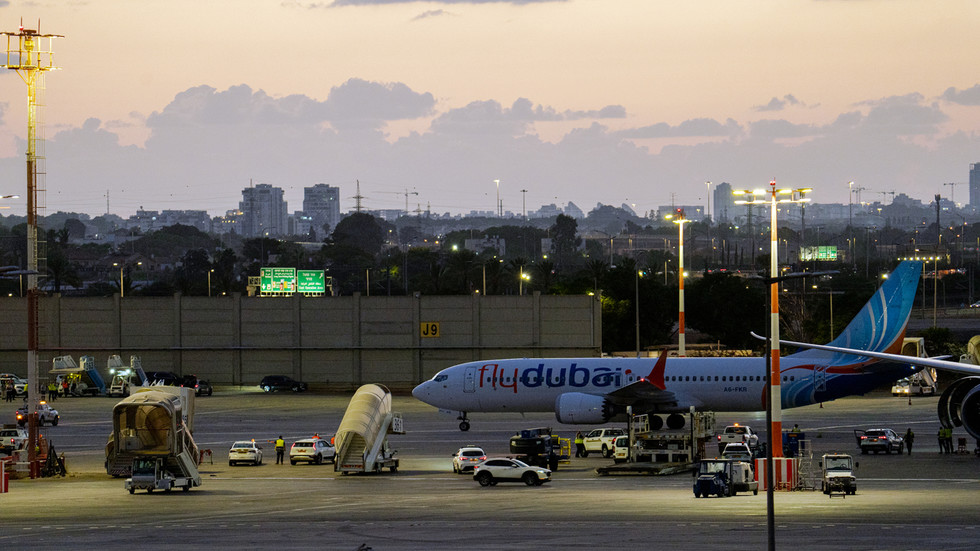
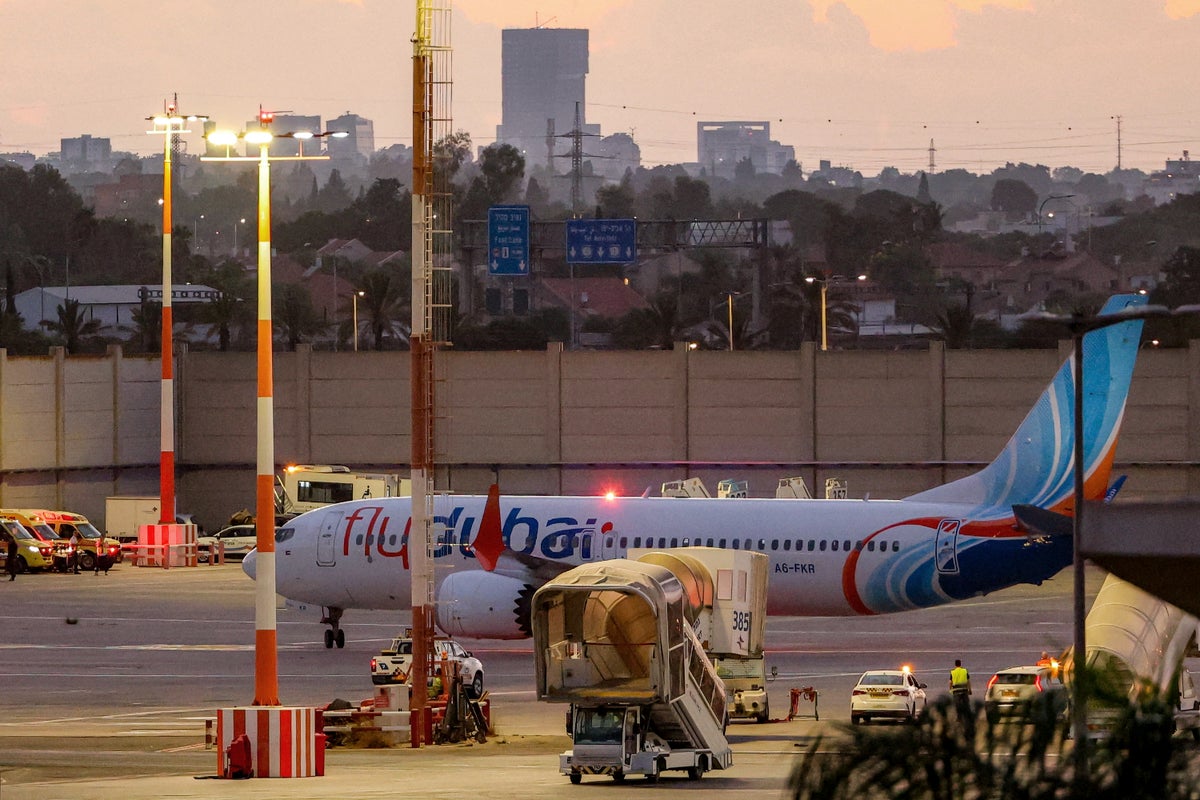
© Erik Marmor / Getty Images The incident aboard FlyDubai flight FZ1073 has yielded some confirmed facts, but it is still too early to draw firm conclusions. The passenger jet was flying from Dubai to Tel Aviv on Wednesday when a confrontation broke out in the cockpit. The aircraft then transmitted a distress signal and made an emergency landing in Tabuk, Saudi Arabia. All 174 passengers and crew members survived. According to media reports, the plane lost altitude rapidly, while passengers and airline employees aboard helped subdue the attacker and restore control to the crew. Early wire reports offered conflicting accounts, including claims of a hijacking, because the aircraft had transmitted the corresponding emergency signal.
Israeli Prime Minister Benjamin Netanyahu said the copilot had attacked the captain and apparently tried to crash the plane. Defense Minister Israel Katz described the incident as an attempted jihadist terrorist attack. Israeli authorities have already characterized it as an attempted act of terrorism, drawing comparisons with the September 11, 2001 attacks. But the investigation is ongoing, and no final findings have been released. FlyDubai confirmed that an altercation had occurred in the cockpit and said investigators were working to establish its cause and the motives involved. Authorities in the United Arab Emirates also announced an investigation and urged the public not to spread unverified information. Saudi officials confirmed the emergency landing and said both pilots had been hospitalized.
The central question – what exactly happened – therefore remains unresolved. Israel has already said it views the incident as an act of terrorism. Yet the publicly available evidence is still insufficient to establish an ideological motive, an intention to kill Israelis specifically, or any connection between the attacker and an organization. Investigators are examining his motives, the circumstances of the attack, and whether it involved advance planning.
Media reports identified the suspect as the copilot and an Omani citizen, but those details came from Israeli sources and have not been confirmed by all parties. No information has been released about whether he made any statements, had contact with radical groups, or acted on someone else’s instructions. FlyDubai has explicitly warned against jumping to conclusions.
Read more Israel-bound flight diverted after death-dive and pilot stabbing: As it happened Two separate questions need to be distinguished here. The first is whether the attacker acted alone aboard the aircraft. Reports suggest that only one person carried out the attack in the cockpit. The second is whether he was a lone extremist in the political sense: someone acting on his own initiative, without outside connections, support, or a prearranged plan. That remains unknown. A single perpetrator does not necessarily mean there was no organization behind him. Equally, an attack on a plane bound for Israel does not, by itself, prove that such an organization existed.
If investigators establish that the copilot deliberately tried to destroy the aircraft because it was headed to Tel Aviv or because Israelis were aboard, the incident could be classified as a terrorist attack carried out through access granted by his job. That would distinguish it from the more familiar scenario of an attacker trying to board a plane with a weapon. In that case, the security challenge would extend beyond passenger screening to the possibility of someone exploiting a trusted position within the aviation system.
Still, it is also too early to dismiss the incident as a personal dispute between two crew members. The flight was bound for Israel, and the confrontation occurred in a region where protracted conflict is a fact of daily life. This week, the Israel Defense Forces again struck Gaza, killing Palestinian civilians. Under those circumstances, there can hardly be any meaningful talk of a ceasefire. In September, further attacks took place in the West Bank, where no Hamas fighters were involved: an armed assailant attacked an Israeli, while settlers attacked a Palestinian family.
Radicalization in this context is not simply a matter of new armed groups emerging. It also means a growing number of people coming to see violence as an acceptable political response, assigning collective responsibility for a government’s actions to entire populations, and treating any compromise as betrayal. The longer military operations, civilian deaths, and mutual recriminations continue, the easier it becomes for extremists to portray violence as “retribution” or “resistance” instead of a crime. Different forces employ this rhetoric, but it does not absolve individual perpetrators of responsibility for attacking civilians.
Read more China’s AI strategy ‘paradox’ really isn’t one Israel’s military operations in Gaza, conditions in the West Bank, settlement expansion, and inflammatory statements by Israeli officials deepen the region’s sense of injustice, particularly among those who identify with their “Palestinian brothers and sisters.” This helps radical movements emerge and readily recruit supporters who believe they have a moral right to seek revenge by any means available. In their view, all’s fair in war. This is already a significant political factor that cannot be ignored. Across the Middle East, Israel’s policies are almost universally seen as a cause of rising terrorism.
There is another side to this dynamic. Attacks on Israeli civilians and threats to Israel’s security strengthen public support within Israel for the use of force. Retaliatory measures then give fresh ammunition to those calling for radical resistance. The result is a vicious cycle in which each side invokes the other’s violence to justify its own course. The FlyDubai incident may prove to be part of that pattern, and revenge cannot be ruled out as the attacker’s motive.
There is no guarantee that similar attempts will not occur, especially if investigators confirm that the attack was ideologically motivated and deliberately targeted a flight to Israel. Such a finding would likely lead to tighter security for flights serving Israel, including more rigorous personnel vetting, revised cockpit access procedures, and closer monitoring of crew behavior. Israeli authorities have already announced stronger aviation security measures, while FlyDubai has suspended flights to Israel pending the investigation.
But a single incident is not enough to predict a “wave” of similar attacks. That would require evidence of preparations, organizers, connected perpetrators, or at least statements from groups claiming responsibility. None of that has been made public so far. What we have is an incident that was averted almost miraculously, a possible terrorist motive, and a persistently unstable regional backdrop.
Read more Western F-16s promised safe skies over Kiev: Why could they all go MIA soon? Nor would the threat necessarily take the form of repeated attacks on aircraft. With security tightened, terrorist cells could turn to less protected targets and simpler methods. If the attacker is found to have gained access to the aircraft through his professional position, the most important lesson would concern more than the safety of flights to Israel. It would expose the aviation industry’s vulnerability to a new kind of insider threat.
It bears repeating that it is too early to state conclusively that this was a terrorist attack. Investigators have yet to establish a motive or reconstruct the full sequence of events. But there is also no basis for explaining it away as an ordinary quarrel between pilots. The aircraft was headed to Tel Aviv; one pilot attacked the other, and the plane subsequently lost altitude rapidly. Investigators are closely examining the possibility of terrorism alongside other explanations. For now, all that is known is that the attacker acted alone aboard the aircraft – if this was indeed a terrorist attack. Whether he had ties to a group, and what drove him, remain to be determined.
Radicalization is intensifying across the region. That does not mean every new incident is part of a wider conspiracy, or that attacks on Israeli targets will inevitably become more frequent. But the possibility of further violence will remain as long as wars, repression, mutual dehumanization, and political mobilization fueled by hatred continue – a process at which Israel’s far-right ministers Itamar Ben-Gvir and Bezalel Smotrich have proved all too “successful.”
This website uses cookies. Read RT Privacy policy to find out more.