Cree chief says Canada blocking community efforts to take back control of child welfare

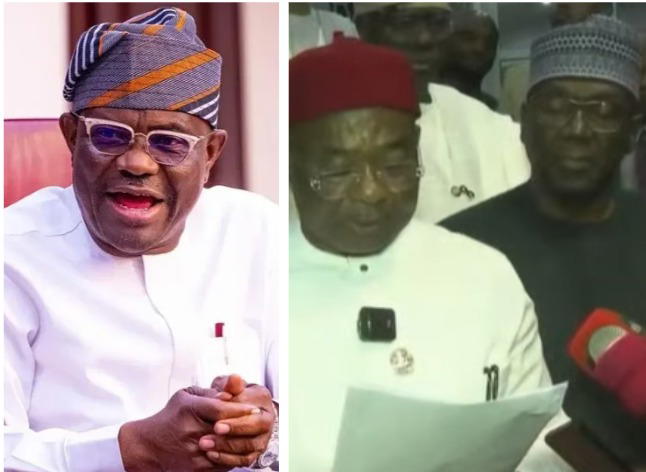
Taykwa Tagamou Chief Bruce Archibald says he started noticing 'barriers being put in place' as his community negotiated with Canada to implement its child well-being law. (Taykwa Tagamou Nation)Social SharingA Cree chief in Ontario is accusing the Carney government of blocking his community's effort to reclaim jurisdiction over child welfare by imposing financial terms on any handover of authority.
Warning of potential serious consequences for other communities, Taykwa Tagamou Nation Chief Bruce Archibald told CBC Indigenous the situation has him feeling concerned, ignored and disheartened.
"They're not giving us self-determination," said Archibald, whose community is in northern Ontario, about 270 kilometres north of Sudbury.
"They're basically forcing the colonial way of how things were done in the past, which didn't work for our people."
Archibald's concerns arise from an Aug. 6 letter he got from Indigenous Services Canada, which informed him about "updates to Canada’s funding approach" for First Nations negotiating self-government over child and family services under federal law C-92.
The Trudeau-era legislation empowers First Nations to assert jurisdiction over child welfare by passing laws that supersede both federal and provincial authorities. The caveat is that First Nations must negotiate a "co-ordination agreement" to get any money to implement their laws.
In a ruling two years ago, the Supreme Court of Canada upheld and praised C-92 as "legislative reconciliation by means of an innovative statute." Sixteen co-ordination agreements have been signed since the law was passed in 2019, according to ISC.
Ottawa to begin $8.5B rollout for Ontario First Nations to reclaim child welfare
After two years of talks, ISC's latest letter told Archibald that funding for on-reserve services "will align" with Canada's broader child welfare program reforms — which Archibald's community has not endorsed — and that "this funding approach will guide fiscal discussions" during negotiations for a co-ordination agreement.
The chief responded with a list of 10 detailed questions outlined in a six-page open letter to Indigenous Services Minister Mandy Gull-Masty, arguing Canada's new approach raises issues that may impact every Indigenous government that has or intends to invoke C-92.
"The consequences are immediate and serious both for our children and our rights," Archibald wrote on Aug. 21.
Funding for First Nations laws must be sustainable and connected to each community's service model and children's needs, not subject to Canada's predetermined program constraints, the letter continued.
"Recognition of jurisdiction without the means to implement it is not reconciliation."
In a statement, Gull-Masty's office said the Carney government is committed to putting decision-making power back in the hands of First Nations but did not address the funding questions.
"We respect Taykwa Tagamou Nation’s exercise of its inherent jurisdiction and we remain committed to working collaboratively with the Nation toward arrangements that support the implementation of their law," the statement reads in part.
Archibald is unconvinced, however, since Taykwa Tagamou Nation did not support the reforms in Ontario that his agreement may now have to align with, he said.
Another chief in Alberta is echoing the concerns.
"Canada's actions and Canada's words are reminiscent of Trump's signature in pencil," wrote Cold Lake First Nations Chief Kelsey Jacko in his own open letter to the minister.
"Statements that could be intercepted by the general public, and our membership, say one thing while your actions in court, in front of the Canadian Human Rights Tribunal, and in the details of the terms and conditions of your programs say another."
Chief Kelsey Jacko of Cold Lake First Nations in Alberta speaks during the Assembly of First Nations 2026 Annual General Assembly in Ottawa last July. (Justin Tang/The Canadian Press)Jacko told CBC Indigenous he's worried Canada wants to tell First Nations that Ottawa knows best when it comes to the design of their laws.
"And that is not reconciliation, it might not even be legal," Jacko said via text message.
The chiefs are right to speak out, according to children's rights advocate Cindy Blackstock, who said Canada is at serious risk of undermining this once-touted promise of jurisdiction by offloading responsibility while retaining control of all the money.
"What it's saying is, 'We're going to make all the major decisions here, and there's very little room for you to actually be able to negotiate what's needed to give your law effect and protect your kids.' So it's negotiation almost as a Trojan horse," Blackstock said.
As executive director of the First Nations Child and Family Caring Society, Blackstock and the Assembly of First Nations have been successfully fighting at the Canadian Human Rights Tribunal since 2007 to end racial discrimination in funding the on-reserve child welfare system.
The complaint revealed how chronic underfunding fuelled the mass removal of First Nations kids from their families, with more youth being taken into government custody than at the height of the residential school system.
Their work culminated in a $23.4-billion class-action settlement and a proposed $47.8-billion reform deal, though chiefs voted down the latter in 2024. Since then Ottawa began trying to sign regional agreements, concluding an $8.5 billion deal with First Nations in Ontario.
The future of the program's reform outside Ontario is unclear, however, as litigation continues.
Blackstock said the record shows "when Canada makes decisions without qualification and without oversight about funding, kids get hurt and taxpayers end up paying more money."
Brett Forester is a senior reporter with CBC Indigenous in Ottawa. He is a member of the Chippewas of Kettle and Stony Point First Nation in southern Ontario who previously worked as a journalist with the Aboriginal Peoples Television Network.