Criminals are stealing used cooking oil from restaurants. Here’s why
Want to bookmark your favourite articles and stories to read or reference later? Start your Independent Membership today.
Federal prosecutors recently described an interstate criminal enterprise with all the trappings of organized crime: clandestine warehouses, money laundering and stolen goods transported across state lines. The mid-September 2026 announcement stated that 19 defendants faced charges; two had just pleaded guilty, while the remainder are slated for trial in April 2027.
The stolen material was not drugs, guns or jewels. It was leftover cooking oil.
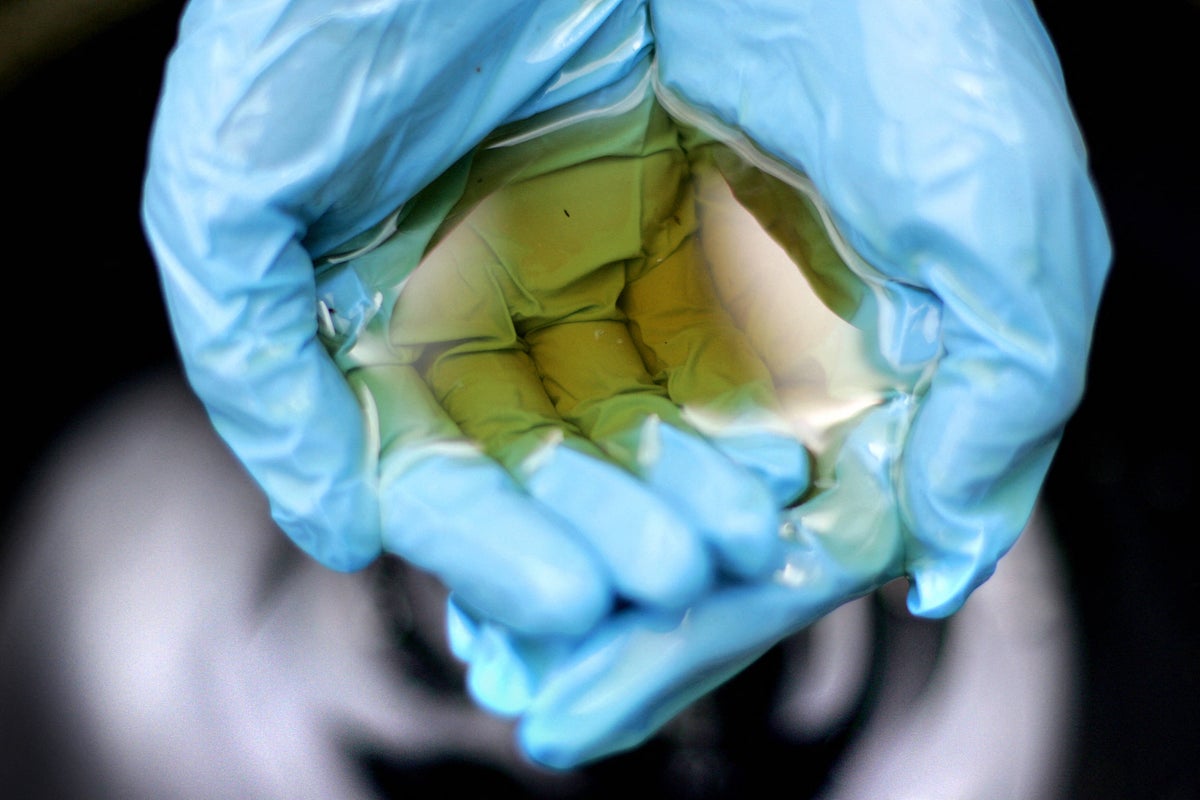
According to prosecutors, members of the group drove trucks to restaurants in 10 states, siphoned used cooking oil from collection tanks and transported it to depots for resale. The alleged motive was simple: Used cooking oil has value. It can be refined into biodiesel. A viscous fluid that the food industry formerly considered garbage has become valuable enough to spur a large-scale criminal operation.
This oil-theft scheme points to a larger lesson. People tend to think of waste as trash, sewage, slag, manure and other seemingly useless or disgusting substances. But historians, anthropologists and geographers increasingly recognize that “waste” is a category defined by humans. Technologies, markets, laws and cultural assumptions all determine what is discarded, what is kept and why. Waste describes a material’s status, not necessarily its substance.
As an environmental historian who studies how societies transform nature into commodities, I am also interested in the other side of the process: how materials classified as waste can be converted back into things of value.
Nothing in nature is wasted. A fallen tree becomes food for fungi and insects, while its nutrients eventually return to the soil or the atmosphere; animal feces feed creatures ranging from bacteria to dung beetles. In ecosystems, one organism’s leftovers routinely provide for another’s needs.
Human societies, by contrast, frequently remove unwanted materials from circulation. The question of where those materials go – and whether they remain useless – is part of the history of waste.
Scholars in a growing field called “discard studies” examine this process. Sociologist Zsuzsa Gille describes different “waste regimes,” the ideologies and concepts that people use to determine what’s valuable and what’s disposable.
Calling something “waste” does not mean that its physical properties are irrelevant. A toxic chemical can poison a river. But whether people dump, recycle, store or reprocess that substance – and whether they classify it as waste at all – depends on human decisions.
Industrialization did not invent waste, but it dramatically changed its scale and geography. During the 19th century, factories and processing plants brought raw materials together in unprecedented quantities and consolidated their unwanted residues in the same sites. That concentration created disposal problems. It also generated new incentives to find profitable uses for what industry left behind.
Consider whey. Cheesemaking produces extraordinary quantities of the watery liquid left behind after milk coagulates. For much of the 19th and 20th centuries, cheese manufacturers disposed of the whey as an unwanted residue. Dumped into waterways, whey encourages bacterial and algal growth that depletes oxygen and can damage aquatic ecosystems.
Beginning in the 1970s, ultrafiltration allowed producers to separate and concentrate whey proteins. A troublesome liquid became whey powder, lactose and protein concentrates, all of which can be used in baked goods, infant formula, animal feed and protein supplements.
Coal-fired power plants provide another example. Coal combustion leaves behind fly ash, a fine mineral residue that companies dumped in landfills or stored in enormous ash ponds. In the 1930s, engineers discovered that fly ash could replace a portion of the Portland cement normally used to make concrete. This new application diverted waste from disposal while reducing demand for energy-intensive cement production.
There is much to admire in these transformations. Repurposing leftover materials can reduce pollution, conserve resources and lower the amount of material dumped into landfills or waterways. The ecological ideal of “cradle-to-cradle” design rests on precisely this insight. Just as in nature, the output of one process can become the input of another.
Yet finding a market for waste does not necessarily solve the problems that the waste created in the first place.
Cottonseed provides a striking example. During the 19th century, American cotton growers regarded seeds as an enormous nuisance. Cotton ginning generated mountains of seeds, and many operators simply dumped these unwanted byproducts into nearby waterways, where they accumulated in foul-smelling, decaying masses. The problem became serious enough that Southern states began restricting cottonseed dumping in the mid-1800s.
Then manufacturers learned to crush cottonseed for oil to be used in soap, cooking and as a substitute for animal fats. They turned the remaining material into fertilizer and animal feed. By the late 19th century, something previously seen as garbage had become the foundation of a major new industry.
Cottonseed boosters proclaimed a transformation of waste into wealth. In 1911, entrepreneur Luther A. Ransom celebrated cottonseed’s ability to produce “edible oil without olives; medicinal oil without codfish; butter without cows; ice cream without cream; lard without hogs.”
Edward D. Melillo, William R. Kenan, Jr. Professor of History and Environmental Studies, Amherst College.
This article is republished from The Conversation under a Creative Commons license. Read the original article.