
Death numbers are climbing as Australia’s baby boomers reach their 80s
The annual number of deaths in Australia has risen to the highest level since the pandemic and is set to keep climbing as the baby boomers reach their 80s.
There were 188,421 deaths in Australia last year, 1153 more than in 2024, and just below the all-time high registered in 2022 when there was a temporary spike in deaths due to COVID-19.
Population ageing was driving the increase in the number of deaths, the Bureau of Statistics said. Dementia, including Alzheimer’s disease, became Australia’s leading cause of death in 2024, overtaking ischaemic heart diseases, separate bureau statistics show.
The median age at which people died last year was 82.1 years (the median age is when half are older and half are younger). That’s up from 81.9 years a decade earlier.
Men die younger than women, although the gender mortality gap is narrowing. The male median age of death has risen by one year during the past decade and declined 0.4 years for females in that time. Even so, the median age of death for women (84.6 years) was about five years older than for men (79.7 years).
Among the states, Victoria had the oldest median age of death at 82.9 years just ahead of South Australia with 82.8 years.
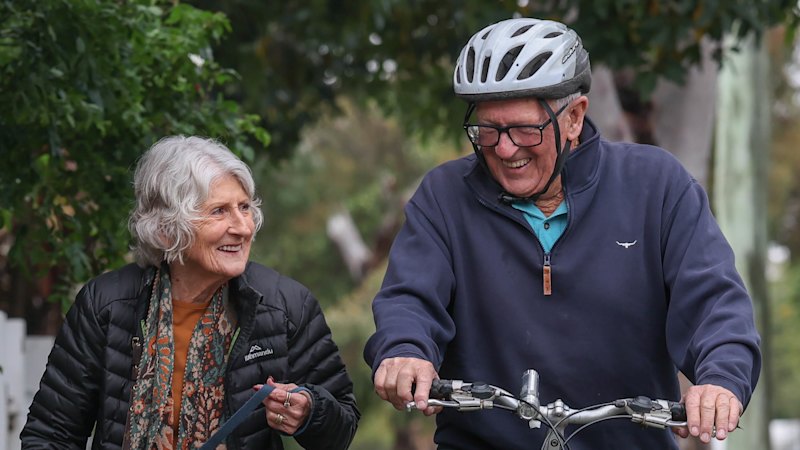
Eddie and Margaret Stevens say the key to living well in your 80s is just that – living.
Margaret Stevens, 81, and her husband Eddie Stevens, 82.Joe ArmaoEddie, 82, rides his bike to the warehouse where he runs a small business, saying he works to keep his mind active. Margaret, 81, agrees you need to keep busy, even if it’s just a daily walk and a chat.
The thought of death crosses Margaret’s mind only when loved ones pass away, she says.
“You never know when your time’s up,” she said. “There’s nothing much you can do about it, so there’s no point dwelling on it, that’s for sure.”
KPMG economist Terry Rawnsley said that death rates per 1000 people among those aged between 70 and 89 years had edged lower during the past five years, while there had been an uptick for the cohort aged over 90 years.
“That’s suggesting a longevity story,” he said. “In past generations people might have passed away in their 70s or 80s but thanks to medical advances and the way people are more aware of their own health has helped many push into that 90s range, which will help drive up life expectancy.”
The federal government’s 2026 Intergenerational Report, released last month forecast life expectancy to reach 89.5 years for women and 86.1 years for men by 2066 due to improvements in healthcare and medical innovation.
But the ageing population will pile pressure on the federal budget because older people typically use more healthcare and aged care services, which are costly to provide.
Health Minister Mark Butler has often pointed out that when he was aged care minister 15 years ago, “about 15,000 Australians turned 80 every year. Next year, it will be 90,000.”
The new figures show death rates have improved a little for those ages between 20 and 50 years during the past five years.
Rawnsley said health educational campaigns along with advances in medical technology, especially the early detection of disease, are among the factors that have “improved the odds for people in those younger age groups”.
However, the total number of deaths annually in Australia is likely to rise steadily in coming years, particularly for the Baby Boomer generation.
The Boomers – given that name because of a surge in births following World War II – were born between 1946 and 1961, meaning the generation’s oldest members turn 80 this year.
Nick Parr, an honorary professor of demography at Macquarie University, anticipates death numbers to ramp up in coming years because of the sheer size of the Baby Boomer cohort.
“It’s not just going to be a linear trend, it will be an upward dogleg in terms of the numbers of deaths,” he said. “This is a coming trend that has been a bit below the radar.”
Births currently outnumber deaths in Australia. However, the latest intergenerational report forecast deaths would start outnumbering births during the 2060s. Some advanced economies have already passed that milestone thanks to low fertility rates, including Japan, Italy and South Korea.
The Central Coast council area in NSW had the highest number of deaths of any local government area last year at 3452 (9.6 deaths per 1000 people). Next highest was Greater Geelong council in Victoria with 2345 deaths (7.9 deaths per 1000 people).
Cut through the noise of federal politics with news, views and expert analysis. Subscribers can sign up to our weekly Inside Politics newsletter.
You have reached your maximum number of saved items.
Remove items from your saved list to add more.

