Death row inmate who murdered 3 people execution-style set for lethal injection
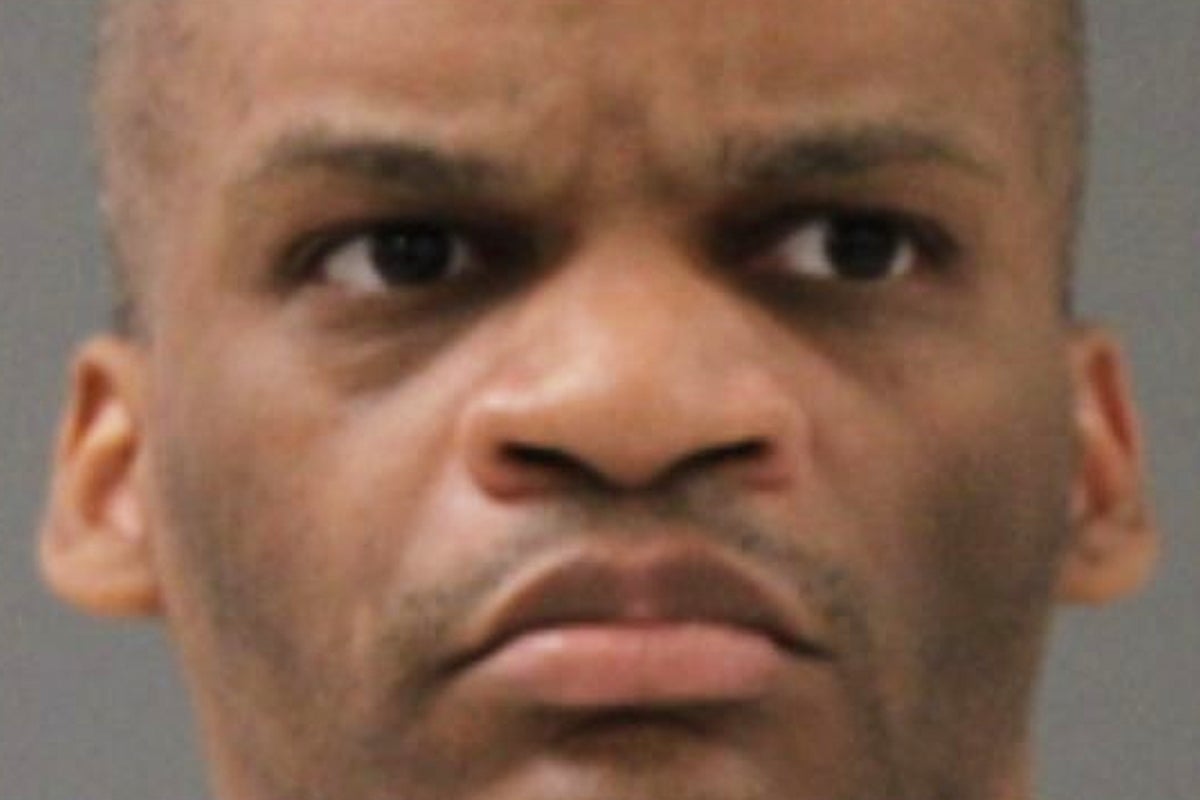
A judge's late-night intervention has temporarily halted the execution of a man convicted of killing two real estate agents in Georgia as Texas prepares to carry out a separate lethal injection on Wednesday for a man convicted of a triple murder.
The execution in Texas would mark the state's fifth execution this year, whereas Georgia has not conducted any during the same period. Nationwide, Florida remains the most active jurisdiction, accounting for more than half of the 25 executions carried out across the U.S. so far this year.
In Georgia, 53-year-old Stacey Humphreys was sentenced to death for malice murder and other charges stemming from the 2003 slayings of 33-year-old Cyndi Williams and 21-year-old Lori Brown in an Atlanta suburb. He was originally set to be executed by lethal injection of pentobarbital at 7 p.m. EDT at the state prison in Jackson.
Meanwhile, in Texas, 40-year-old LeJames Norman faces execution at 6 p.m. CDT at the state penitentiary in Huntsville. Norman received the death penalty for the 2005 fatal shootings of Samuel Roberts, 24, Tiffani Peacock, 18, and Celso Lopez, 38, during a home invasion in search of drugs.
The stay of execution for Humphreys was issued late Tuesday after his legal team submitted a petition under a new Georgia statute. The law allows individuals who suffered past abuse to seek sentence reconsiderations if a link can be established between that abuse and their offenses.
State prosecutors are currently appealing the judge's order, a move that could allow the execution to go forward Wednesday night. Should an appellate court determine that Humphreys is ineligible for a sentence reduction hearing prior to the scheduled time, the judge indicated the stay could be vacated.
Norman and an accomplice, Ker’Sean Ramey, targeted a residence in Edna—a rural community approximately 100 miles (160 kilometers) southwest of Houston—expecting to steal cocaine, according to court records. Finding no drugs, they shot the three occupants: Lopez was struck four times, including three shots to the back of the head; Peacock was shot twice in the head; and Roberts sustained five gunshot wounds to his head, neck, and chest.
Norman was apprehended five months later while attempting to re-enter the U.S. from Mexico. After he pleaded guilty to capital murder, a jury handed down the death sentence.
Ramey was likewise convicted and sentenced to death for his role in the killings, with his execution slated for next week.
Norman’s defense team has submitted a final petition for a stay of execution to the U.S. Supreme Court.
The murders committed by Humphreys took place on Nov. 3, 2003, at a model home sales office for a new subdivision in Powder Springs. Prosecutors showed that he forced Williams and Brown to undress and relinquish their bank account PINs before shooting them.
Humphreys withdrew over $3,000 using their cards, later telling investigators he needed cash to cover a high-interest payday loan for his truck.
Authorities identified a black Dodge Durango matching his vehicle at the crime scene. When officers attempted to question him at his Dunwoody home days later, he fled, prompting a high-speed pursuit that ended with his arrest in Wisconsin.
Defense attorneys have also raised physical concerns, noting that Humphreys weighs around 370 pounds (170 kilograms) and suffers from medical conditions causing him to feel as though he is choking when flat on his back. Prison officials agreed to elevate the gurney and place blankets behind his upper body to assist his breathing during the procedure.
Furthermore, his lawyers argue his sentence was corrupted by a juror who concealed biases and coerced others into voting for death. While lower courts dismissed these claims on procedural grounds, U.S. Supreme Court Justice Sonia Sotomayor and two colleagues argued last year that the allegations warranted full consideration.
Humphreys’ attorneys also challenged his clemency proceedings, which were conducted by a reduced four-member panel after one member was ordered to recuse herself over a prior conflict of interest with the local prosecutor’s office. The State Board of Pardons and Paroles ultimately denied clemency on Tuesday.